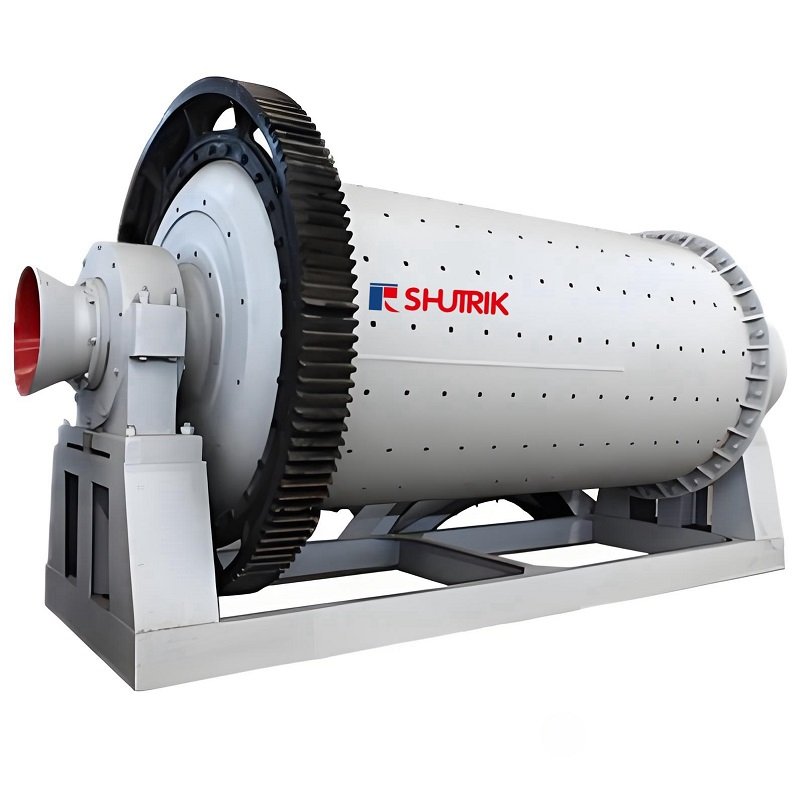
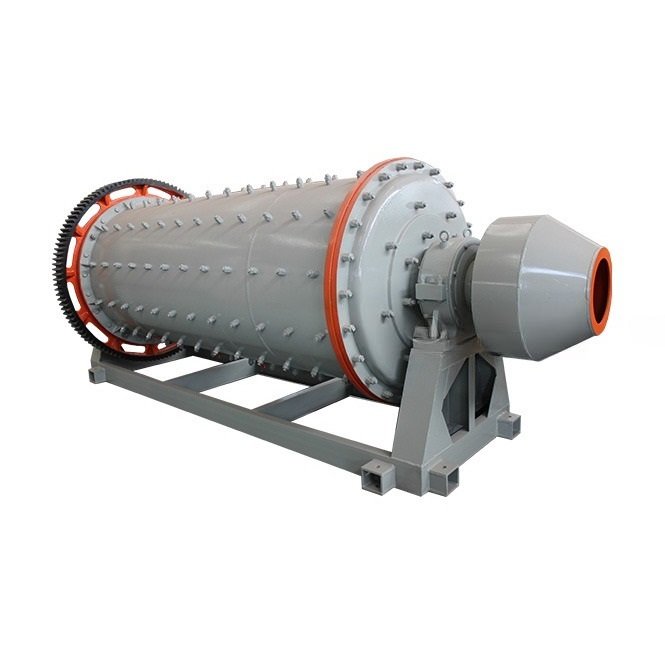
A wet ball mill is an industrial piece of equipment designed for the wet grinding of materials. During the grinding process, water is added to facilitate the operation. The amount of water required generally depends on the intended use of the material, the proportion of clay in the formulation, and the water-absorption capacity of that clay.
Wet grinding ball mills operate by rotating a cylindrical drum, which causes steel balls to impact and grind the material. The use of water as a medium helps reduce dust pollution and enhances grinding efficiency. These ball mills are primarily employed in sectors such as mining, construction materials, chemicals, cement, and mineral processing, where they are used for the wet grinding of various ores and other grindable materials. Typically, they are designed to process feed material with a particle size of 25 mm or less.
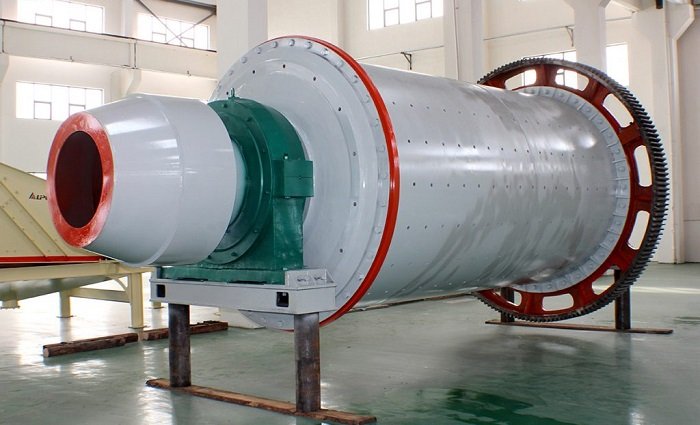
Wet Ball Mill Working Principle
In a wet ball mill, an electric motor drives the rotation of the cylinder at a low speed. Steel balls inside the cylinder are lifted by the lining plates and then fall, impacting and grinding the material through both collision and mutual sliding. The material is mixed with water to form a slurry, which is pulverized and refined within the cylinder. The slurry is discharged via an overflow mechanism or a grate plate. The discharged material is classified in a spiral classifier to separate the qualified product, while the coarse fraction (coarse sand) is returned to the ball mill via a combined feeder for further grinding. Wet grinding effectively suppresses dust and facilitates the transport of materials.

Advantages of Wet Grinding Ball Mill
1. Easier to grind
In the wet process, the addition of water acts as a grinding aid. It facilitates reversible reactions between water molecules and the unsaturated bonds on the surface of the material, making the material easier to grind.
2. Higher grinding efficiency
In dry ball milling, the material being ground may sometimes adhere to the steel balls, which reduces grinding efficiency. In a wet grinding ball mill, the presence of water prevents this phenomenon, thereby increasing grinding efficiency.
3. Longer service life for liners
In a wet ball mill, water provides better protection for the mill’s liners by cushioning the impact from the steel balls and the material. Consequently, the liners experience less damage and have a longer service life.
4. More uniform slurry
The wet process allows the ball mill to effectively mix non-plastic (lean) materials with plastic materials. Even within a short processing time, it produces a slurry with a highly uniform composition, consisting primarily of rounded—rather than flaky—particles. This promotes better flow characteristics in the slurry.
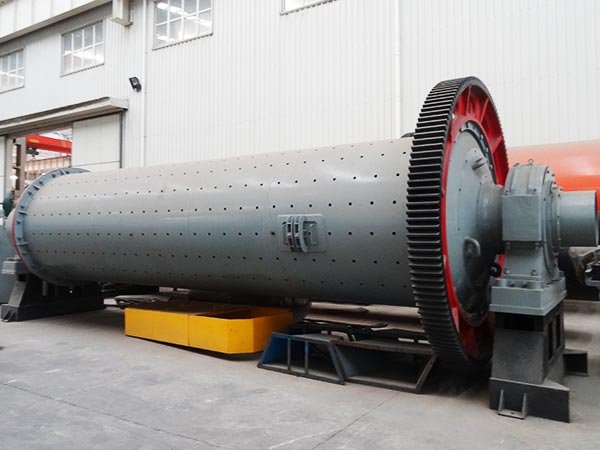
Wet Ball Mill Applications
As a common type of grinding equipment, the wet grinding ball mill has a wide range of applications, primarily in sectors such as power generation, chemical processing, mining, cement production, and mineral beneficiation.
In the power industry, wet ball mills are notably used in flue-gas desulfurization (FGD) systems to grind limestone for the preparation of desulfurization agents. In the field of mineral processing, they are employed for ores that require a fine grind, such as iron, copper, and gold ores. By producing a slurry with uniform particle size, they provide suitable feed material for subsequent beneficiation processes.
Technical Parameters of Wet Grinding Ball Mill
| Model | Rotary Speed(r/min) | Ball Load(t) | Input Size (mm) | Output Size (mm) | Capacity(t/h) | Power (kW) | Weight (t) |
| Φ900 × 1 800 | 36-38 | 1.5 | ≤20 | 0.075-0.89 | 0.65-2 | 18.5 | 4.6 |
| Ф900 × 3000 | 36 | 2.7 | ≤20 | 0.075-0.89 | 1.1-3.5 | 22 | 5.6 |
| Φ1200 × 2400 | 36 | 3 | <25 | 0.075-0.6 | 1.5-4.8 | 30 | 12 |
| Φ1200 × 3000 | 36 | 3.5 | <25 | 0.074-0.4 | 1.6-5 | 37 | 12.8 |
| Φ1200 × 4500 | 32.4 | 5 | ≤25 | 0.074-0.4 | 1.6-5.8 | 55 | 13.8 |
| Φ1500 × 3000 | 29.7 | 7.5 | <25 | 0.074-0.4 | 2-5 | 75 | 15.6 |
| Φ1500 × 4500 | 27 | 11 | <25 | 0.074-0.4 | 3-6 | 90 | 21 |
| Φ1500 × 5700 | 28 | 12 | <25 | 0.074-0.4 | 3.5-6 | 130 | 24.7 |
| Φ1830 × 3000 | 25.4 | 11 | <25 | 0.074-0.4 | 4-10 | 130 | 28 |
| Ф1830 × 4500 | 25.4 | 15 | <25 | 0.074-0.4 | 4.5-12 | 155 | 32 |
| Φ1830 × 6400 | 24.1 | 21 | <25 | 0.074-0.4 | 6.5-15 | 180 | 34 |
| Φ1830 × 7000 | 24.1 | 23 | <25 | 0.074-0.4 | 7.5-17 | 210 | 36 |
| Φ2100× 3000 | 23.7 | 15 | <25 | 0.074-0.4 | 6.5-36 | 210 | 34 |
| Φ2100 × 4500 | 23.7 | 24 | ≤25 | 0.074-0.4 | 8-43 | 245 | 42 |
| Φ2100 × 7000 | 23.7 | 26 | <25 | 0.074-0.4 | 8-48 | 280 | 50 |
| Φ2200 × 4500 | 21.5 | 27 | ≤25 | 0.074-0.4 | 9-45 | 280 | 48.5 |
| Φ2200 × 6500 | 21.7 | 35 | <25 | 0.074-0.4 | 14-26 | 370 | 52.8 |
| Φ2200 × 7000 | 21.7 | 35 | ≤25 | 0.074-0.4 | 15-28 | 380 | 54 |
| Φ2200 × 7500 | 21.7 | 35 | <25 | 0.074-0.4 | 15-30 | 380 | 56 |
| Φ2400 × 4500 | 21 | 30 | <25 | 0.074-0.4 | 8.5-60 | 320 | 65 |
| Φ2700 × 4000 | 20.7 | 40 | <25 | 0.074-0.4 | 12-80 | 400 | 94 |
| Φ2700 × 4500 | 20.7 | 48 | ≤25 | 0.074-0.4 | 12-90 | 430 | 102 |
| Φ3200 × 4500 | 18 | 65 | <25 | 0.074-0.4 | 25-130 | 800 | 137 |


Related products
-
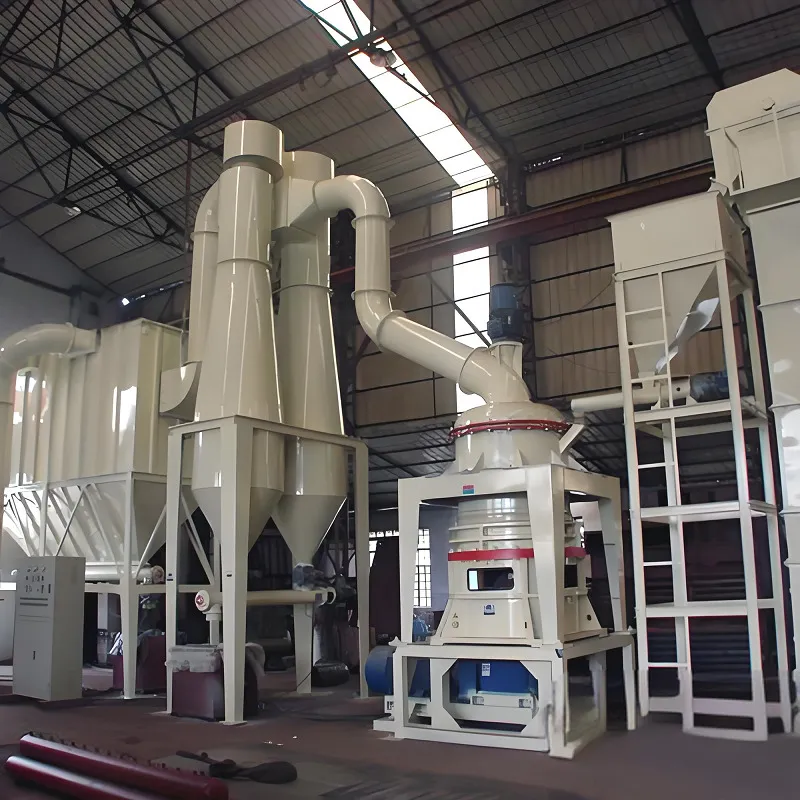
Micro Powder Grinding Mill
The micro powder grinding mill is an advanced piece of equipment designed for the dry, superfine grinding of non-metallic powders. It is widely used in applications such as calcium carbonate pulverization, gypsum powder processing, power plant desulfurization, non-metallic mineral powder production, and pulverized coal preparation. The finished products find extensive application across various sectors, including construction, building materials, glass, ceramics, and the chemical industry.
- Capacity: 0.5 – 25 t/h
- Feed Size: ≤ 20 mm
- Output Size: 325 – 3250 mesh
-
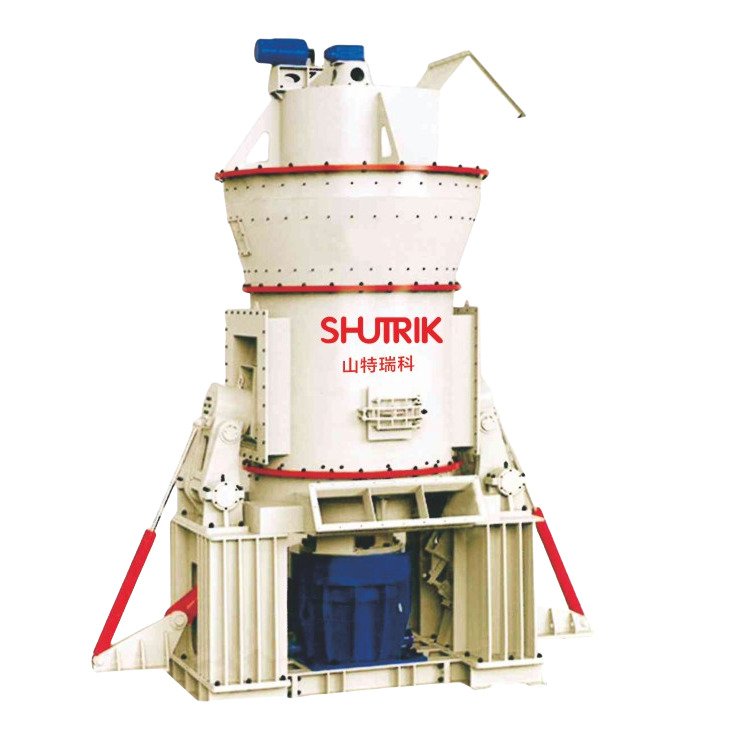
Vertical Roller Mill Machine
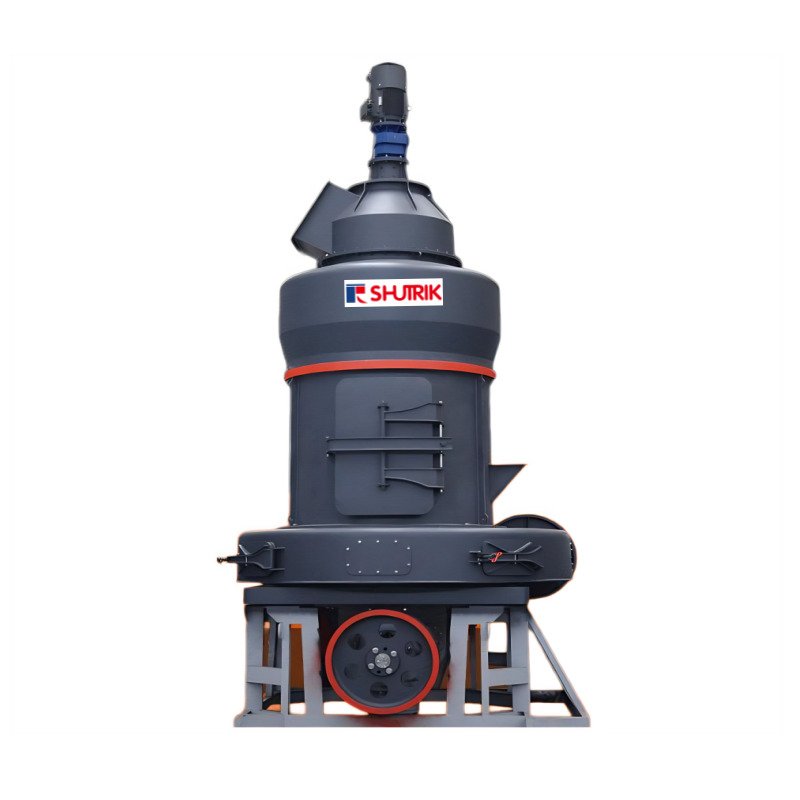
The vertical roller mill machine is a high-efficiency grinding machine that integrates crushing, grinding, drying, classifying, and conveying. Its core principle is based on material bed grinding technology, achieving material pulverization through the relative motion between grinding rollers and the grinding table.
- Capacity: 10 – 400 t/h
- Feed Size: ≤ 55 mm
- Output Size: 20 – 400 mesh
-
Vertical Grinding Mill
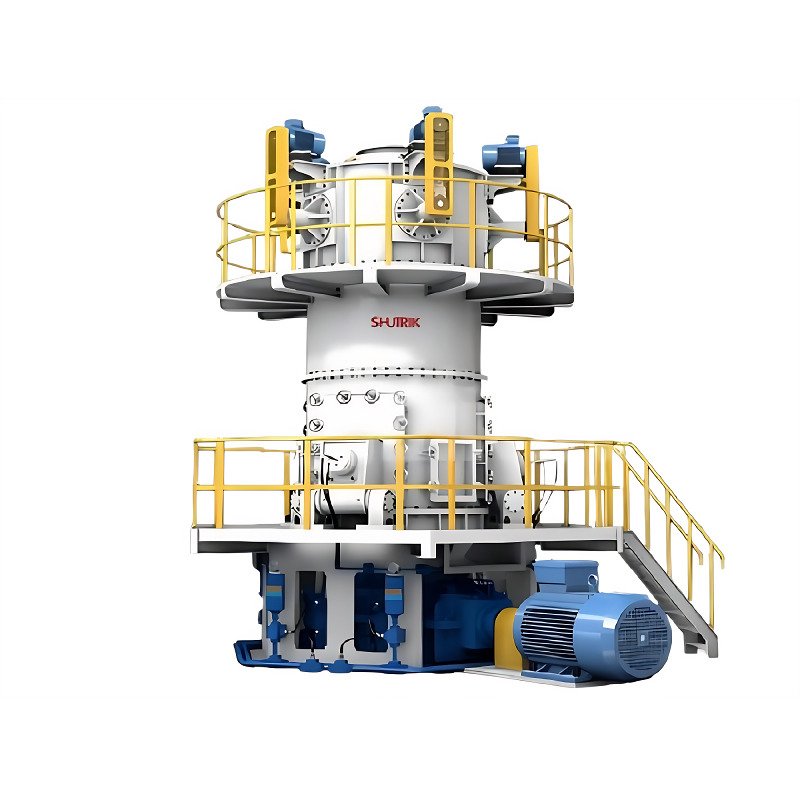
The vertical grinding mill integrates the functions of fine crushing, grinding, drying, classifying, and conveying. The system is simple, easy to operate and adjust, and features a high degree of automation. It is suitable for both large-scale and ultra-large-scale industrial production, as well as for small- and medium-scale operations.
- Capacity: 10 – 400 t/h
- Feed Size: ≤ 55 mm
- Output Size: 20 – 400 mesh
-
Ball Grinding Mill
A ball mill grinder is a grinding machine that uses steel balls as the grinding medium. It can crush and grind materials to a fineness of 35 mesh or finer and is suitable for use in open-circuit or closed-circuit grinding processes.
- Capacity: 0.65-130 t/h
- Feed Size: ≤ 25 mm
- Output Size: 0.074-0.89 mm
-
Grinding Rod Mill
Grinding rod mills are primarily utilized in the first stage of open-circuit grinding for coarse- to fine-size reduction. They are particularly well-suited for brittle ore materials. Our rod mills offer the advantages of uniform product particle size and high throughput.
- Capacity: 100-500 t/h
- Feed Size: <25 mm
- Output Size: 0.074-5 mm
-
Rod Mill Equipment
Rod mill equipment is primarily used for coarse grinding operations. They are suitable for the fine crushing and coarse grinding of ores and are particularly well-suited for processing brittle materials. They are widely used in the production of manufactured sand, as well as in mineral processing plants, chemical plants, and the power industry.
- Capacity: 100-500 t/h
- Feed Size: <25 mm
- Output Size: 0.074-5 mm