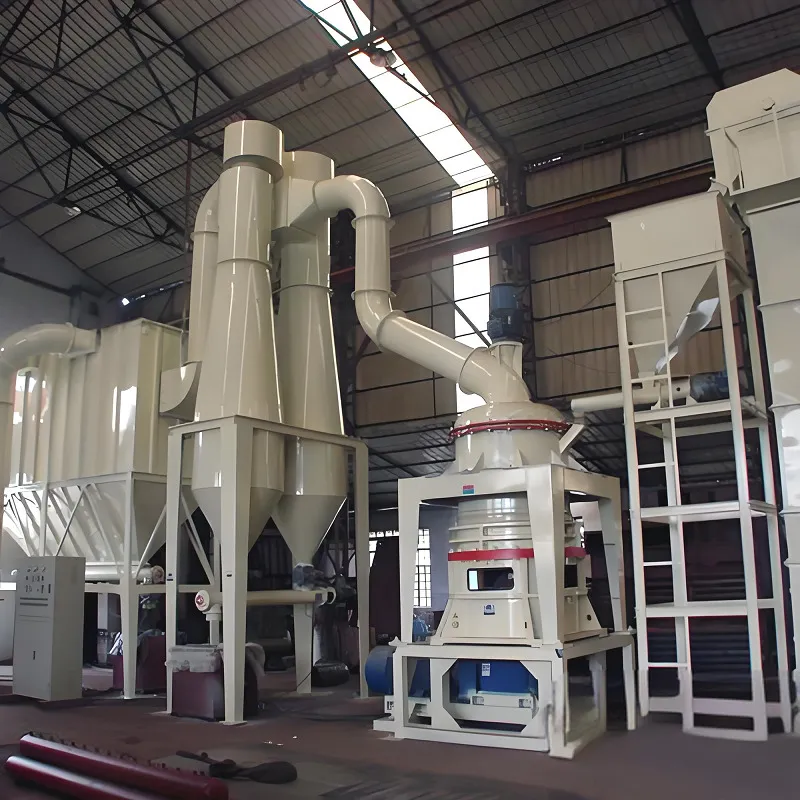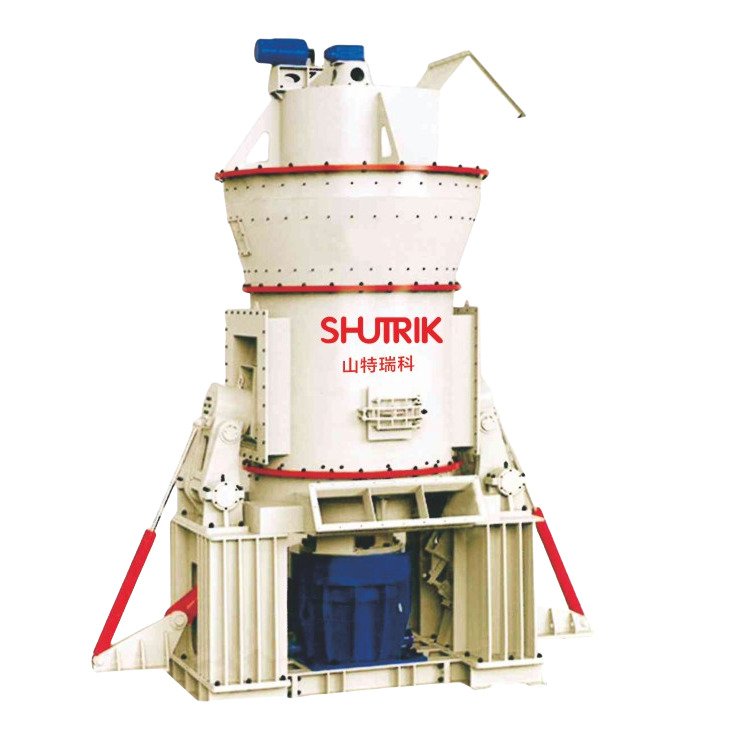
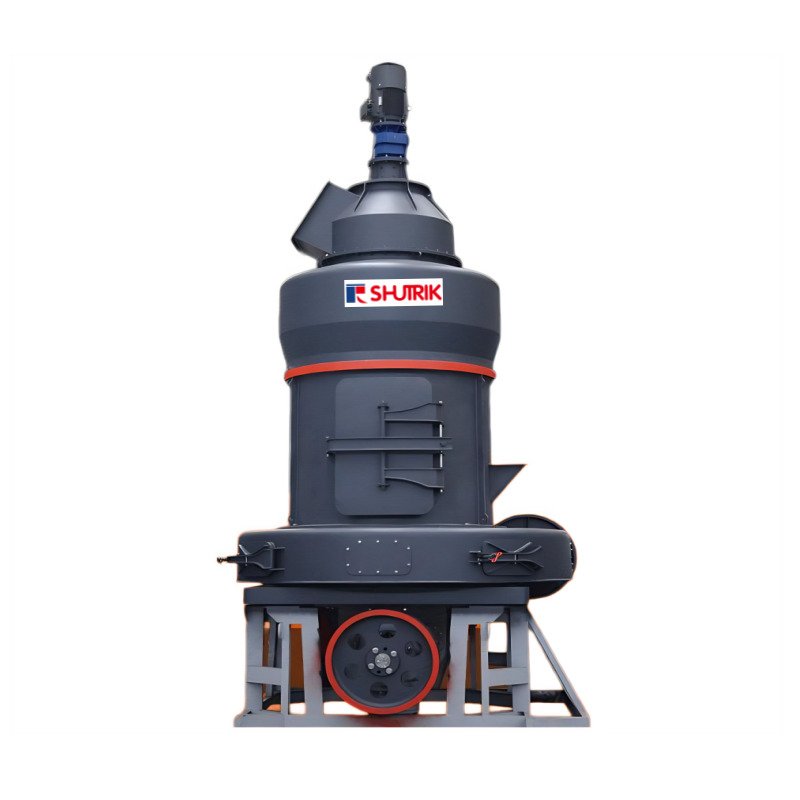
The micro-powder grinding mill is primarily designed for processing non-metallic minerals of low to medium hardness that require ultrafine grinding—such as calcite, talc, limestone, dolomite, quartz, bentonite, barite, and kaolin. It enables precision grinding within the 325–2500 mesh range and is suitable for materials with a Mohs hardness of 6 or lower. It is particularly well-suited for applications demanding high powder fineness and purity.
Sandreck’s micro-powder grinding mill overcomes the limitations of traditional mills, such as low fineness limits and poor precision. It utilizes a design featuring multiple grinding rollers working in synergy. Equipped with a high-efficiency classifier, the mill consistently produces ultrafine powder ranging from 325 to 2500 mesh, with a particle size deviation of ≤3%. It offers the advantages of low energy consumption, high precision, and ease of maintenance. Providing reliable support for fine powder processing, our micro powder grinding mill is the preferred choice for small and medium-sized ultrafine powder projects.
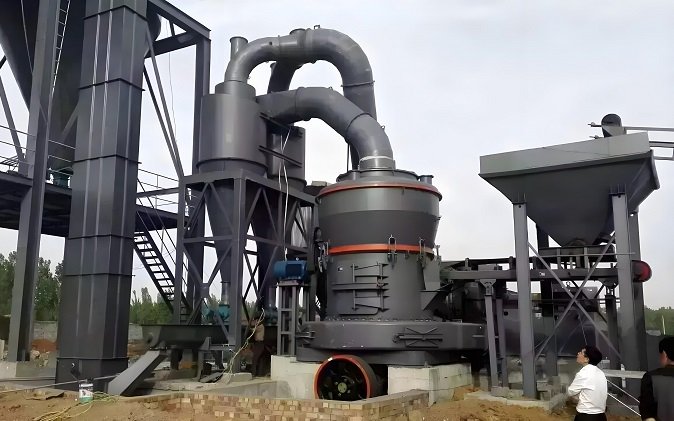
Micro Powder Grinding Mill Working Principle
1. Material Conveying and Feeding: Lumpy or granular materials (particle size ≤ 20mm) are evenly fed into the inlet via a vibrating feeder. A screw conveyor slowly transports the material into the grinding chamber to prevent issues such as insufficient grinding or jamming caused by excessive feed rates.
2. Ultrafine Grinding: Once inside the chamber, rotating blades scoop the material into the gaps between the grinding rollers and rings. Driven by centrifugal force and spring pressure, the rollers exert high-frequency squeezing and grinding forces to produce ultrafine powder. Cold air dissipates the heat generated during grinding to prevent material agglomeration.
3. Precision Classification: The powder is carried by the negative-pressure airflow generated by the fan into a high-efficiency classifier. The impeller speed is adjustable. Powder meeting the required fineness (325–2500 mesh) passes through the classifier and enters the collection system, while coarse particles are returned for secondary grinding.
4. Powder Collection and Discharge: The qualified ultrafine powder enters a pulse dust collector, is filtered, and settles into the discharge hopper, from which it is evenly discharged via a discharge valve. Clean exhaust air is vented by the fan. The system operates without dust leakage, meeting environmental protection standards.

Features of Micro Powder Grinding Mill
1) High-Precision Ultrafine Grinding
The micro powder grinding mill consistently produces ultrafine powder ranging from 325 to 2500 mesh, with a fineness deviation of ≤3%. It yields a product free of coarse impurities, eliminating the need for subsequent screening and reducing energy loss, thereby meeting the precision requirements of high-end industries.
2) Low Energy Consumption
Compared to traditional mills, this micro powder grinding mill reduces energy consumption per output by 25%–30%, resulting in significant long-term electricity savings. With minimal material loss, the return on investment (ROI) increases by approximately 20%, shortening the payback period.
3) Wear-Resistant and Durable
The grinding rollers and rings offer a service life of 1,800–2,500 hours (adjustable based on material abrasiveness)—40% longer than traditional equipment. The system boasts a low failure rate and supports over 2,800 hours of continuous annual operation, minimizing losses associated with downtime.
4) Environmentally Friendly Production
Equipped with high-efficiency pulse dust collectors and noise suppressors, the grinding mill ensures dust-free, low-noise operation. It fully complies with national environmental standards, creating a clean and quiet working environment.
5) Ease of Operation
The system is easy to operate. General workers can master independent operation after just one week of training, helping to reduce labor costs. A single unit meets various fineness requirements and is suitable for over 90% of ultrafine non-metallic mineral processing applications, maximizing equipment utilization.
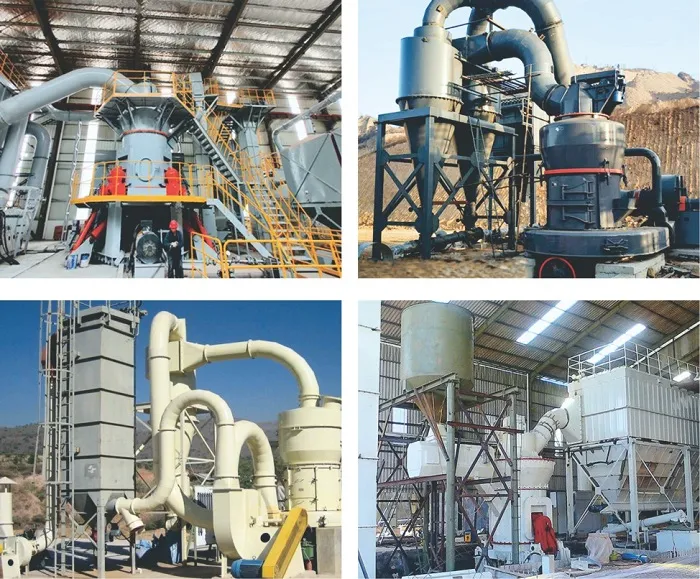
Micro Powder Grinding Mill Applications
The micro powder grinding mill is primarily designed for the ultrafine processing of non-flammable, non-explosive, and brittle materials with low to medium hardness (Mohs hardness ≤ 6). It is suitable for over 100 types of materials, including calcite, chalk, limestone, dolomite, carbon black, kaolin, bentonite, talc, mica, magnesite, illite, pyrophyllite, vermiculite, sepiolite, attapulgite, rectorite, diatomite, barite, gypsum, alunite, graphite, fluorite, phosphate rock, potash ore, and pumice. The particle size of the finished powder can be adjusted within the 325-3250 mesh range.

Technical Parameters of Micro Powder Grinding Mill
| Specifications | MW880 | MW1080 | MW1280 | MW1680 |
| Working Diameter (mm) | 800 | 1000 | 1250 | 1680 |
| Max Input Size(mm) | 10 | 10 | 15 | 20 |
| Rotary Speed (r/min) | 230-240 | 180-200 | 135-155 | 120-130 |
| Capacity (kg/h) | 500-5000 | 1000-8500 | 1500-11200 | 5000-25000 |
| Q’ty of Roller (PCS) | 21 | 28 | 32 | 36 |
| Q’ty of Ring Layer (PCS) | 3 | 4 | 4 | 4 |
| Output Size μm | 45-3 | 45-3 | 45-3 | 45-3 |
| Output Size Mesh | 325-3250 | 325-3250 | 325-3250 | 325-3250 |
| Overall Dimension (mm) | 13.9x4x6.2 | 18×4.6×8.6 | 14x9x10.25 | 26.3×7.5×11.9 |
| Total Weight (t) | 18 | 36 | 56 | 102 |




Related products
-
Ultrafine Grinding Mill
Ultrafine grinding mills are pulverizing machines designed to produce ultrafine powders. They are primarily used in industries such as non-metallic minerals, chemicals, construction materials, and coatings. These grinding mills can process minerals—including limestone, calcite, marble, heavy calcium carbonate, pyrophyllite, and talc—into ultrafine powder.
- Capacity: 3 – 25 t/h
- Feed Size: ≤ 15 mm
- Output Size: 300 – 3000 mesh
-
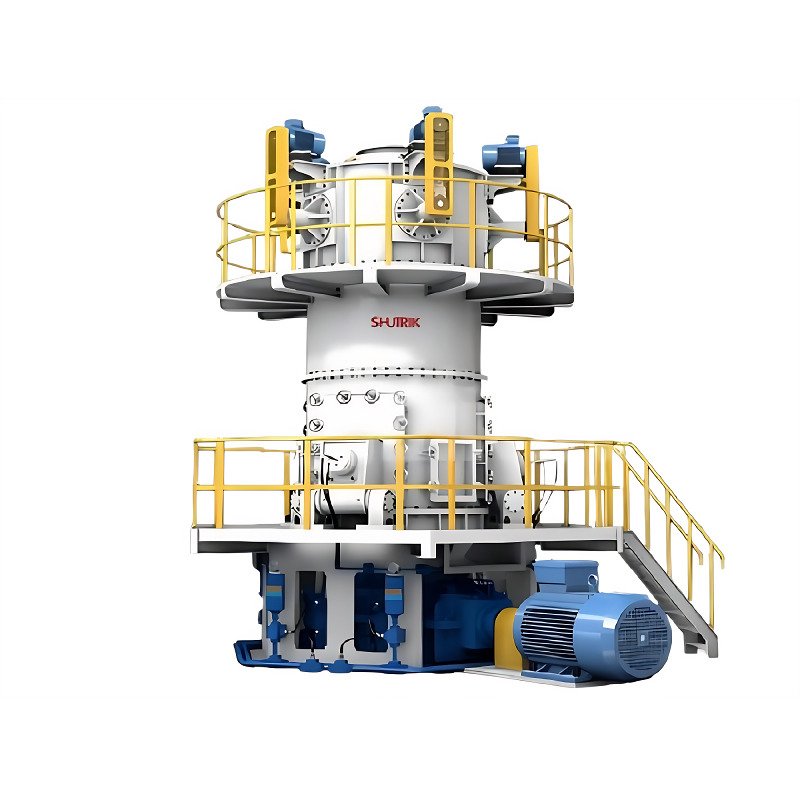
Vertical Roller Mill Machine
The vertical roller mill machine is a high-efficiency grinding machine that integrates crushing, grinding, drying, classifying, and conveying. Its core principle is based on material bed grinding technology, achieving material pulverization through the relative motion between grinding rollers and the grinding table.
- Capacity: 10 – 400 t/h
- Feed Size: ≤ 55 mm
- Output Size: 20 – 400 mesh
-
Vertical Grinding Mill
The vertical grinding mill integrates the functions of fine crushing, grinding, drying, classifying, and conveying. The system is simple, easy to operate and adjust, and features a high degree of automation. It is suitable for both large-scale and ultra-large-scale industrial production, as well as for small- and medium-scale operations.
- Capacity: 10 – 400 t/h
- Feed Size: ≤ 55 mm
- Output Size: 20 – 400 mesh
-
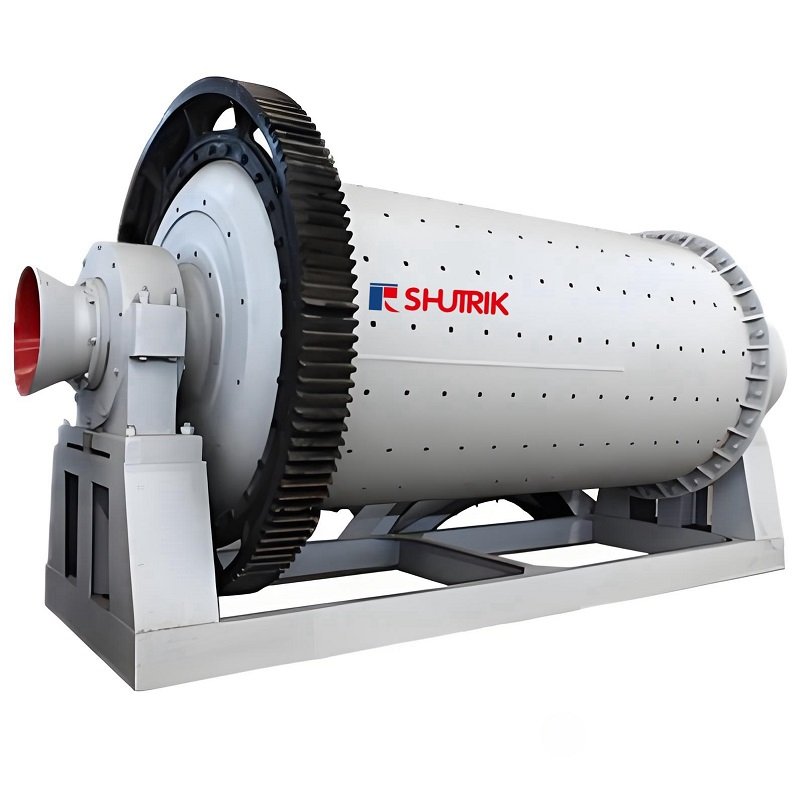
Industrial Ball Mill
The industrial ball mill is a grinding device widely used in industries such as mining, building materials, and chemicals, primarily employed for the crushing, grinding, and mixing of materials, as well as the production of ultrafine powders.
- Capacity: 0.65-130 t/h
- Feed Size: ≤ 25 mm
- Output Size: 0.074-0.89 mm
-
Raymond Grinding Mill
The Raymond grinding mill is a type of dry-grinding suspended-roller mill. It is widely used in the non-metallic mining industry and is capable of grinding rock into fine powder.
- Capacity: 0.25-22 t/h
- Feed Size: ≤35 mm
- Output Size: 0.005-0.613 mm
-
Raymond Roller Mill
The Raymond roller mill is a high-efficiency grinding machine featuring a vertical structure. It is primarily used for processing non-metallic minerals into fine and ultrafine powders and is widely applied in industries such as mining, construction materials, chemicals, and metallurgy.
- Capacity: 0.25-22 t/h
- Feed Size: ≤35 mm
- Output Size: 0.005-0.613 mm