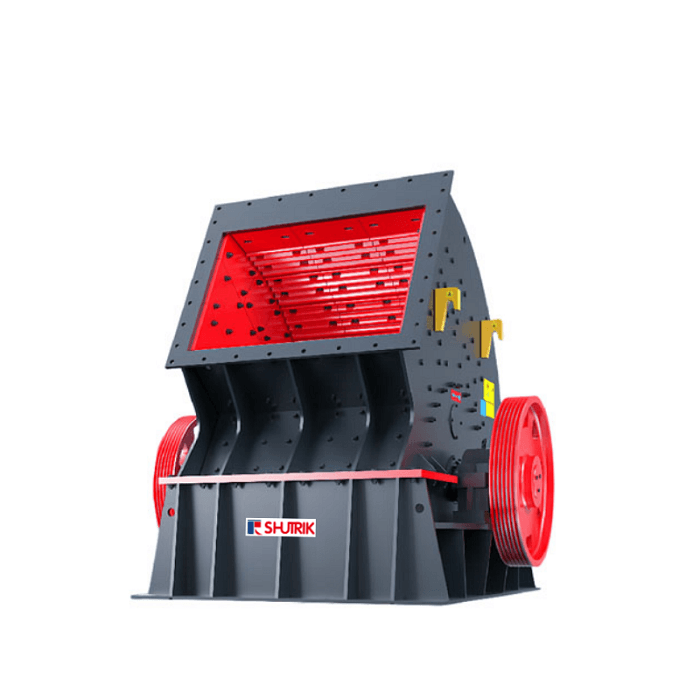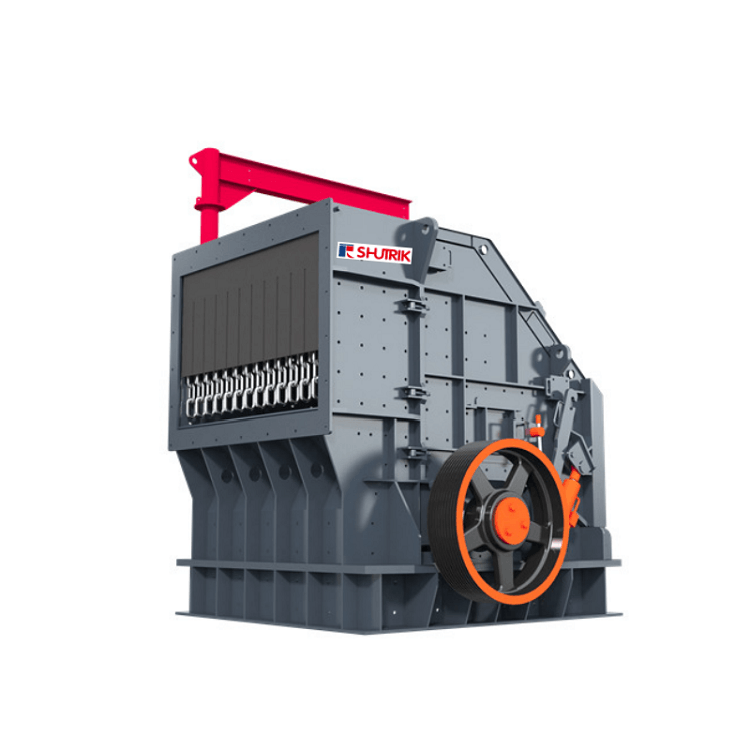

An impact hammer crusher is a piece of mining machinery that utilizes impact energy for size reduction. Its operating principle involves feeding material into the crushing chamber, where it is struck by hammers mounted on a high-speed rotating rotor. The material is then propelled at high velocity against impact plates, undergoing repeated collisions until it is broken down to the desired particle size.
This equipment is primarily suited for materials with low abrasiveness and a compressive strength not exceeding 200 MPa, such as limestone, gypsum, and shale. The maximum feed size typically does not exceed 1600 mm. Key technical features include a high reduction ratio, excellent product shape (often cubic), and relatively low energy consumption. Some models incorporate a reversible rotor design to enhance the utilization rate of the hammers.
Hammer impact crushers are widely used for medium and fine crushing operations in sectors such as construction aggregates, highway construction, water conservancy projects, and mining.
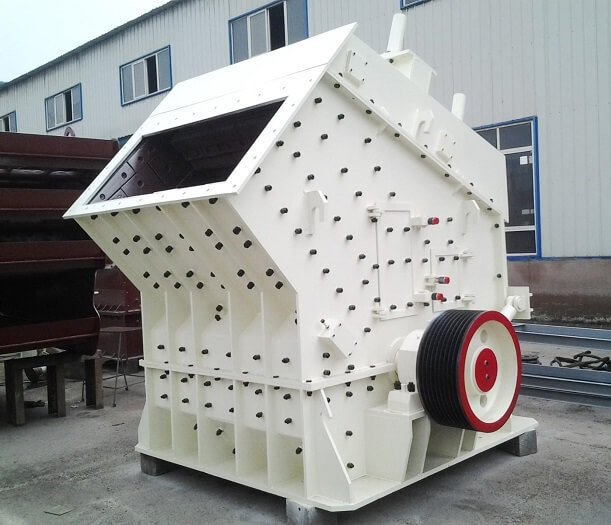
Hammer Impact Crusher Structure
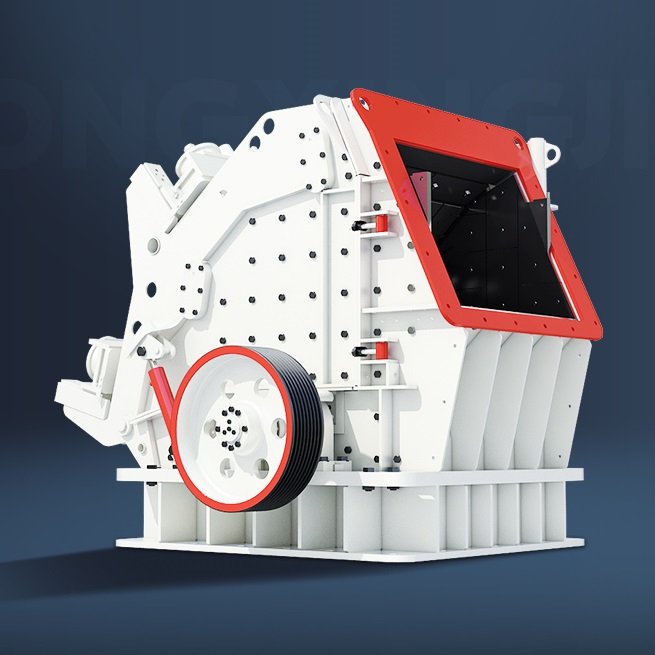
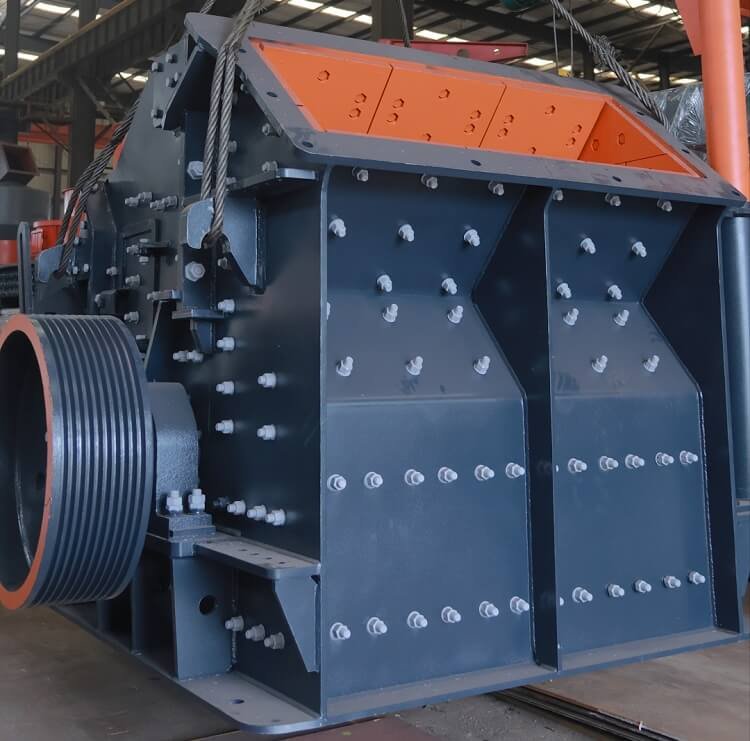
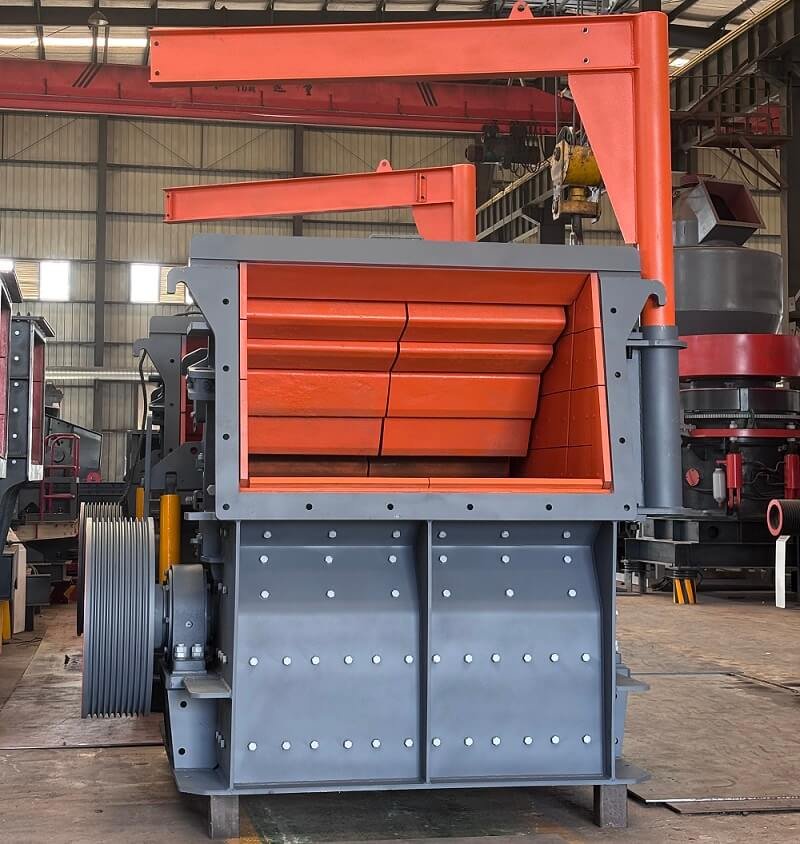
The structure of an impact hammer crusher primarily consists of springs, guard rails, front and rear impact frames, impact liners, square steel bars, impact liner bolts, a cover-opening mechanism, a main shaft, blow bars, a rotor assembly, lining plates, locking blocks, and clamping blocks. The “impact” functionality of the stone crusher is primarily concentrated in the lower section of the machine.
Impact Hammer Crusher Working Principle
The impact hammer crusher operates on the principle of impact-based size reduction, utilizing kinetic energy to break down materials.
Material fed into the crusher lands on a grate screen. Smaller pieces pass through the gaps in the grate into the lower section of the machine housing, while larger pieces slide along the screen surface toward the rotor. Blow bars of a specific height are securely mounted around the circumference of the rotor, which is driven at high speed by an electric motor via V-belts.
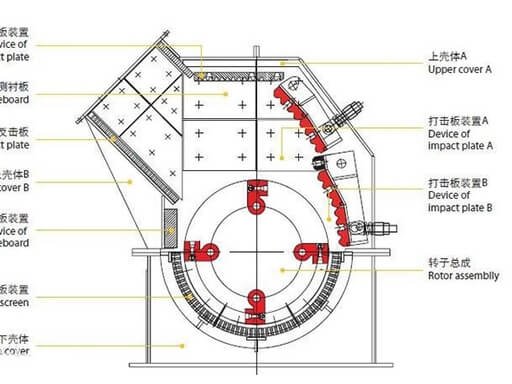
Material landing on the rotor is struck by the high-speed rotating blow bars, gaining kinetic energy that propels it at high velocity toward the impact plates. Upon striking the impact plates, the material rebounds and may collide with other pieces of material also being thrown by the rotor. This process repeats until the material is reduced to the desired particle size, at which point it is discharged through the outlet.
Features of Hammer Impact Crusher
- The hammer impact crusher is characterized by a high crushing ratio—typically ranging from 30 to 40 and reaching up to 150—along with high crushing efficiency and low energy consumption.
- The resulting product features uniform particle size and excellent particle shape, predominantly consisting of cubic-shaped grains with a high bulk density.
- This equipment offers strong adaptability and is particularly well-suited for crushing brittle or fibrous materials, as well as materials with a hardness below the medium range, such as limestone, gypsum, and shale.
- It utilizes highly wear-resistant blow bars (e.g., made from high-chromium alloys) that offer superior impact resistance, durability, a long service life, and high metal utilization.
- The impact hammer crusher incorporates an anti-clogging design, enabling it to effectively process materials with higher moisture content. Certain models are equipped with heating systems to prevent material from sticking or caking.
- The output particle size can be flexibly controlled through various methods, such as adjusting the rotor speed or the gap between the impact plates, offering a wide range of adjustment. Some models are also equipped with hydraulic or mechanical adjustment systems.
Impact Hammer Crusher Applications
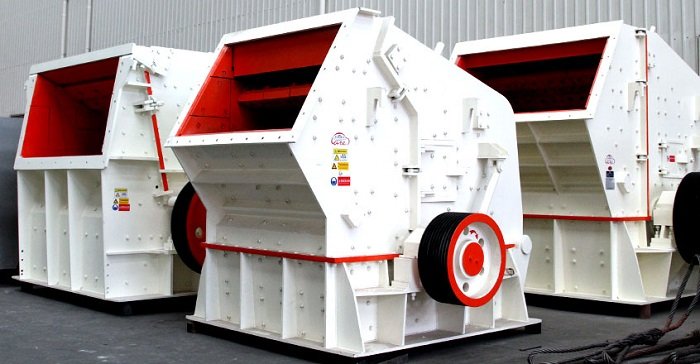
Hammer impact crushers are widely used across various sectors, including mining, metallurgy, cement, chemicals, refractories, ceramics, construction, highway infrastructure, and water conservancy projects. This equipment is capable of processing a diverse range of materials, such as limestone, granite, basalt, river pebbles, iron ore, and construction waste. It serves as a key piece of machinery for ore crushing, the production of construction aggregates, and the resource recovery of solid waste.
Technical Parameters of Impact Hammer Crusher
| Model
|
Rotor Size | Feeding Port Size | Feeding Size (mm)
|
Capacity(t/h)
|
Motor Power (kw)
|
Overall Dimension |
| diameter x length (mm) | W*L (mm) | L*W*H(mm) | ||||
| PCZ1380 | 1310×790 | 850×800 | <600 | 100-160 | 132 | 2818x2100x2390 |
| PCZ1510 | 1500×950 | 1000×900 | <700 | 160-210 | 132 | 3260x2414x2750 |
| PCZ1512 | 1500×1160 | 1200×900 | <750 | 250-320 | 160 | 3260x2624x2750 |
| PCZ1615 | 1650×1452 | 1500×1200 | <1000 | 420-500 | 200 | 3456x2915x3185 |
| PCZ1620 | 1660×1900 | 2000×1200 | <1200 | 800-1000 | 400 | 3500x3100x3200 |
| PCZ1820 | 1800×1964 | 2000×1200 | <1200 | 1000-1200 | 450 | 3270x3210x3520 |
| PCZ2125 | 2100×2486 | 2600×1690 | <1600 | 2000-2500 | 1250 | 3728x4565x4667 |

Related products
-
Hammer Mill Crusher
Hammer mill crushers for sale are used to crush various materials of medium hardness and low abrasiveness. The materials should have a compressive strength not exceeding 100 MPa and a moisture content of less than 15%. Materials suitable for crushing include coal, salt, chalk, gypsum, brick and tile, limestone, and the like.
- Capacity: 100-2500 t/h
- Feed Size: ≤1600 mm
- Output Size: 10-35 mm
-
CI Series Impact Crusher
The CI impact crusher features a high-precision rotor with large rotational inertia, a multi-functional fully hydraulic operating system, and an involute crushing chamber. It offers excellent overall performance and is an ideal choice for coarse and medium crushing in large-capacity crushing production lines.
- Capacity: 60-800 t/h
- Feed Size: <300-1000 mm
- Output Size: 10-80 mm
-
Secondary Impact Crusher
A secondary impact crusher is a stone crushing machine that uses impact energy to crush stone. It can process materials with side lengths of 300-900 mm. The finished product is cubic in shape, and the particle size is adjustable.
- Capacity: 90-800 t/h
- Feed Size: <300-900 mm
- Output Size: 20-80 mm
-
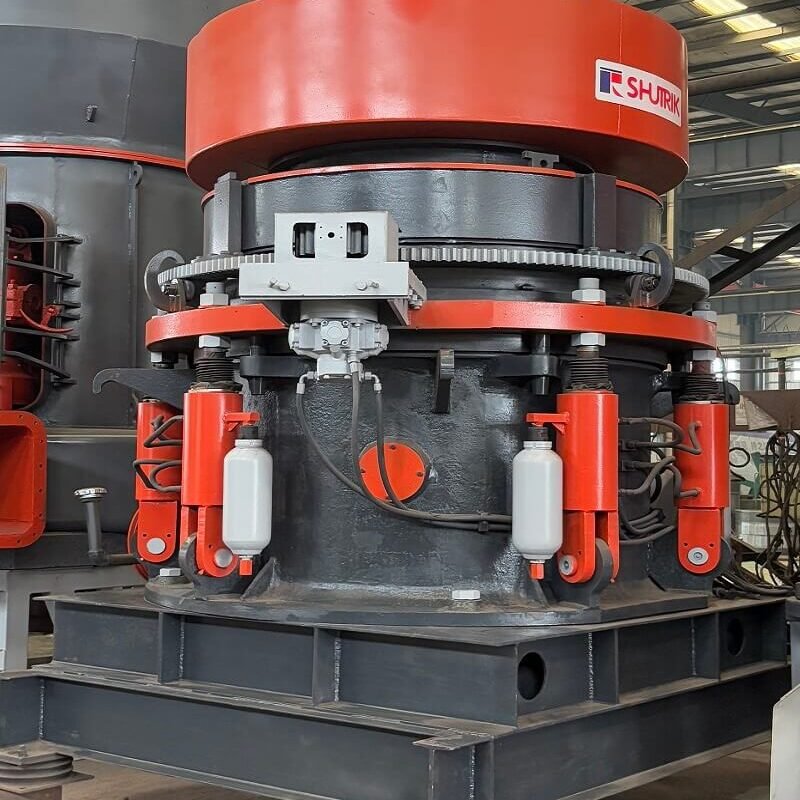
Multi Cylinder Hydraulic Cone Crusher
Multi-cylinder hydraulic cone crushers are typically used as tertiary crushers in stone crushing and sand-making production lines. They can process materials such as quartz, limestone, river pebbles, bluestone, and granite. They are widely used in mining, construction, chemical, transportation, and many other industries.
- Capacity: 100-1200 t/h
- Feed Size: 80-350 mm
- Output Size: 13-38 mm
-
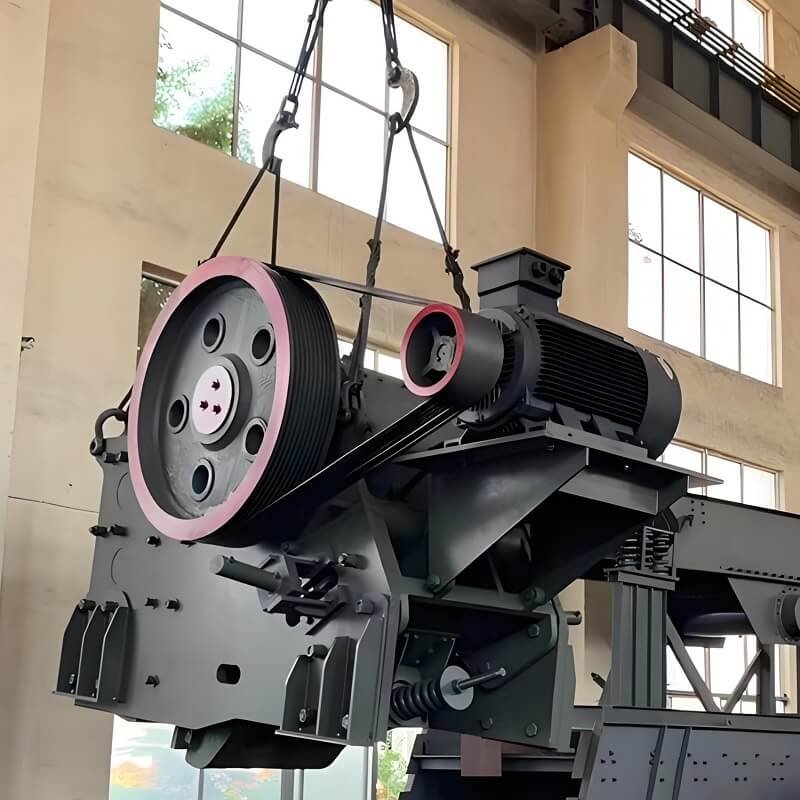
Jaw Stone Crusher
The jaw stone crusher is a core piece of equipment used for the primary and secondary crushing of medium-hard materials. It crushes various ores and large stone blocks—such as river pebbles, granite, and construction waste—with compressive strengths ranging from 147 to 245 MPa.
- Capacity: 5-1000t/h
- Feed Size: ≤ 1200mm
- Output Size: 20-350 mm
-
Jaw Rock Crusher
The jaw rock crusher is a heavy-duty crushing equipment widely used in industries such as mining, metallurgy, construction materials, and chemicals. It is specifically designed for primary and secondary crushing of high-hardness materials.
- Capacity: 1-1000 t/h
- Feed Size: ≤1200 mm
- Output Size: 10-350 mm