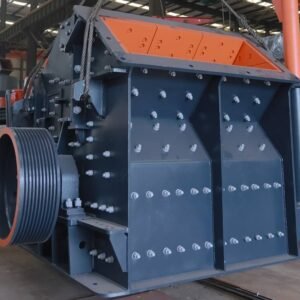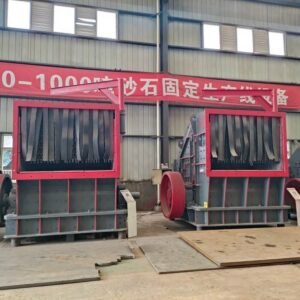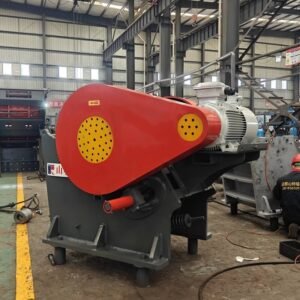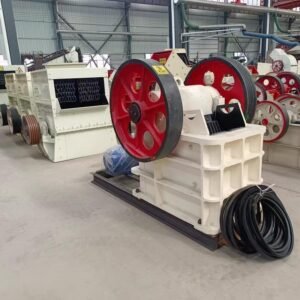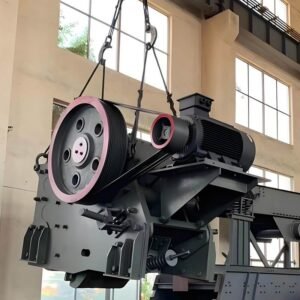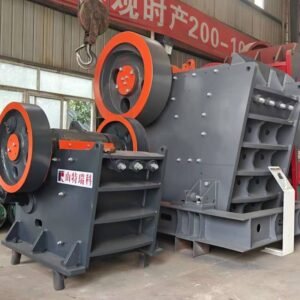
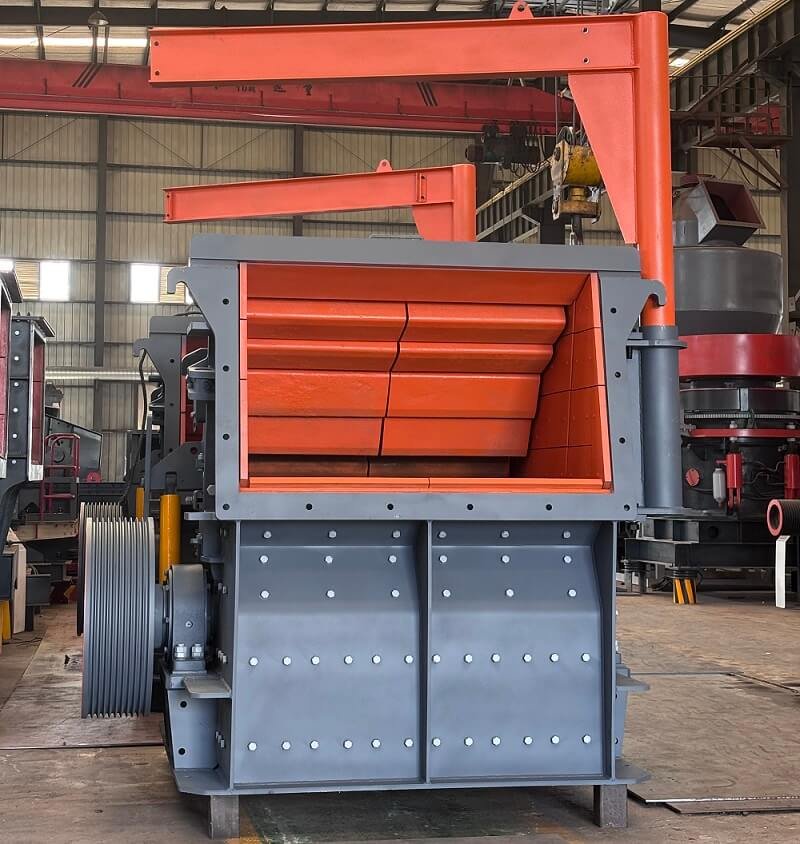
The impact rock crusher is a high-efficiency machine that utilizes high-speed impact energy to perform medium and fine crushing operations. It is primarily suitable for processing materials with medium hardness or lower (compressive strength ≤350 MPa)—such as granite, concrete blocks, basalt, limestone, dolomite, gypsum, coal gangue, shale, quartz sand, and feldspar, as well as ores like gold and copper.
The resulting product features a predominantly cubic shape with a low content of flaky or elongated particles, meeting the requirements for high-quality aggregates, manufactured sand, and roadbed fill. Sandreck‘s impact crushers can operate as standalone units or be integrated with jaw crushers and cone crushers to form complete “primary-secondary-tertiary” crushing production lines. Additionally, they can be configured with feeders, vibrating screens, jaw crushers, and other equipment to create an integrated mobile crushing station.
With advantages such as high crushing efficiency, excellent product shape, and ease of maintenance, the impact mill rock crusher serves as core equipment for the production of high-quality aggregates.
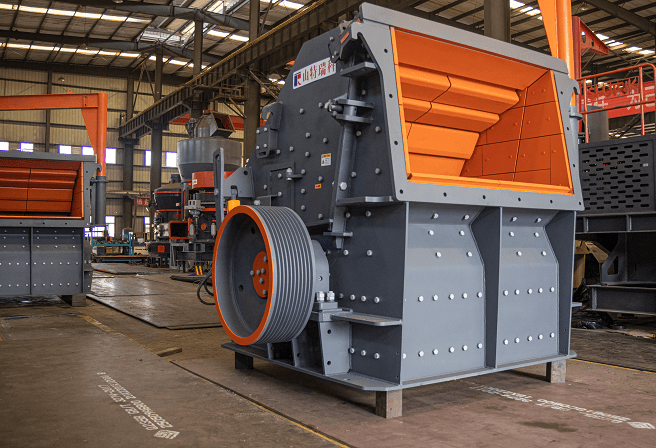
Impact Rock Crusher Working Principle
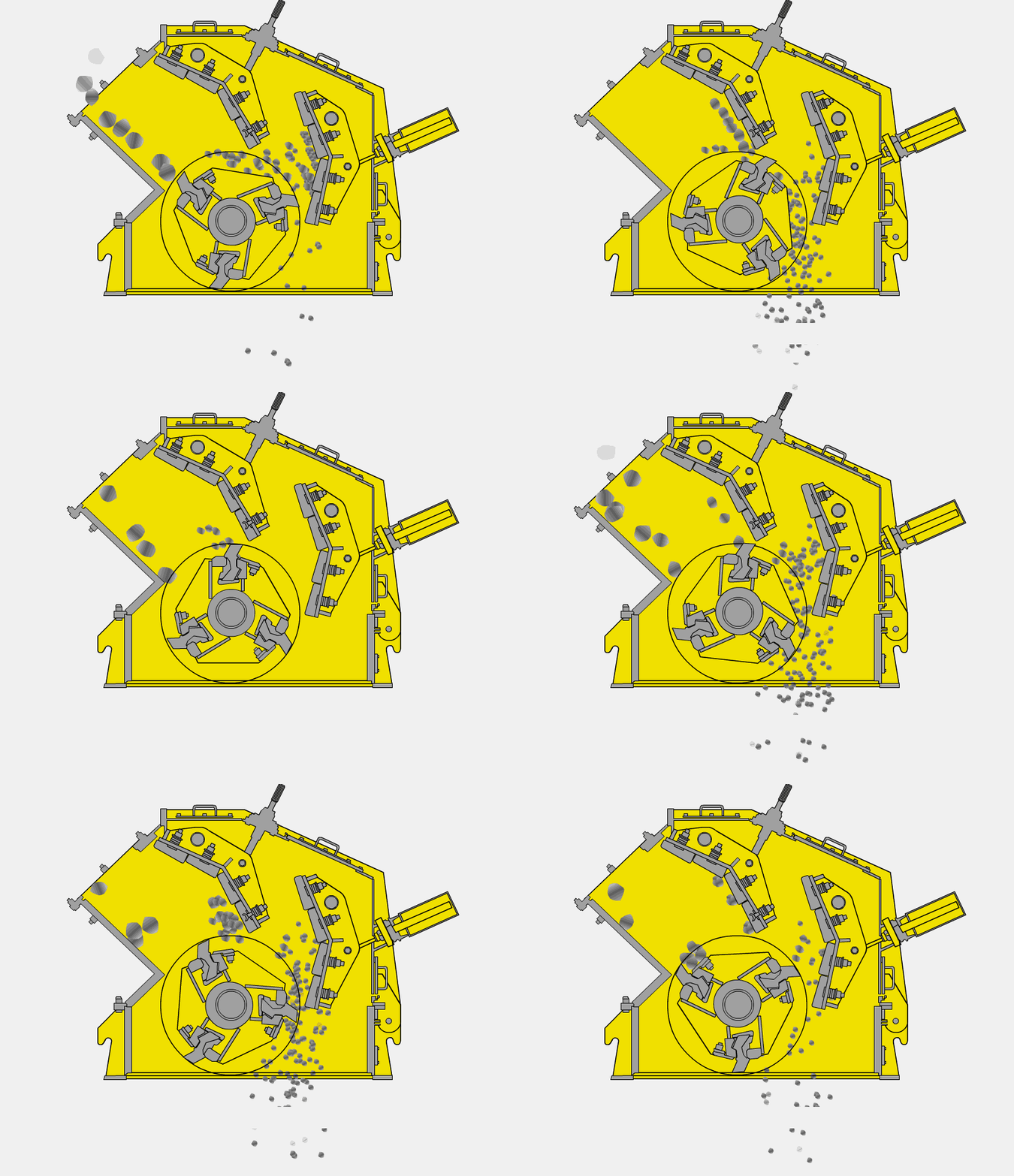
A rock impact crusher is a machine that utilizes impact energy to crush materials. During operation, the rotor spins at high speed, driven by an electric motor. As material enters the impact zone, it is crushed upon colliding with the blow bars on the rotor. It is then thrown against the impact assembly for further crushing, after which it rebounds from the impact liners back into the impact zone to undergo repeated crushing. This process continues as the material moves through the first, second, and third impact chambers—undergoing successive stages of size reduction—until it reaches the desired particle size and is discharged through the outlet.
Adjusting the gap between the impact assembly and the rotor allows for control over the output particle size and shape.
Advantages of Rock Impact Crusher
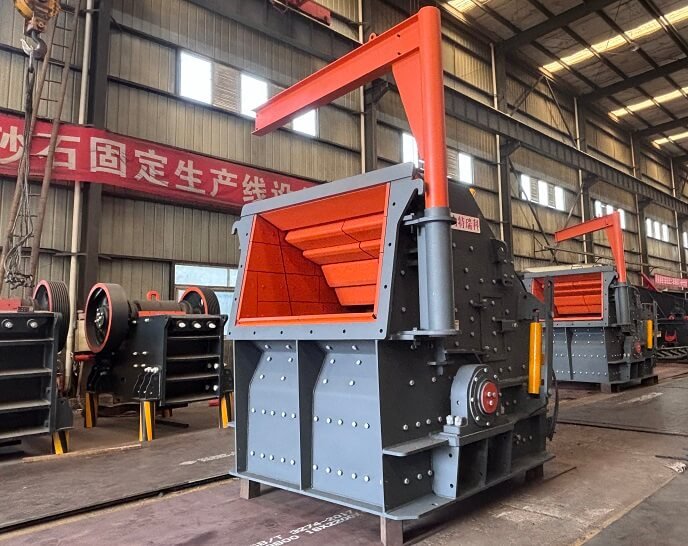
- Impact rock crushers are characterized by high crushing efficiency and large processing capacity. They utilize a high-precision, heavy-duty rotor design with a high moment of inertia. Combined with high-speed rotation, this significantly boosts the equipment’s throughput.
- The crushed product typically features a cubic shape, meeting the standards required for construction aggregates. Discharge particle size can be easily adjusted by modifying the gap between the impact rack and the rotor, or by using mechanical or hydraulic adjustment mechanisms.
- These rock crushers employ highly wear-resistant materials—such as high-chromium blow bars and high-manganese steel impact plates—to extend the service life of wear parts.
- Maintenance is facilitated by features such as detachable blow bar designs, ratchet-operated housing opening or hydraulic lifting mechanisms, and keyless connections, allowing for the rapid replacement of wear parts and thereby reducing maintenance costs and downtime.
- Impact mill rock crushers feature a relatively simple structure and are easy to maintain. They are typically equipped with convenient housing opening mechanisms (such as lifting devices) to facilitate internal inspections and component replacement.
- Advanced models feature a multifunctional, fully hydraulic operating system that enables easy housing opening, impact rack adjustment, and discharge size regulation. This reduces operator workload while improving equipment utilization and uptime.
- The equipment is usually equipped with overload protection devices—such as spring-loaded safety mechanisms or gravity-based safety systems—to protect against damage caused by uncrushable materials or overloading, thereby enhancing operational safety.
Impact Rock Crusher Applications
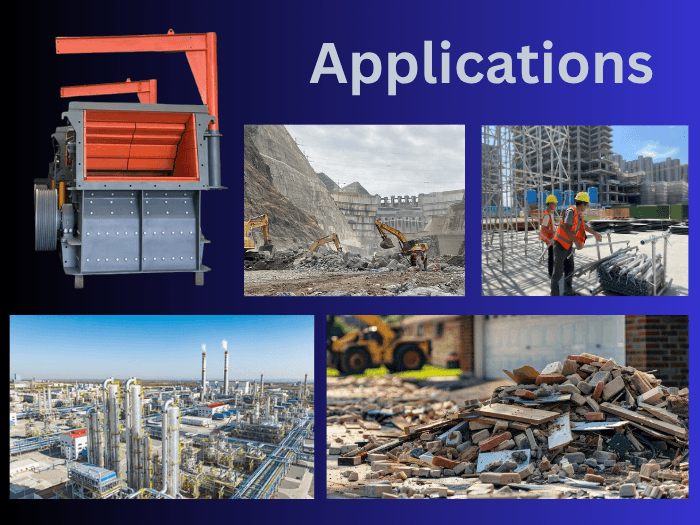
Rock impact crushers are primarily used in mining operations, construction waste processing, concrete aggregate production, and the crushing of medium-hard materials.
1) Industrial and Engineering Applications
Impact crushers are widely used in sectors such as metallurgy, chemicals, building materials, and hydropower engineering—particularly in scenarios requiring mobile processing operations. They are especially well-suited for crushing stone in projects involving highways, railways, and hydropower facilities. In mining, they are used to crush medium-hard ores and materials such as iron ore, sandstone, gypsum, coal gangue, and lump coal.
2) Construction Waste and Recycled Aggregate Processing
In urban demolition and construction waste management projects, impact mill rock crushers crush and screen construction waste into recycled aggregates of various sizes and shapes, laying the foundation for the resource recovery and reuse of such waste. These machines are capable of processing materials with high moisture content. Through the use of heating mechanisms or specialized designs, they prevent clogging and ensure efficient crushing performance.
Technical Parameters of Rock Impact Crusher
| Model | Rotor size (mm) | Feed Opening Size (mm) | Max. Feed Size(mm) | Capacity (t/h) | Motor Power (kW) | Overall Dimension (L*W*H) (mm) |
| PF-1214 | 1250×1400 | 400×1430 | 300 | 90-120 | 132-160 | 2850*2400×2900 |
| PF-1315 | 1320×1500 | 860×1520 | 350 | 120-220 | 180-200 | 3100x2800x3160 |
| PF-1320 | 1300×2000 | 900×2030 | 500 | 160-350 | 220-300 | 3320x3218x2613 |
| PF-1520 | 1500×2000 | 1315×2040 | 700 | 220-450 | 315-355 | 4138*3422×3649 |
| PF-1820 | 1800*2000 | 1620×2040 | 900 | 350-800 | 400 | 4471*3250×4008 |
相关产品
-
Single Rotor Impact Crusher
Single-rotor impact crushers are widely used for crushing various soft and medium-hard ores, enabling medium and fine crushing in secondary crushing processes. They are widely applied in various ore crushing, railway, highway, and construction industries for the production of artificial sand and gravel. They are primarily used in mining, construction, chemical, cement, and metallurgical industries.
- Capacity: 90-800 t/h
- Feed Size: <300-900 mm
- Output Size: 20-80 mm
-
Secondary Impact Crusher
A secondary impact crusher is a stone crushing machine that uses impact energy to crush stone. It can process materials with side lengths of 300-900 mm. The finished product is cubic in shape, and the particle size is adjustable.
- Capacity: 90-800 t/h
- Feed Size: <300-900 mm
- Output Size: 20-80 mm
-
PEV Jaw Crusher
The PEV series jaw crusher is suitable for the primary and secondary crushing of various hard ores—such as granite, river pebbles, basalt, and iron ore—with a compressive strength not exceeding 300 MPa. It is widely used in mining, quarrying, construction, and metallurgy.
- Capacity: 55 -1590 t/h
- Feed Size: ≤ 750 – 2000 mm
- Output Size: 40-300 mm
-
PEX Jaw Crusher
The PEX series fine-crushing jaw crusher is specialized equipment for crushing materials in industries such as metallurgy, mining, and construction. It is suitable for the medium and fine crushing of ores and rocks with a compressive strength of less than 250 MPa. It offers a high crushing ratio, uniform product particle size, low energy consumption, and easy maintenance.
- Capacity: 1 – 60 t/h
- Feed Size: ≤125 – 210 mm
- Output Size: 10 – 80 mm
-
Jaw Stone Crusher
The jaw stone crusher is a core piece of equipment used for the primary and secondary crushing of medium-hard materials. It crushes various ores and large stone blocks—such as river pebbles, granite, and construction waste—with compressive strengths ranging from 147 to 245 MPa.
- Capacity: 5-1000t/h
- Feed Size: ≤ 1200mm
- Output Size: 20-350 mm
-
Jaw Rock Crusher
The jaw rock crusher is a heavy-duty crushing equipment widely used in industries such as mining, metallurgy, construction materials, and chemicals. It is specifically designed for primary and secondary crushing of high-hardness materials.
- Capacity: 1-1000 t/h
- Feed Size: ≤1200 mm
- Output Size: 10-350 mm