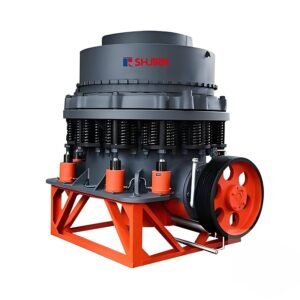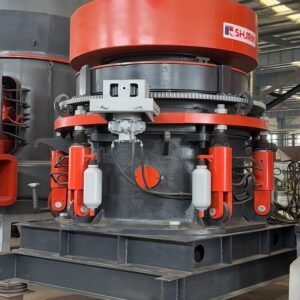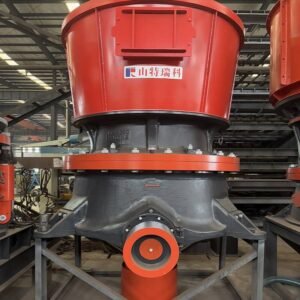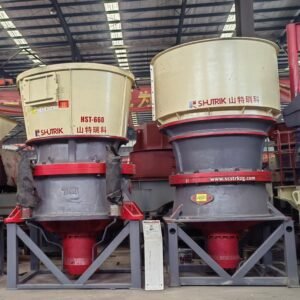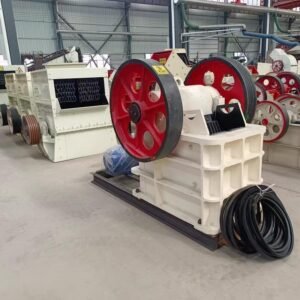
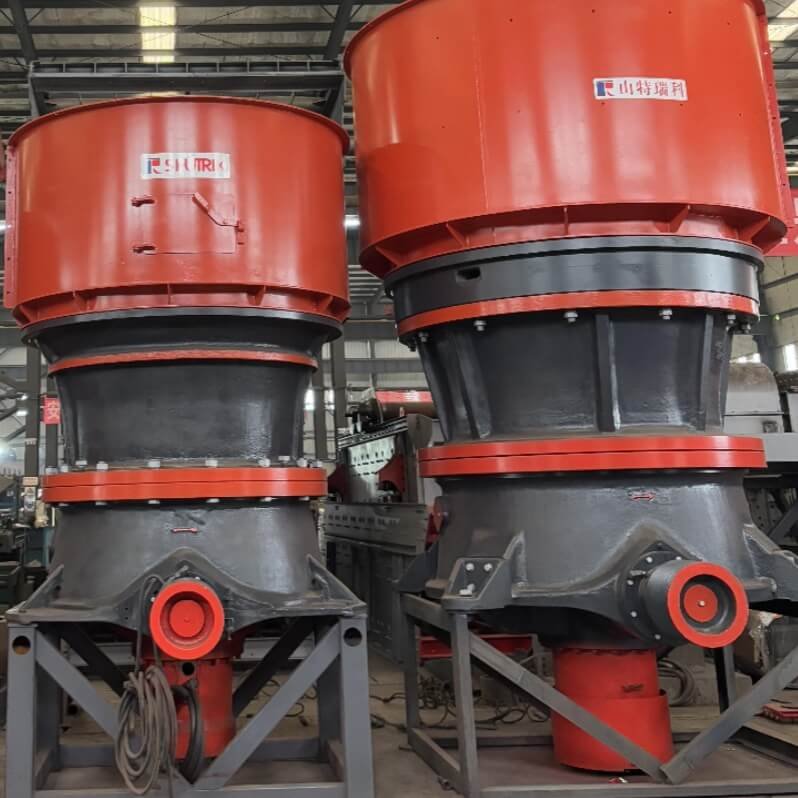
Cone stone crushers suit large and medium-sized enterprises in aggregate and ore processing, serving as secondary, tertiary, or quaternary crushing equipment for ores, rocks, and bedrock. Our stone cone crusher machines feature an optimized design that delivers low energy consumption, high crushing force, and robust production capacity. They offer a high degree of automation, ease of operation and maintenance, excellent product particle shape, and low wear-part costs.
Based on their structural design, these cone crushers include single-cylinder hydraulic cone crushers, compound cone crushers, standard hydraulic cone crushers, and multi-cylinder hydraulic cone crushers. Sandreck is a professional cone crusher distributor. Our equipment is widely used in industries including aggregate yards, concrete sand production, dry-mixed mortar, construction waste recycling, manufactured sand production, and power plant desulfurization. They are designed to crush various ores and rocks of medium to high hardness (up to 350 MPa), such as calcite, limestone, granite, river pebbles, dolomite, and bluestone.
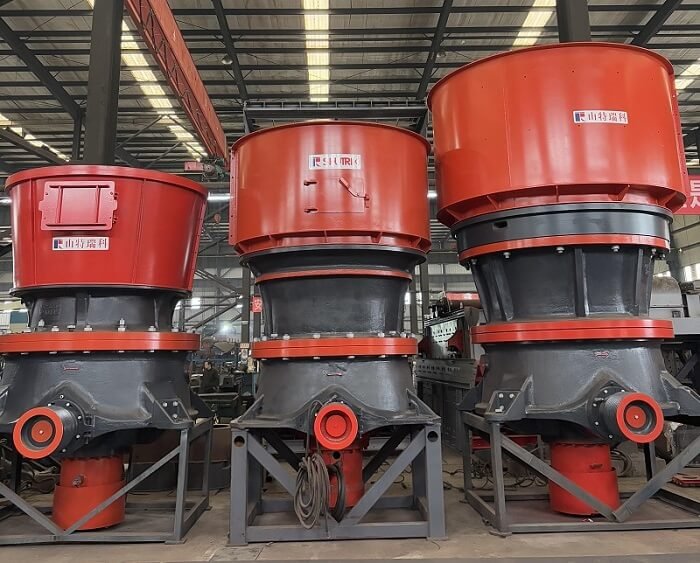
Stone Cone Crusher Working Principle
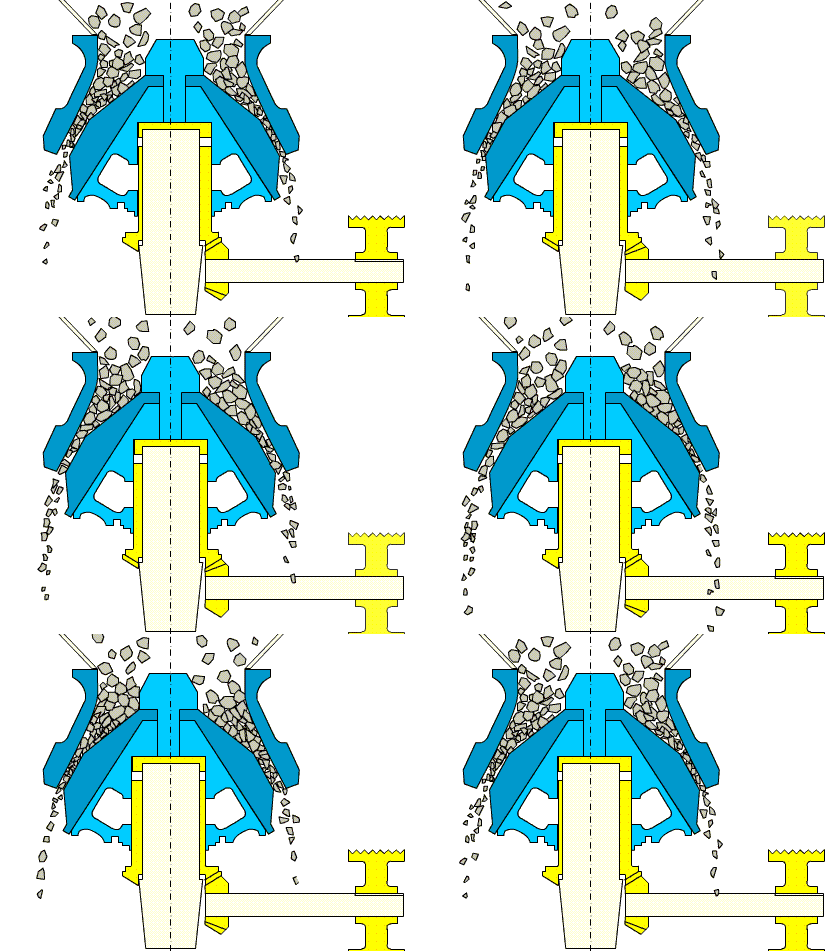
The crushing process takes place between a stationary concave (fixed cone) and a gyrating mantle (moving cone). During operation, a motor drives the cone stone crusher’s horizontal shaft via V-belts and pulleys. This horizontal shaft then drives the eccentric sleeve to rotate through a gear set.
Driven by the eccentric sleeve, the stone crusher‘s main shaft undergoes gyratory motion, causing the mantle surface to alternately approach and recede from the concave surface. Consequently, the stone material within the crushing chamber is continuously subjected to compression, bending, and impact forces, causing it to break. The crushed material is then discharged by gravity through the outlet at the bottom of the crusher.
Advantages of Cone Stone Crusher
1. High Crushing Ratio
The combination of a high-performance crushing chamber design and a high crushing frequency significantly boosts the stone cone crusher’s processing capacity, enabling a single unit to achieve an hourly output of up to 2,128 tons.
2. Inter-particle Crushing for Superior Particle Shape
Using the principle of inter-particle (lamination) crushing, the machine produces predominantly cubic material, minimizing flaky or elongated particles.
3. Diverse Models and Selection Options
A variety of chamber designs meet different particle-size requirements. The cone stone crusher series includes models for coarse, medium, and fine crushing, allowing users to select the right equipment for their specific needs.
4. Simple Structure and Easy Maintenance
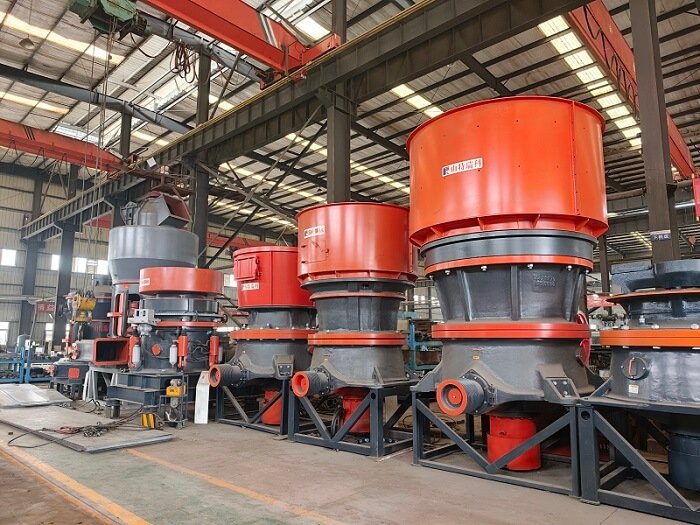
The cone stone crusher features a simple structure that is easy to operate and maintain. Adjusting the discharge opening is quick and convenient, while maintenance tasks are efficient and labor-saving. Notably, the liners can be replaced rapidly, minimizing downtime.
Stone Cone Crusher Applications
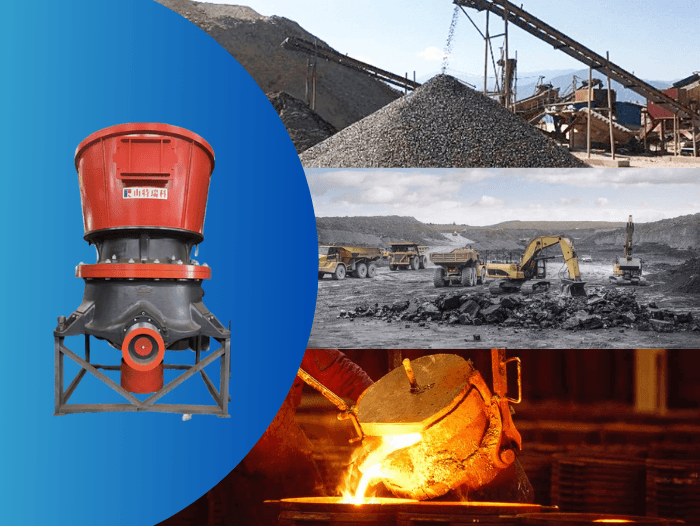
1. Mining Operations
The stone cone crusher is a core piece of equipment for crushing metal ores (such as iron and copper). It is particularly well-suited for processing high-hardness ores (compressive strength ≤350 MPa). In mineral processing plants, for instance, hydraulic cone crushers are commonly used for secondary and tertiary crushing. They offer a crushing ratio of 5:1 to 8:1, reducing ore from ≤350 mm to ≤30 mm and meeting ball mill feed requirements.
2. Sand and Aggregate Production
In manufactured sand and crushed stone production, cone rock crushers are often used for secondary crushing (processing materials such as granite and basalt). The finished product size is adjustable from 3–60 mm.
3. Metallurgy and Chemical Industry
It is used to pre-crush raw materials such as coke and silica. When processing sticky or moist materials, the equipment requires heating elements or anti-clogging designs.
Technical Parameters of Cone Stone Crusher
| Model | Chamber | Max Feeding Size (mm) | Minimum Discharging Size (mm) | Capacity (T/H) | Max Motor Power (kW) |
| HST420
|
S1 (extra coarse) | 240 | 22 | 85-170 | 90
|
| S2(medium coarse) | 200 | 19 | 70-130 | ||
| HST420 | H(fine) | 135 | 10 | 45-130 | |
| H2(medium fine) | 65 | 8 | 35-80 | ||
| H3(extra fine) | 38 | 4 | 27-60 | ||
| HST430 | S1 (extra coarse) | 360 | 25 | 120-345 | 160 |
| S2(medium coarse) | 300 | 33 | 105-305 | ||
| S3(coarse) | 235 | 19 | 90-275 | ||
| HST430 | H(fine) | 185 | 13 | 60-210 | |
| H2(medium fine) | 90 | 10 | 65-165 | ||
| H3(extra fine) | 50 | 6 | 48-105 | ||
| HST440 | S1 (extra coarse) | 450 | 35 | 255-605 | 250 |
| S2(medium coarse) | 400 | 29 | 215-515 | ||
| S3(coarse) | 300 | 25 | 190-490 | ||
| HST440 | H1 (fine) | 215 | 16 | 110-395 | |
| H2(medium fine) | 110 | 13 | 115-340 | ||
| H3(extra fine) | 70 | 8 | 90-225 | ||
| HST660 | S1 (extra coarse) | 560 | 41 | 355-1050 | 315 |
| S2(medium coarse) | 500 | 38 | 305-895 | ||
| HST660 | H1 (fine) | 275 | 16 | 170-665 | |
| H2(medium fine) | 135 | 16 | 190-505 | ||
| H3(extra fine) | 65 | 13 | 205-320 | ||
| HST870 | H1(fine) | 300 | 22 | 448-1512 | 520 |
| H2(medium fine) | 155 | 19 | 400-1372 | ||
| H3(extra fine) | 80 | 10 | 280-775 | ||
| HST880 | H1 (fine) | 370 | 25 | 480-2128 | 750 |
| H2(medium fine) | 195 | 22 | 552-1605 | ||
| H3(extra fine) | 85 | 10 | 365-885 |
相关产品
-
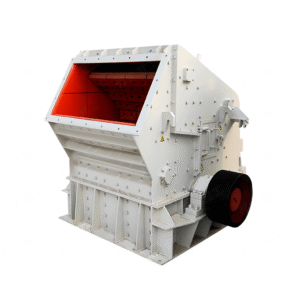
Impact Stone Crusher
Stone impact crushers can be used for secondary and tertiary crushing (medium and fine crushing) operations. They are suitable for various soft to medium-hard materials, such as granite, concrete blocks, basalt, and limestone. They feature a simple structure, reliable performance, and a compact footprint, all at a relatively affordable price.
- Capacity: 90-800 t/h
- Feed Size: <900 mm
- Output Size: 10-80 mm
-
Symons Cone Crusher
The Simmons cone crusher relies on springs for mechanical overload protection. The discharge port requires manual adjustment during machine shutdown. The machine has a simple structure, highly interchangeable parts, and a low operating threshold. It is suitable for small to medium-sized sand and gravel mines.
- Capacity: 12-800 t/h
- Feed Size: 35-300 mm
- Output Size: 3-60 mm
-
Multi Cylinder Hydraulic Cone Crusher
Multi-cylinder hydraulic cone crushers are typically used as tertiary crushers in stone crushing and sand-making production lines. They can process materials such as quartz, limestone, river pebbles, bluestone, and granite. They are widely used in mining, construction, chemical, transportation, and many other industries.
- Capacity: 100-1200 t/h
- Feed Size: 80-350 mm
- Output Size: 13-38 mm
-
Single Cylinder Hydraulic Cone Crusher
Single-cylinder hydraulic cone crushers are widely used in metallurgy, construction, highway, chemical, and building materials industries, and are suitable for medium crushing of ores and rocks with medium to high hardness and high abrasiveness. They are particularly widely used for crushing metal ores and building aggregates.
- Capacity: 27-2128 t/h
- Feed Size: 38-560 mm
- Output Size: 4-41 mm
-
Cone Rock Crusher
The rock cone crusher is a high-performance crushing machine. It is primarily used for secondary and tertiary crushing in metal mining and construction aggregate processing. With its strong crushing capability and high output, it crushes medium-hard materials.
- Capacity: 10-2128 t/h
- Feed Size: 50-560 mm
- Output Size: 6-41 mm
-
PEX Jaw Crusher
The PEX series fine-crushing jaw crusher is specialized equipment for crushing materials in industries such as metallurgy, mining, and construction. It is suitable for the medium and fine crushing of ores and rocks with a compressive strength of less than 250 MPa. It offers a high crushing ratio, uniform product particle size, low energy consumption, and easy maintenance.
- Capacity: 1 – 60 t/h
- Feed Size: ≤125 – 210 mm
- Output Size: 10 – 80 mm