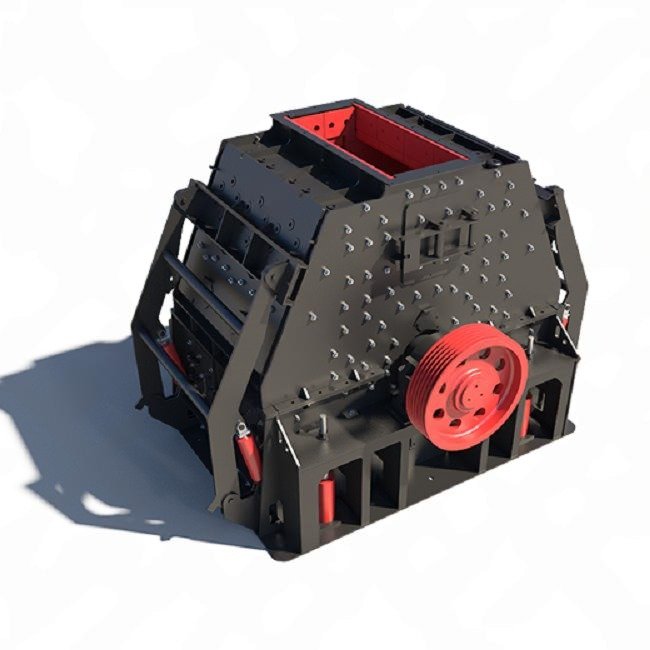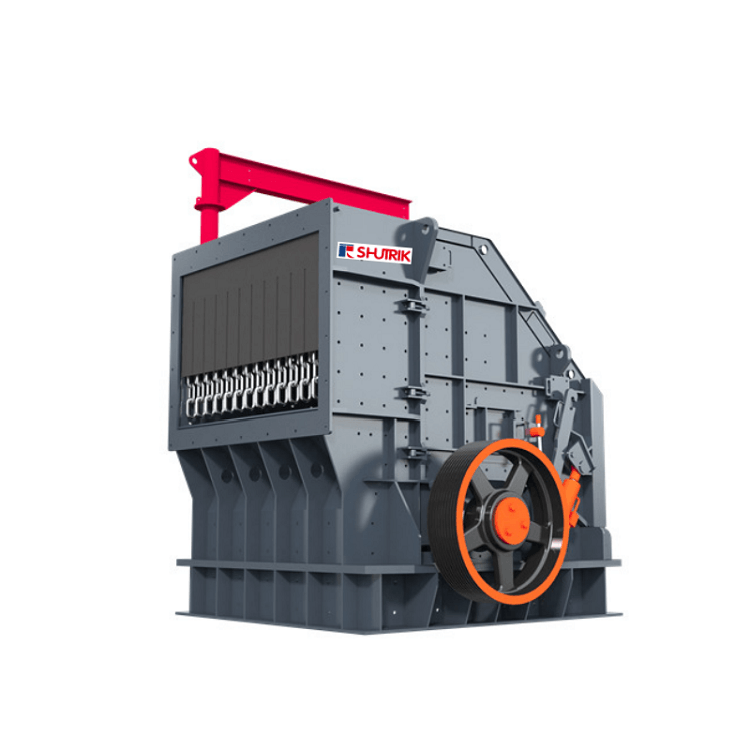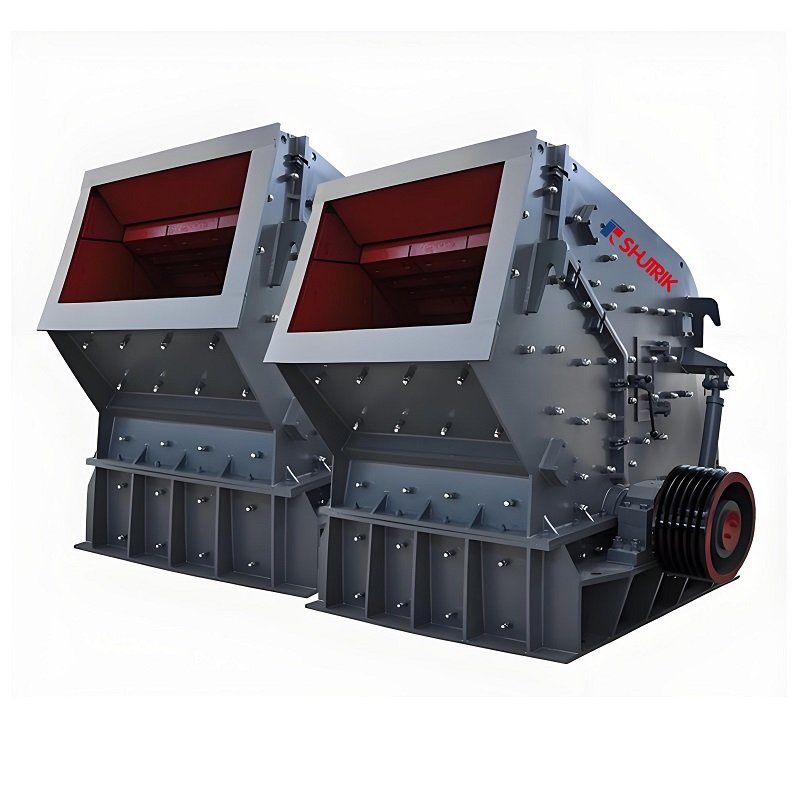

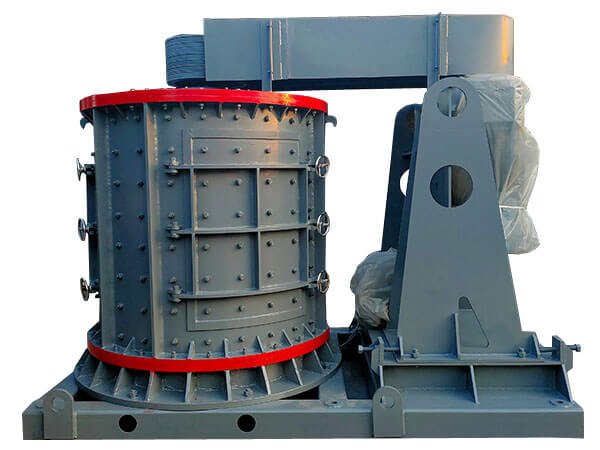
The vertical compound crusher features a vertical design that combines the characteristics of both impact crushers and hammer crushers. It is capable of performing primary, secondary, and tertiary crushing within a single operational cycle.
This compound crusher offers a high crushing ratio and can accommodate a wide range of material moisture levels, making it suitable for processing materials with high water content. The output particle size is fully adjustable. Designed without screen bars, the unit is resistant to clogging, even when processing materials with high silt or sand content. Uncrushable objects that enter the machine are automatically discharged, preventing damage to the equipment. The stone crusher is highly efficient, features a unique structure, operates smoothly, produces low noise, and is easy to maintain. Worn parts can be conveniently replaced by simply opening the access door to the crushing chamber.

The vertical shaft compound crusher is a common piece of equipment in stone crushing plants and sand-making production lines. It is primarily used for the fine crushing of medium-hard ores (with a compressive strength of ≤200 MPa), such as dolomite, coal gangue, and sandstone. It is also suitable for sand production from hard rock and for crushing high-temperature clinker.
Vertical Compound Crusher Working Principle
The primary working component of a high-efficiency vertical shaft compound crusher is a rotor equipped with hammers (also known as hammer heads). The rotor consists of a main shaft, discs, pins, and hammers.
An electric motor drives the rotor to rotate at high speed within the crushing chamber. Material is fed into the machine through an upper feed opening, where it is pulverized by the striking, impacting, shearing, and grinding actions of the high-speed rotating hammers. A screen plate is positioned below the rotor. Material particles smaller than the screen apertures pass through the plate and are discharged. Coarser particles—those larger than the screen apertures—remain on the screen plate, where they continue to be subjected to the striking and grinding actions of the hammers until they are reduced to a size that allows them to pass through the screen plate and exit the machine.

Advantages of Vertical Shaft Compound Crusher
1. High crushing ratio. It accepts a maximum feed size of 100–220 mm, with an output in which 70%–90% or more of the material is ≤3 mm.
2. High throughput. The crushing process is of a “pass-through” type. The high volume and rapid flow of material result in high production capacity.
3. High efficiency and energy savings. When used in conjunction with a grinding mill, this vertical compound crusher machine can increase the mill’s output by approximately 40% while reducing the system’s power consumption by about 30%.
4. Long service life. Wear-prone components are crafted from high-hardness, high-toughness multi-alloy wear-resistant materials, ensuring minimal wear and extended durability. The hammer heads are reversible, which significantly improves their utilization rate and increases their service life by approximately fivefold.
5. Uniform and adjustable product particle size. The gap between the hammer heads and the impact plates can be finely adjusted, ensuring a consistent particle size in the final product.
Vertical Compound Crusher Applications
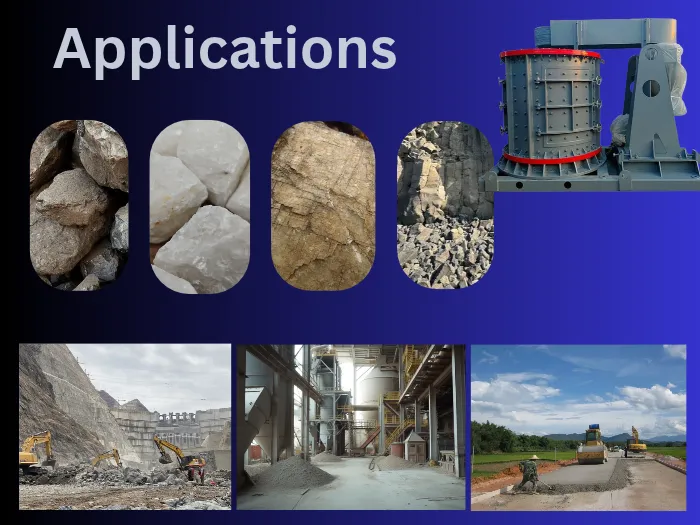
The vertical shaft compound crusher is widely applicable to the fine crushing of raw materials and clinker in cement plants. It serves as an ideal piece of equipment for technical upgrades in cement facilities, facilitating a “more crushing, less grinding” approach that enhances energy efficiency and reduces consumption.
Furthermore, the vertical compound crusher is suitable for the fine crushing of medium-hardness materials, including dolomite, calcined bauxite, lead-zinc ore, serpentine, blast furnace slag, coal gangue, and phosphate rock. It is also particularly well-suited for processing hard limestone, dolomite, granite, and basalt—whether for the production of manufactured sand or for the creation of aggregate used in highway pavement construction.
Technical Parameters of Vertical Shaft Compound Crusher
| Model | Feeding Size (mm) | Output Size (mm) | Main Shaft Speed (r/min) | Capacity (t/h) | Power (kW) |
| PFL-750 | ≤100 | ≤3,70-90% | 800~1350 | 8~20 | 45 |
| PFL-1000 | ≤120 | ≤3,70-90% | 650~980 | 15~30 | 55 |
| PFL-1250 | ≤150 | ≤3,70-90% | 510~770 | 35~45 | 90 |
| PFL-1500 | ≤180 | ≤3,70-90% | 430~640 | 50~70 | 132 |
| PFL-1750 | ≤200 | ≤3,70-90% | 420~540 | 70~100 | 160 |
| PFL-2000 | ≤220 | ≤3,70-90% | 360~500 | 90~120 | 200 |
Related products
-
Reversible Hammer Crusher
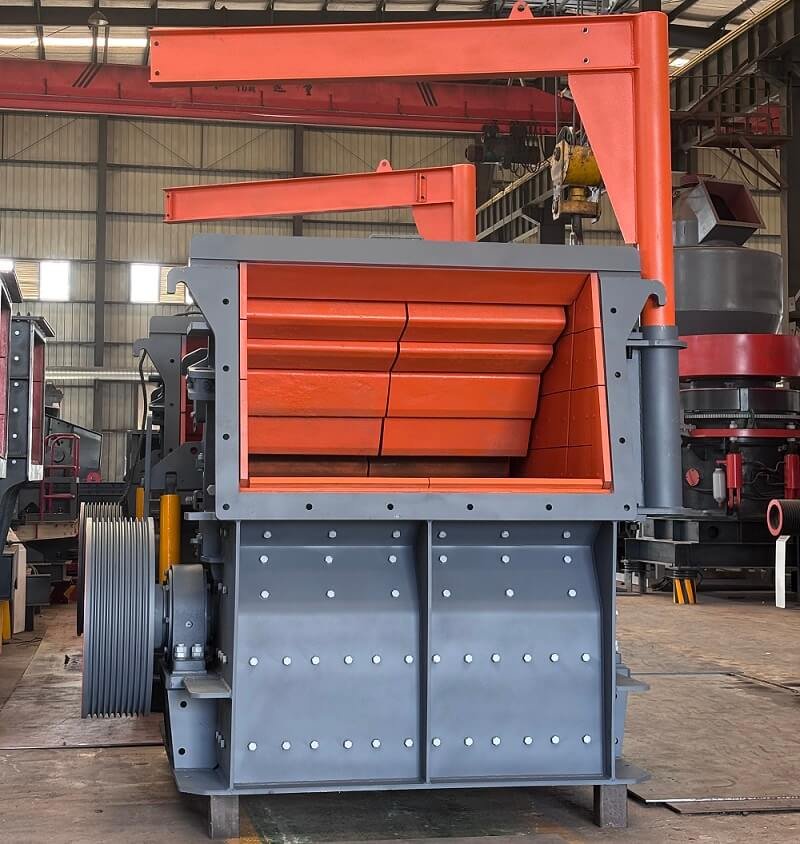
The reversible hammer mill crusher is specifically designed for the fine crushing of medium-hardness materials such as coal, coke, and slag. It is widely used in material pre-processing stages across industries, including thermal power generation, coking, and steel manufacturing. It is particularly well-suited for crushing sticky or damp materials with high moisture content and is capable of achieving a fine output product with a particle size of ≤3 mm.
- Capacity: 83-360 t/h
- Feed Size: ≤80 mm
- Output Size: ≤3 mm
-
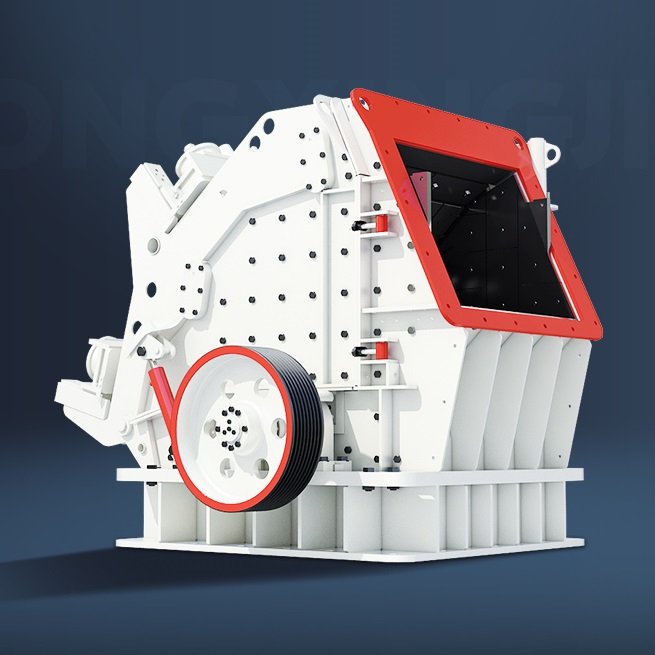
CI Series Impact Crusher
The CI impact crusher features a high-precision rotor with large rotational inertia, a multi-functional fully hydraulic operating system, and an involute crushing chamber. It offers excellent overall performance and is an ideal choice for coarse and medium crushing in large-capacity crushing production lines.
- Capacity: 60-800 t/h
- Feed Size: <300-1000 mm
- Output Size: 10-80 mm
-
Horizontal Impact Crusher
Horizontal shaft impact crushers are widely used in industries such as building materials, ore crushing, railways, highways, transportation, energy, cement, mining, and chemicals for medium and fine crushing of materials. Their discharge particle size is adjustable, allowing for diverse crushing specifications.
- Capacity: 90-800 t/h
- Feed Size: <300-900 mm
- Output Size: 20-80 mm
-
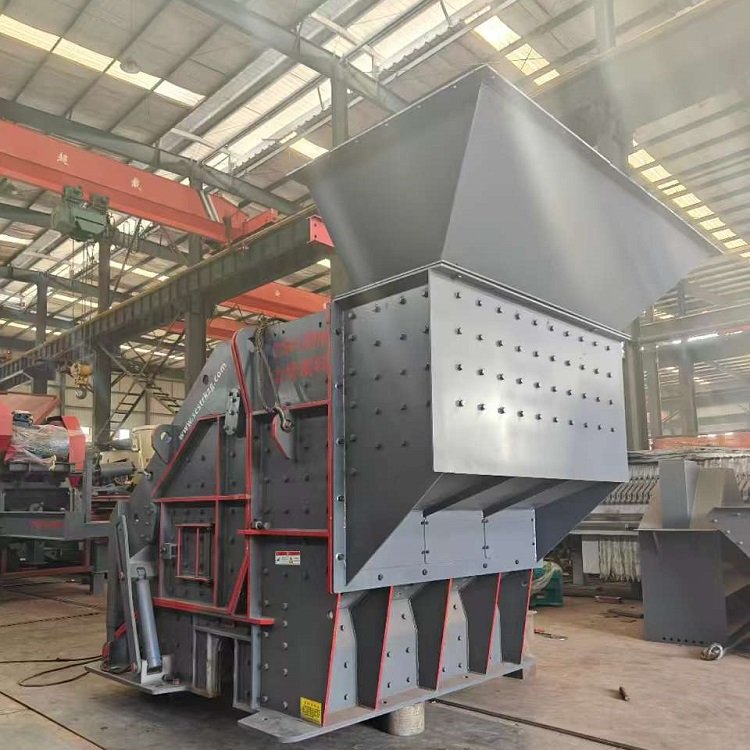
PF Series Impact Crusher
The PF series impact crusher can crush various medium and fine materials (granite, limestone, concrete, etc.) with a feed particle size not exceeding 900mm and a compressive strength not exceeding 350MPa. It features a large crushing ratio, high crushing efficiency, and convenient maintenance.
- Capacity: 90-800 t/h
- Feed Size: <300-900 mm
- Output Size: 20-80 mm
-
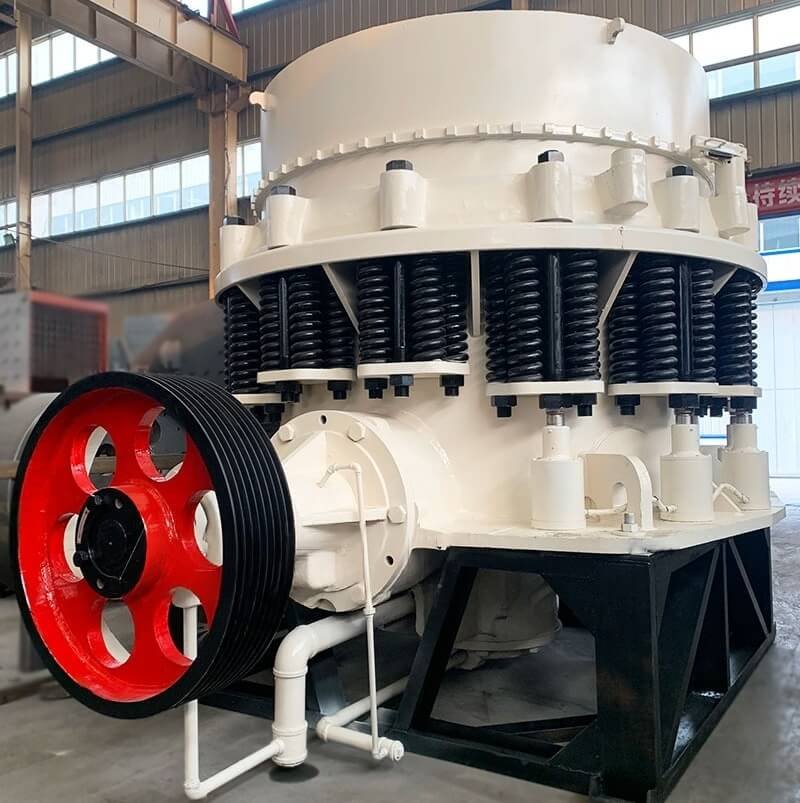
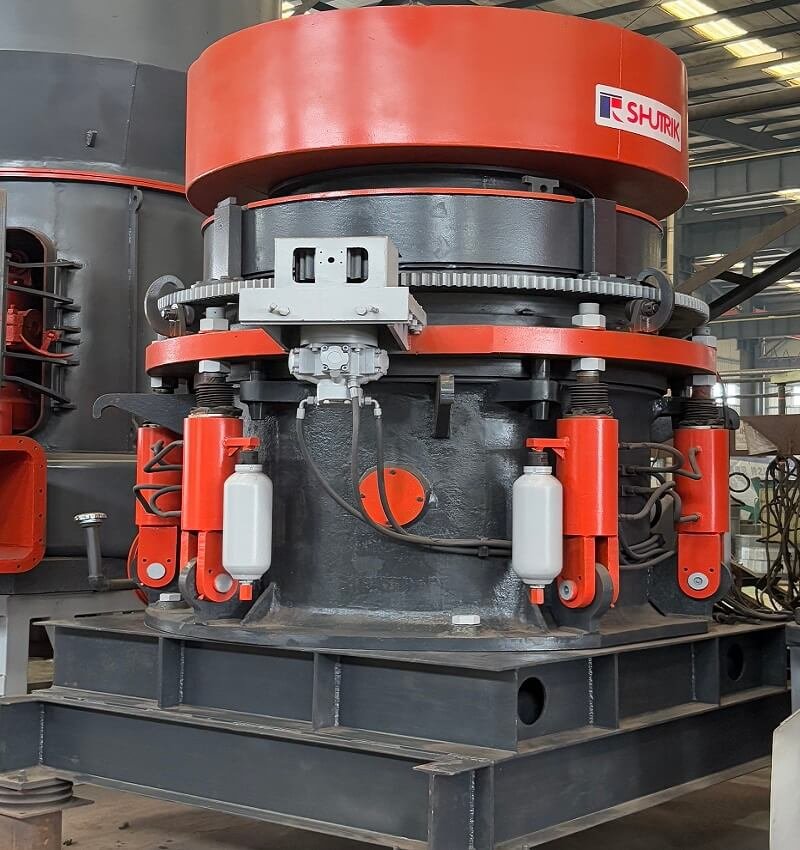
Cone Rock Crusher
The rock cone crusher is a high-performance crushing machine. It is primarily used for secondary and tertiary crushing in metal mining and construction aggregate processing. With its strong crushing capability and high output, it crushes medium-hard materials.
- Capacity: 10-2128 t/h
- Feed Size: 50-560 mm
- Output Size: 6-41 mm
-
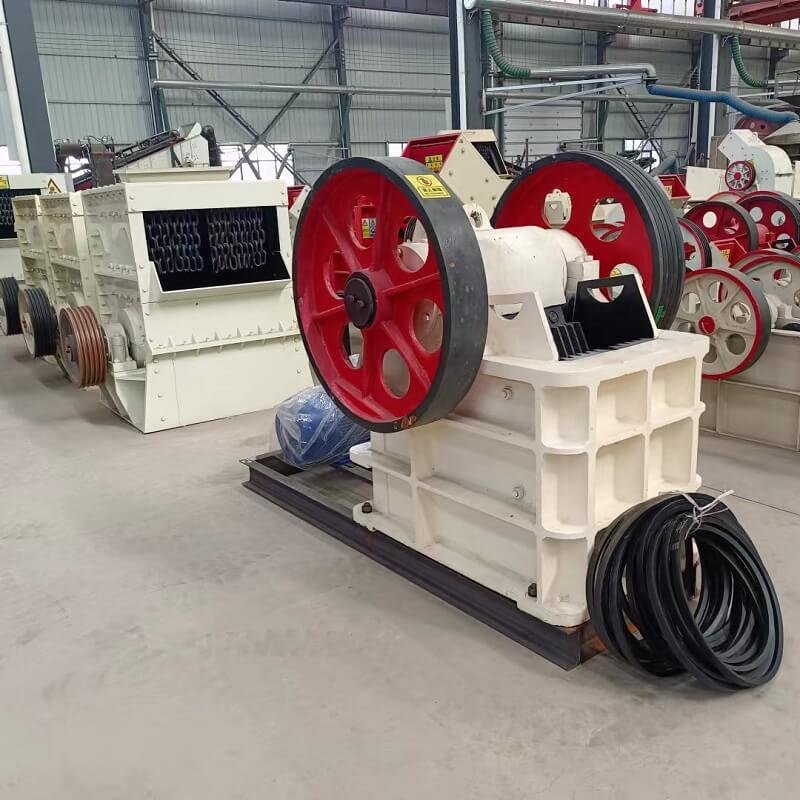
PEX Jaw Crusher
The PEX series fine-crushing jaw crusher is specialized equipment for crushing materials in industries such as metallurgy, mining, and construction. It is suitable for the medium and fine crushing of ores and rocks with a compressive strength of less than 250 MPa. It offers a high crushing ratio, uniform product particle size, low energy consumption, and easy maintenance.
- Capacity: 1 – 60 t/h
- Feed Size: ≤125 – 210 mm
- Output Size: 10 – 80 mm