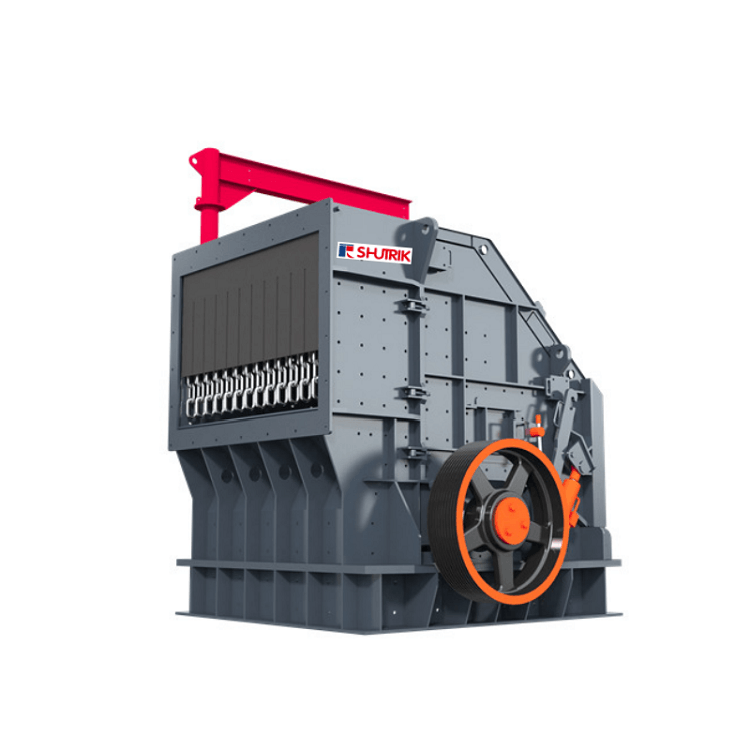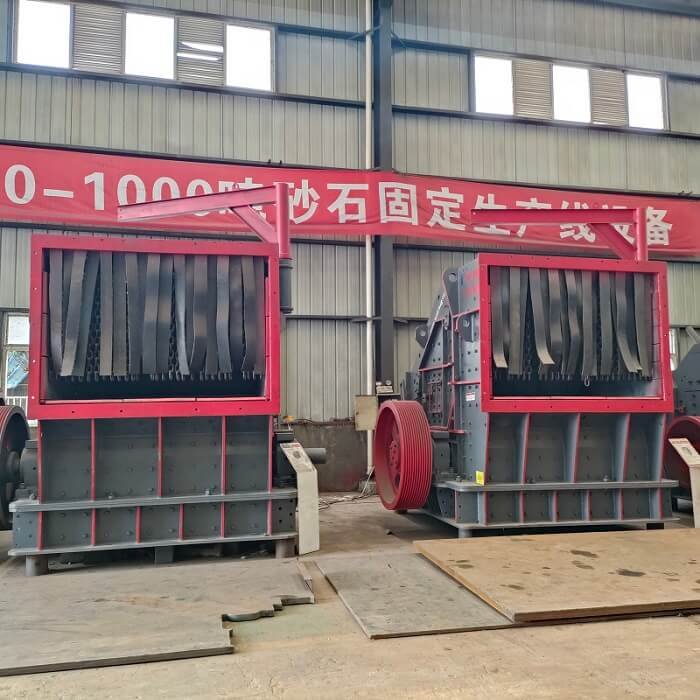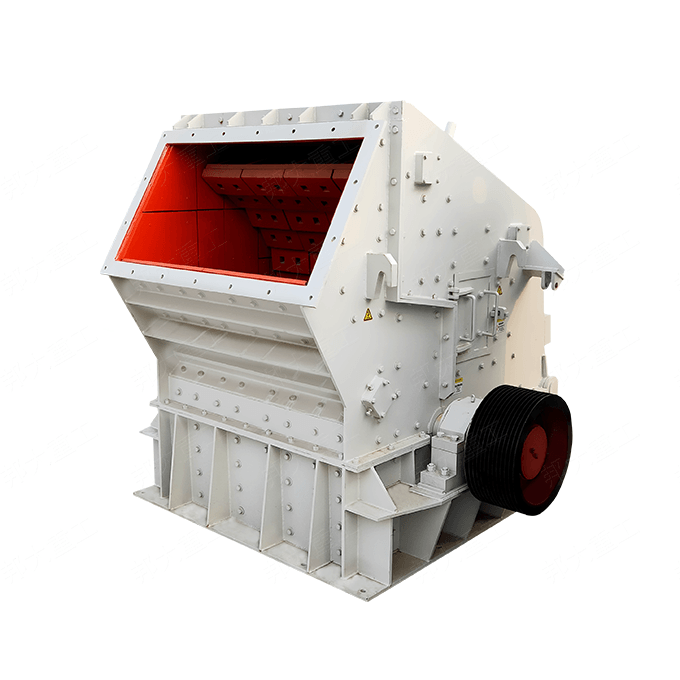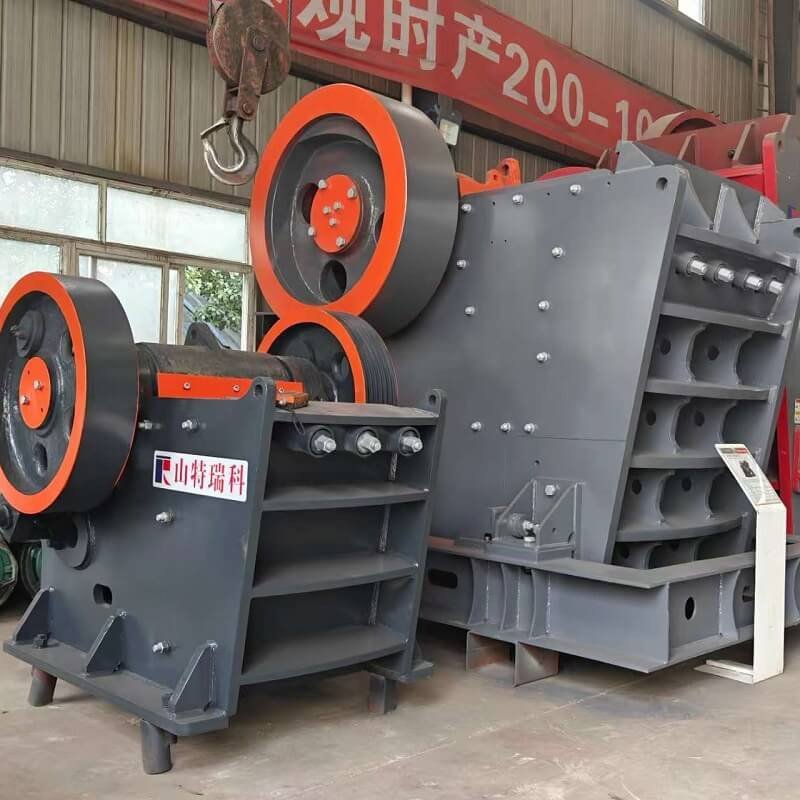

A heavy hammer crusher breaks material through high-speed impacts from its rotating hammer assembly. This type of crusher produces the final output in a single pass, eliminating the need for secondary crushing or shaping stages and reducing costs by approximately 40%. Key advantages include a high crushing ratio, high throughput, uniform product particle size, low energy consumption, and excellent environmental performance.
Sandreck’s heavy hammer crushers support both dry and wet crushing processes. They are ideal for the fine crushing of medium-hardness and brittle materials across sectors such as mining, cement, coal, construction materials, and the chemical/fuel industry. For large-scale models, the gap between the hammer heads and the liner plates can be adjusted to modify the output particle size, allowing the equipment to be tailored to the specific crushing requirements of individual users.

Structure of Heavy Hammer Crusher
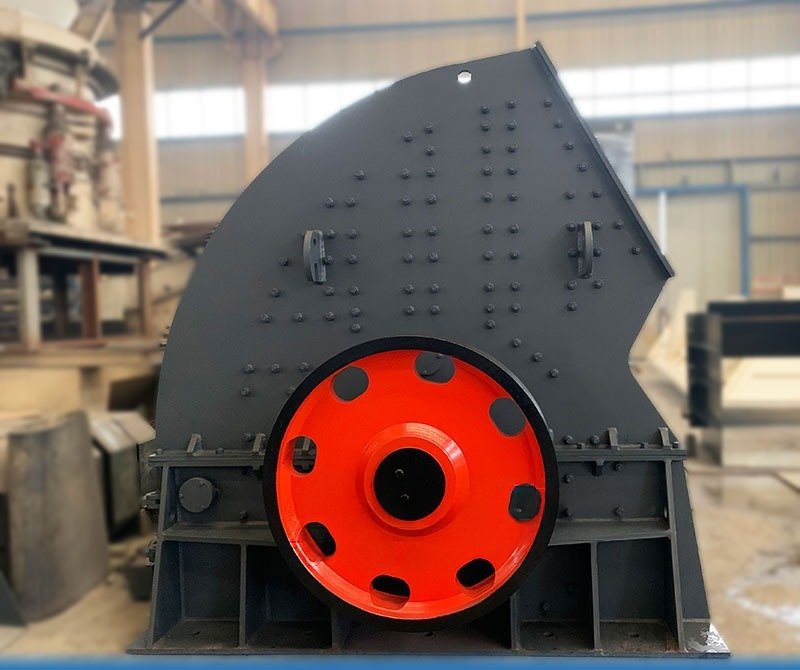
The heavy hammer crusher primarily consists of a rotor, main shaft, hammer heads, housing, drive system, screen plates (or impact liner plates), and a hydraulic system. The rotor, which drives the movement of the hammer heads, is composed of a main shaft, discs, pins, and the hammer heads themselves.
Key components of the Sandreck heavy hammer crusher are manufactured using specialized processes and materials to extend their service life. The hammer heads are crafted from wear-resistant materials, such as high-strength, thermally bonded bimetallic high-chromium alloys. The main shaft is made of 42CrMo alloy steel, which offers a significantly longer service life compared to conventional main shafts.
The equipment features a “snail-shell” (volute-shaped) housing with a streamlined design. When combined with adjustable internal liner plates or impact liner plates, this design effectively resolves the issue of material clogging—a common problem in traditional crushing equipment.

Heavy Hammer Crusher Working Principle
An electric motor drives the rotor to rotate at high speed within the crushing chamber. Material is fed into the machine through an upper inlet, where it is pulverized by the high-speed striking, impact, shearing, and grinding actions of the hammers. Subsequently, the crushed material collides with newly incoming material, leading to further size reduction—effectively combining primary and secondary crushing into a single stage.
A screen plate is positioned beneath the rotor. Particles smaller than the screen apertures pass through the plate and are discharged, while coarser particles—those larger than the apertures—remain on the screen plate, where they continue to be struck and ground by the hammers until they are reduced sufficiently to pass through the screen.

Features of Heavy Hammer Crusher
1) High Crushing Ratio and Excellent Product Shape
Capable of handling large feed sizes—up to 1600mm—while producing a fine output with a high crushing ratio. The final product size can be adjusted to meet specific requirements, ranging from coarse to medium or fine gradings.
2) Grate-Free Design for Single-Stage Crushing
This heavy hammer crusher accepts large feed sizes and delivers a fine output. Through the use of adjustable liners and a gravity-flow chute design, it achieves impact-based crushing, shaping, and gravity-assisted discharge. It consolidates two-stage crushing into a single stage, effectively replacing a combination of a jaw crusher and an impact crusher. This results in lower capital and operational costs, reducing investment requirements by 35% for the same production capacity.
3)Low Fines Generation
Material undergoes three stages of crushing, resulting in a cubic particle shape with an optimal size distribution. The adjustable liners feature a unique gravity-flow chute design; material that is already sufficiently small passes through the gaps and is discharged automatically. This prevents over-crushing and minimizes the production of unwanted fines.
4) Capable of Processing Both Dry and Wet Materials
The crushing chamber of this heavy hammer crusher is engineered based on dynamic principles. It offers increased throughput and is capable of processing wet materials, overcoming the common issues of clogging and low output often associated with traditional hammer crushers.
5) Independent Hammer-Shaft Retaining Plate Structure
The design incorporates independent retaining plates for each hammer shaft, allowing for individual control. This makes the process of replacing hammer heads significantly more convenient and efficient.
6) Hydraulic Impact Frame Adjustment
As hammer heads or adjustable liners experience wear, the gap between them can be easily regulated. This is achieved via a hydraulic adjustment system that modifies the shims behind the spring-loaded housing, allowing for precise control over the clearance between the liners and the hammer heads.
Heavy Hammer Crusher Applications
Heavy hammer crushers are widely used across various industrial sectors, thanks to their high reduction ratio, high throughput, and low energy consumption.
These rock crushers are primarily employed in industries such as mining, construction materials, highway and railway infrastructure, water conservancy and hydropower, cement, chemicals, ceramics, glass, manufactured sand and gravel, coal, non-metallic mineral extraction, and the production of eco-friendly construction materials.
They are mainly designed for crushing materials of low to medium hardness—such as limestone, bluestone, dolomite, coal gangue, shale, gypsum, and brick or tile waste—typically with a compressive strength not exceeding 150 MPa to 200 MPa.
In large-scale sand and aggregate production lines, heavy-duty hammer crushers serve as the core crushing equipment, capable of achieving hourly outputs of up to several thousand tons. In cement manufacturing, they are used to crush raw materials like limestone for the preparation of raw meal.

Technical Parameters of Heavy Hammer Crusher
| Model
|
Rotor Size | Feeding Port Size | Feeding Size (mm)
|
Capacity(t/h)
|
Motor Power (kW)
|
Overall Dimension |
| diameter x length (mm) | W*L (mm) | L*W*H(mm) | ||||
| PCZ1380 | 1310×790 | 850×800 | <600 | 100-160 | 132 | 2818x2100x2390 |
| PCZ1510 | 1500×950 | 1000×900 | <700 | 160-210 | 132 | 3260x2414x2750 |
| PCZ1512 | 1500×1160 | 1200×900 | <750 | 250-320 | 160 | 3260x2624x2750 |
| PCZ1615 | 1650×1452 | 1500×1200 | <1000 | 420-500 | 200 | 3456x2915x3185 |
| PCZ1620 | 1660×1900 | 2000×1200 | <1200 | 800-1000 | 400 | 3500x3100x3200 |
| PCZ1820 | 1800×1964 | 2000×1200 | <1200 | 1000-1200 | 450 | 3270x3210x3520 |
| PCZ2125 | 2100×2486 | 2600×1690 | <1600 | 2000-2500 | 1250 | 3728x4565x4667 |

Related products
-
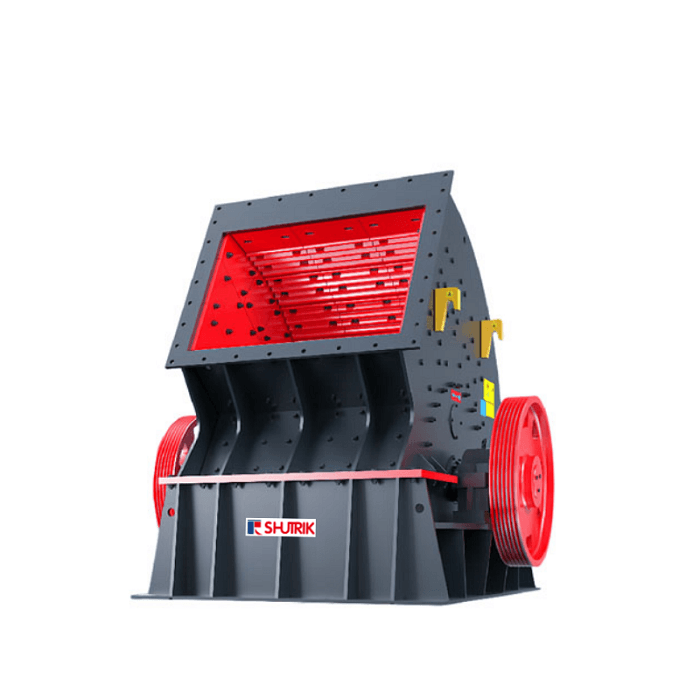
Impact Hammer Crusher
The hammer impact crusher combines the advantages of both impact crushers and hammer crushers. It is suitable for crushing materials such as limestone and bluestone, with a maximum feed size of up to 1600 mm.
- Capacity: 100-2500 t/h
- Feed Size: ≤1600 mm
- Output Size: ≤25–30mm
-
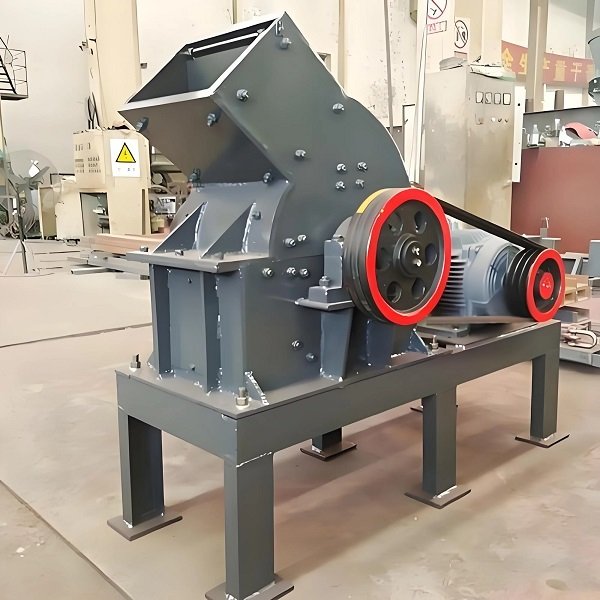
Hammer Rock Crusher
Hammer rock crushers are suitable for crushing medium-hard and brittle materials across industries such as mining, cement, coal, metallurgy, construction materials, road construction, and chemicals. They feature a high crushing ratio, high production capacity, and uniform product particle size.
- Capacity: 3-95 t/h
- Feed Size: ≤350 mm
- Output Size: 10-35 mm
-
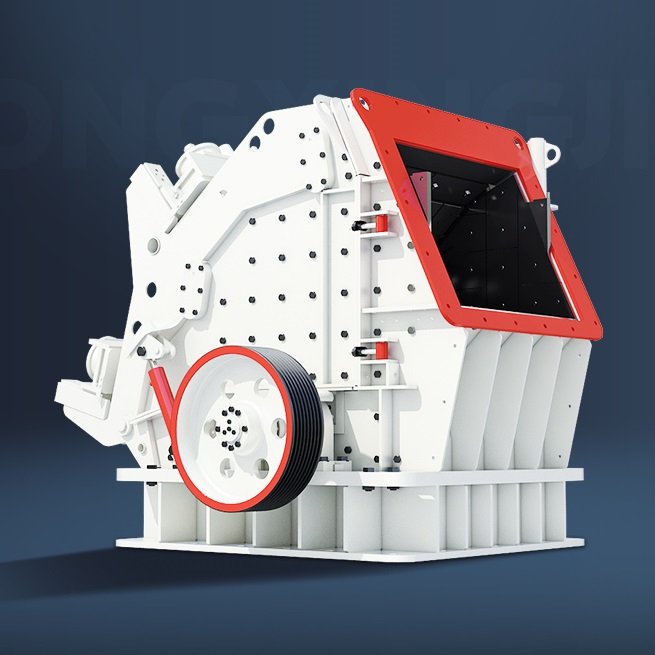
CI Series Impact Crusher
The CI impact crusher features a high-precision rotor with large rotational inertia, a multi-functional fully hydraulic operating system, and an involute crushing chamber. It offers excellent overall performance and is an ideal choice for coarse and medium crushing in large-capacity crushing production lines.
- Capacity: 60-800 t/h
- Feed Size: <300-1000 mm
- Output Size: 10-80 mm
-
Secondary Impact Crusher
A secondary impact crusher is a stone crushing machine that uses impact energy to crush stone. It can process materials with side lengths of 300-900 mm. The finished product is cubic in shape, and the particle size is adjustable.
- Capacity: 90-800 t/h
- Feed Size: <300-900 mm
- Output Size: 20-80 mm
-
Impact Stone Crusher
Stone impact crushers can be used for secondary and tertiary crushing (medium and fine crushing) operations. They are suitable for various soft to medium-hard materials, such as granite, concrete blocks, basalt, and limestone. They feature a simple structure, reliable performance, and a compact footprint, all at a relatively affordable price.
- Capacity: 90-800 t/h
- Feed Size: <900 mm
- Output Size: 10-80 mm
-
Jaw Rock Crusher
The jaw rock crusher is a heavy-duty crushing equipment widely used in industries such as mining, metallurgy, construction materials, and chemicals. It is specifically designed for primary and secondary crushing of high-hardness materials.
- Capacity: 1-1000 t/h
- Feed Size: ≤1200 mm
- Output Size: 10-350 mm