
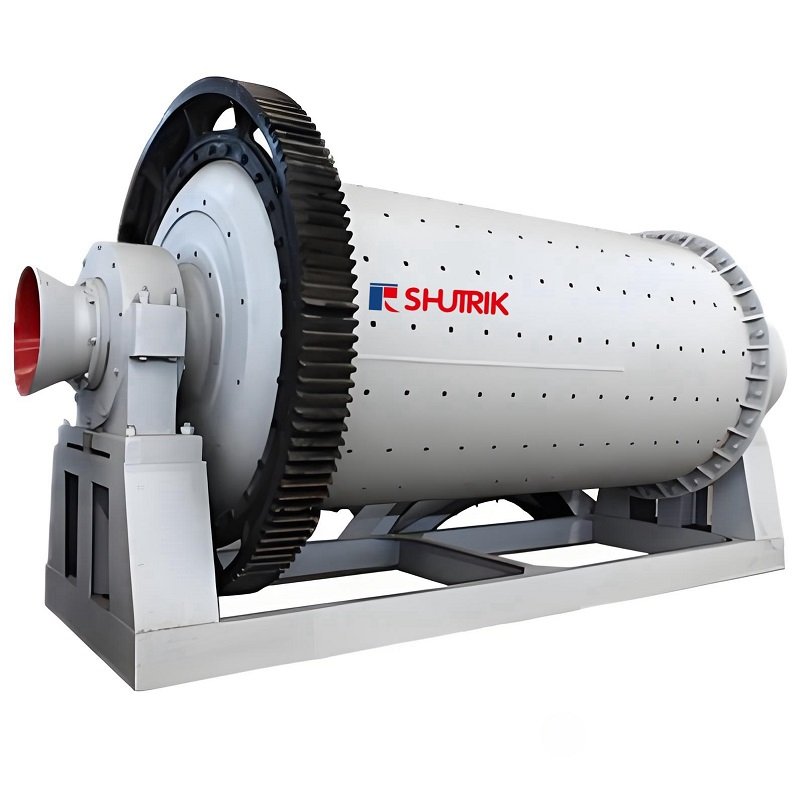
The grinding rod mill is a grinding device that utilizes steel rods as the grinding medium. Manufactured by Sandreck, this grinding mill features advanced, controllable feed and discharge technology. It pairs appropriate grinding media with the specific material being processed. By shifting from traditional surface contact to line contact, the equipment ensures more uniform product granularity and higher output. It is widely used in industries such as refractories, chemicals, metallurgy, and glass—sectors that demand high uniformity in the finished ground product—and has recently found application in the construction sand production industry.
Rod mills are available in both dry and wet configurations, allowing users to select the type best suited to their specific operational needs.
Grinding Rod Mill Working Principle
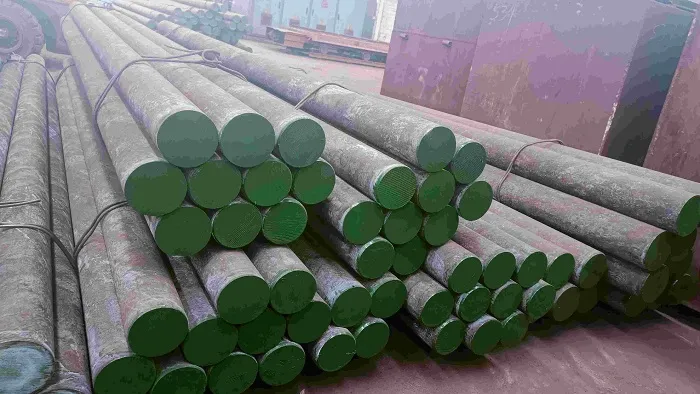
The working principle of a grinding rod mill is identical to that of a ball mill. Raw material is fed into a hollow cylindrical shell through a hollow trunnion for grinding. The shell contains grinding media of varying diameters. As the shell rotates around its horizontal axis at a specific speed, the combined effects of centrifugal force and friction cause the media and raw material to rotate along with the shell. Upon reaching a certain height—where the force of gravity exceeds the centrifugal force—the media detach from the inner wall and either cascade down or fall freely, crushing the ore through impact.
Simultaneously, as the mill rotates, the grinding media slide against one another, exerting a grinding action on the material. The ground material is discharged through the hollow trunnion at the opposite end. The continuous feeding of material creates pressure that drives the contents from the feed end toward the discharge end.
In wet grinding, the material is transported by the flow of water, whereas in dry grinding, it is carried out by an airflow drawn from the shell. The height to which the grinding media are lifted and their falling trajectory depend on the shell’s rotational speed, the quantity of media, and the design of the liner plates.
Features of Grinding Rod Mill
1) Energy Efficiency
Consumes over 40% less energy than other equipment on the market.
2) Uniform Product Size and High Output
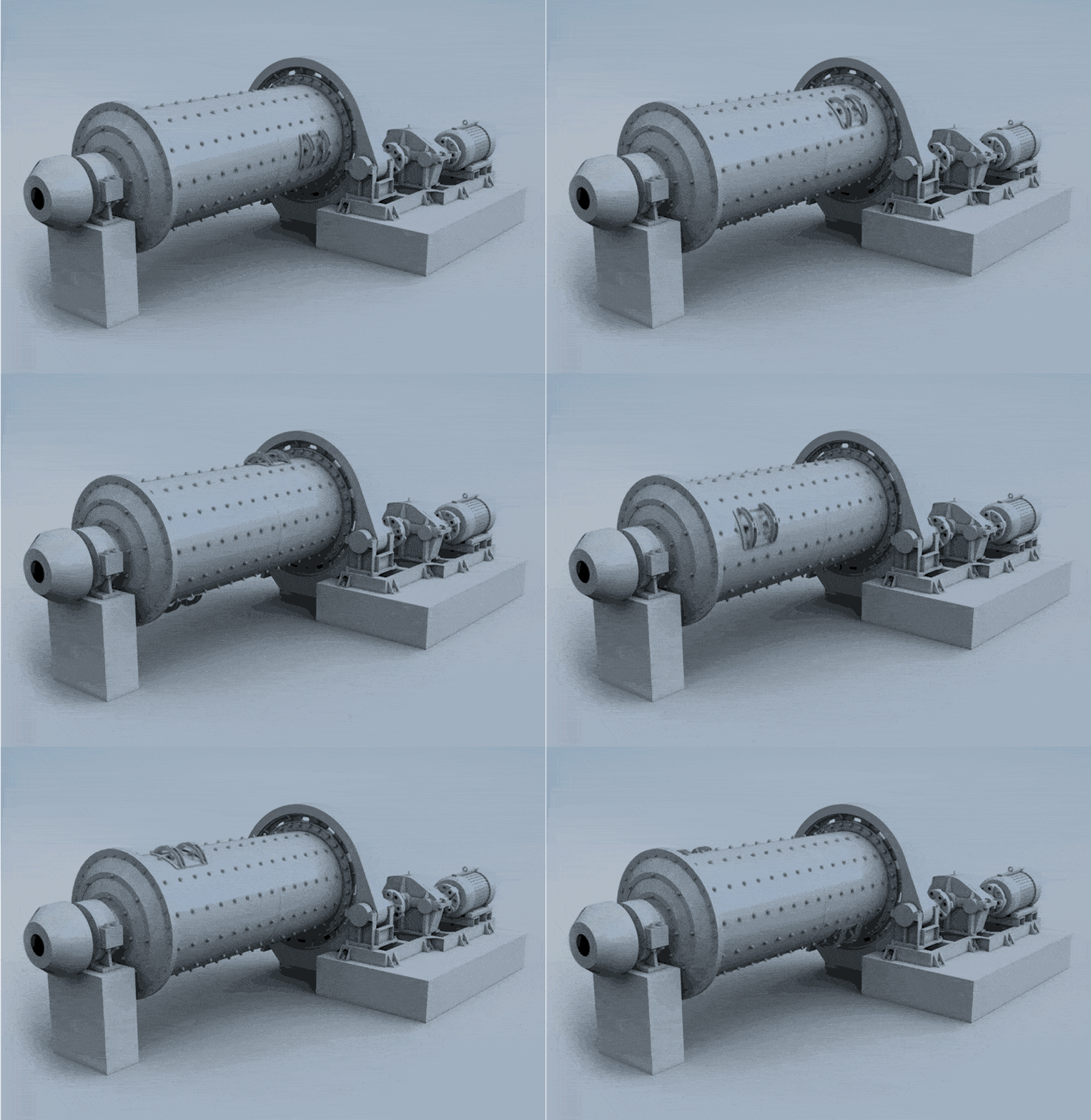
This grinding mill utilizes advanced, controllable rod mill technology. Grinding media are selected based on the specific material being processed. It replaces the point/surface contact typical of traditional ball mills with line contact, resulting in a more uniform product size with fewer coarse particles and minimal fines (slimes).
3) Adjustable Fineness and No Over-grinding
Product size can be adjusted easily. The unit features an integrated fineness control mechanism and an optional discharge screening system. This dual-control approach prevents over-grinding and ensures that substandard material does not contaminate the final product, resulting in a uniform output with minimal over-pulverization.

Grinding Rod Mill Applications
- Manufactured sand: Grinding rod mills primarily utilize line-contact grinding, which helps improve particle shape and enhance gradation continuity.
- Chemical raw materials: While ensuring consistent particle size, our rod mills effectively control the content of fines, making them suitable for processing materials sensitive to over-grinding.
- Glass sand (quartz sand): Grinding rod mills maintain regular particle shapes and a narrow particle size distribution, meeting the requirements for raw material stability in glass production.
- Tungsten, tin, and other gravity-separable ores: Rod mills are used for medium-to-coarse grinding prior to gravity separation. They minimize over-grinding, thereby facilitating subsequent separation processes.
Technical Parameters of Grinding Rod Mill
| Model | Barrel Diameter (mm)
|
Barrel Length (mm)
|
Speed(r/min) | Rod Load (t) | Feeding Size (mm) | Outlet Size (mm) | Capacity (t/h) | Motor Power (kw/h) | Overall Dimensions (mm) | Weight (kg) |
| WP200 | 2400 | 4500 | 21 | 30 | <25 | 0.074-5 | 100-200 | 280-315 | 10500x3250x4120 | 65-70 |
| WP300 | 2700 | 4500 | 17.2-18.5 | 51 | <25 | 0.074-5 | 200-300 | 400-480 | 11500×6100×4950 | 75-90 |
| WP500 | 3200 | 4500 | 15.4-16.6 | 60 | <25 | 0.074-5 | 400-500 | 800 | 12600×6450×5250 | 110-130 |


Related products
-
Micro Powder Grinding Mill
The micro powder grinding mill is an advanced piece of equipment designed for the dry, superfine grinding of non-metallic powders. It is widely used in applications such as calcium carbonate pulverization, gypsum powder processing, power plant desulfurization, non-metallic mineral powder production, and pulverized coal preparation. The finished products find extensive application across various sectors, including construction, building materials, glass, ceramics, and the chemical industry.
- Capacity: 0.5 – 25 t/h
- Feed Size: ≤ 20 mm
- Output Size: 325 – 3250 mesh
-
Ultrafine Grinding Mill
Ultrafine grinding mills are pulverizing machines designed to produce ultrafine powders. They are primarily used in industries such as non-metallic minerals, chemicals, construction materials, and coatings. These grinding mills can process minerals—including limestone, calcite, marble, heavy calcium carbonate, pyrophyllite, and talc—into ultrafine powder.
- Capacity: 3 – 25 t/h
- Feed Size: ≤ 15 mm
- Output Size: 300 – 3000 mesh
-
Ball Grinding Mill
A ball mill grinder is a grinding machine that uses steel balls as the grinding medium. It can crush and grind materials to a fineness of 35 mesh or finer and is suitable for use in open-circuit or closed-circuit grinding processes.
- Capacity: 0.65-130 t/h
- Feed Size: ≤ 25 mm
- Output Size: 0.074-0.89 mm
-
Rod Mill Equipment
Rod mill equipment is primarily used for coarse grinding operations. They are suitable for the fine crushing and coarse grinding of ores and are particularly well-suited for processing brittle materials. They are widely used in the production of manufactured sand, as well as in mineral processing plants, chemical plants, and the power industry.
- Capacity: 100-500 t/h
- Feed Size: <25 mm
- Output Size: 0.074-5 mm
-
Raymond Grinding Mill
The Raymond grinding mill is a type of dry-grinding suspended-roller mill. It is widely used in the non-metallic mining industry and is capable of grinding rock into fine powder.
- Capacity: 0.25-22 t/h
- Feed Size: ≤35 mm
- Output Size: 0.005-0.613 mm
-
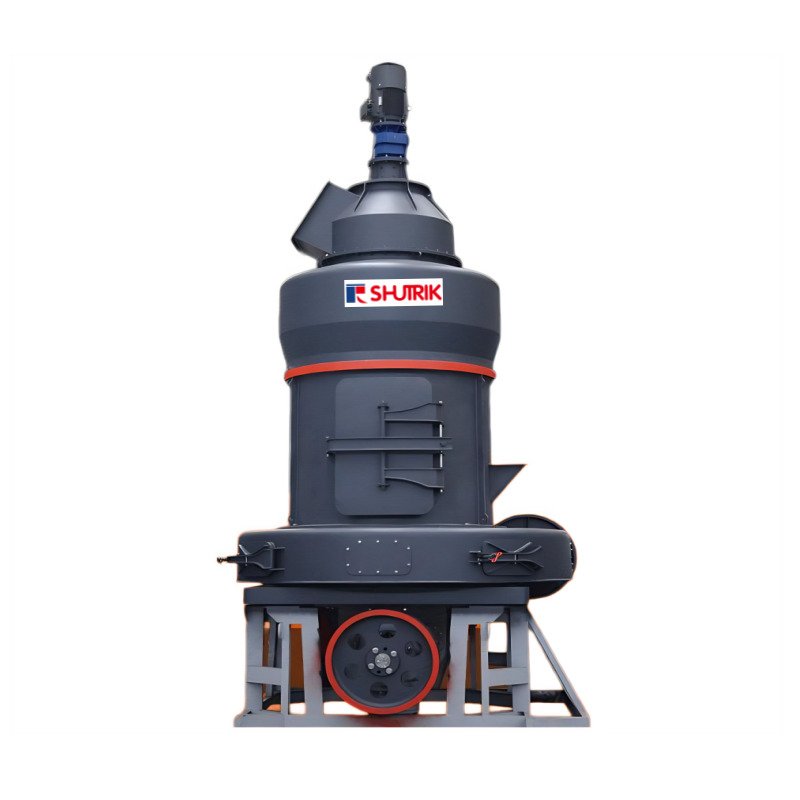
Raymond Roller Mill
The Raymond roller mill is a high-efficiency grinding machine featuring a vertical structure. It is primarily used for processing non-metallic minerals into fine and ultrafine powders and is widely applied in industries such as mining, construction materials, chemicals, and metallurgy.
- Capacity: 0.25-22 t/h
- Feed Size: ≤35 mm
- Output Size: 0.005-0.613 mm
