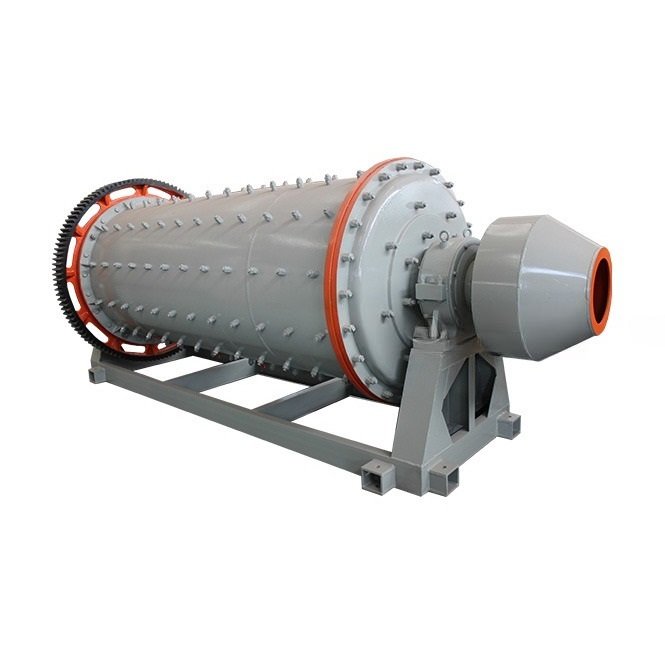
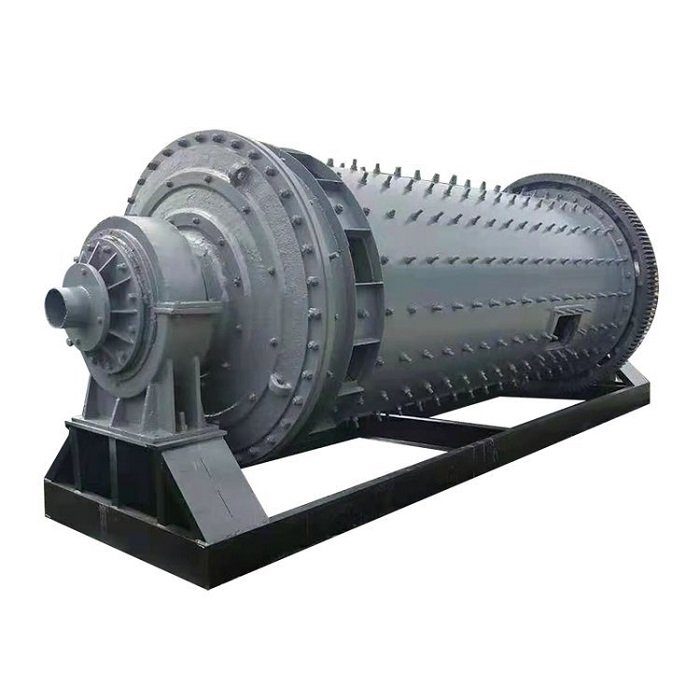
A dry ball mill is a piece of mining machinery designed for dry grinding. No water is added during the production process. It features a cylindrical design and is equipped with components such as an induced-draft system, dust-discharge piping, and a dust collector.
Dry grinding ball mills require the input material to be dry. They are widely used in sectors including the production of cement, silicate products, modern building materials, and refractory materials, as well as in the manufacture of fertilizers, the processing of ferrous and non-ferrous metal ores, and the glass and ceramics industries. Its primary function is to further pulverize previously crushed material, achieving size reduction through mechanical force alone, without the need for water or any other liquid medium.
Dry Ball Mill Working Principle
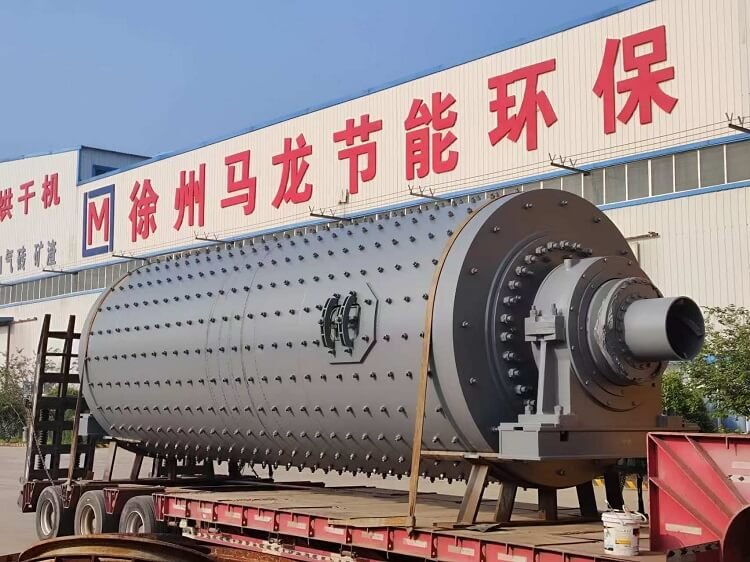
The operating principle of a dry grinding ball mill is based on the rotation of a cylindrical shell, which drives the internal grinding media (steel balls or steel segments) to impact and grind the material. The process is as follows:
1. Material Feeding: Material is fed through a feeding device and enters the first chamber of the ball mill via a hollow feed shaft equipped with a screw mechanism.
2. Coarse Grinding Stage: The first chamber is lined with stepped or corrugated liners and contains steel balls of various sizes. As the shell rotates, centrifugal force lifts the steel balls to a certain height, from which they fall freely, exerting heavy impacts and grinding forces on the material to achieve coarse grinding.
3. Fine Grinding Stage: After coarse grinding, the material passes through a partition plate into the second chamber. This chamber is lined with smooth liners and contains smaller steel balls, which further grind the material to the required fineness.
4. Discharge and Classification: The pulverized material is discharged through a discharge grate plate. It then undergoes air classification, where the appropriately fine powder is directed to a collection system, while the coarse particles are returned to the mill for further grinding. Some units are equipped with a closed-circuit air system and a dust collector to ensure that dust emissions meet regulatory standards.

Features of Dry Grinding Ball Mill
- Dry ball mills do not require the addition of water during the grinding process. This not only conserves water resources but also prevents contamination of the material being ground.
- The feed inlet features a straight-tube design and is equipped with an air-suction system, ensuring effective dust removal.
- Dry grinding ball mills offer high adaptability to various materials, support continuous production, and allow for easy adjustment of the fineness of the ground product.
- Following the dry-grinding process, the output material is ready for use (meets required specifications).
- Components are manufactured using high-chromium steel or special alloy materials, which extends the service life of wear parts and reduces the frequency of replacements.
- Depending on the material characteristics and the preferred discharge method, users can choose between overflow-type or grate-discharge-type dry ball mills.
- Dry ball mills feature a simple structure, making them easy to maintain. The hollow shafts are made of cast steel, which facilitates the replacement of liners.
Dry Ball Mill Applications
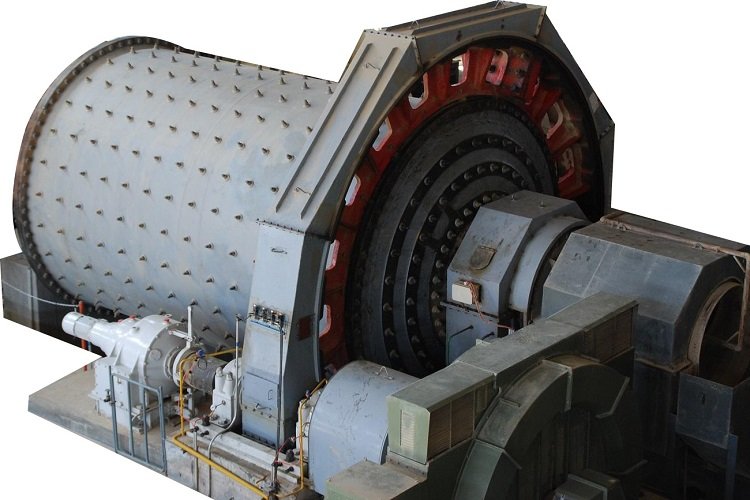
Dry grinding ball mills perform grinding without the addition of water and are widely used in industries such as construction materials, mining, refractories, chemicals, and solid waste treatment. They are ideal for materials that are prone to hydration upon contact with water or for processes that require a dry powder end product.
These ball grinding mills are commonly used for grinding raw cement mix and clinker, slag, fly ash, quartz, feldspar, graphite, bauxite, pulverized coal, limestone (for desulfurization), as well as raw materials for ceramics and glass. They are frequently paired with a powder classifier to form a closed-circuit dry grinding system.
In water-scarce regions, or in applications such as dry mineral processing and the production of dry-mix mortar or powdered fillers, these dry ball mills eliminate the need for subsequent dewatering or drying stages.
Technical Parameters of Dry Grinding Ball Mill
| Model | Shell rotation speed (r/min) |
Ball charge (t) | Feed particle size (mm) |
Discharge particle size (mm) |
Capacity (t/h) | Motor power (kw) |
Total weight (t) |
| Ф900×1800 | 36-38 | 1.5 | ≤20 | 0.075-0.89 | 0.65-2 | 18.5 | 5.85 |
| Ф900×3000 | 36 | 2.7 | ≤20 | 0.075-0.89 | 1.1-3.5 | 22 | 6.98 |
| Ф1200×2400 | 36 | 3 | ≤25 | 0.075-0.6 | 1.5-4.8 | 30 | 13.6 |
| Ф1200×3000 | 36 | 3.5 | ≤25 | 0.074-0.4 | 1.6-5 | 37 | 14.3 |
| Ф1200×4500 | 32.4 | 5 | ≤25 | 0.074-0.4 | 1.6-5.8 | 55 | 15.6 |
| Ф1500×3000 | 29.7 | 7.5 | ≤25 | 0.074-0.4 | 2-5 | 75 | 19.5 |
| Ф1500×4500 | 27 | 11 | ≤25 | 0.074-0.4 | 3-6 | 110 | 22 |
| Ф1500×5700 | 28 | 12 | ≤25 | 0.074-0.4 | 3.5-6 | 130 | 25.8 |
| Ф1830×3000 | 25.4 | 11 | ≤25 | 0.074-0.4 | 4-10 | 130 | 34.5 |
| Ф1830×4500 | 25.4 | 15 | ≤25 | 0.074-0.4 | 4.5-12 | 155 | 38 |
| Ф1830×6400 | 24.1 | 21 | ≤25 | 0.074-0.4 | 6.5-15 | 210 | 43 |
| Ф1830×7000 | 24.1 | 23 | ≤25 | 0.074-0.4 | 7.5-17 | 245 | 43.8 |
| Ф2100×3000 | 23.7 | 15 | ≤25 | 0.074-0.4 | 6.5-36 | 155 | 45 |
| Ф2100×4500 | 23.7 | 24 | <25 | 0.074-0.4 | 8-43 | 245 | 56 |
| Ф2100×7000 | 23.7 | 26 | <25 | 0.074-0.4 | 12-48 | 280 | 59.5 |
| Ф2200×4500 | 21.5 | 27 | <25 | 0.074-0.4 | 9-45 | 280 | 54.5 |


Related products
-
Wet Ball Mill
Wet grinding ball mills are characterized by high wear resistance, automated control, advanced component performance, diverse operating modes, significant energy savings, and low operating costs.
- Capacity: 0.65-130 t/h
- Feed Size: ≤ 25 mm
- Output Size: 0.074-0.89 mm
-
Micro Powder Grinding Mill
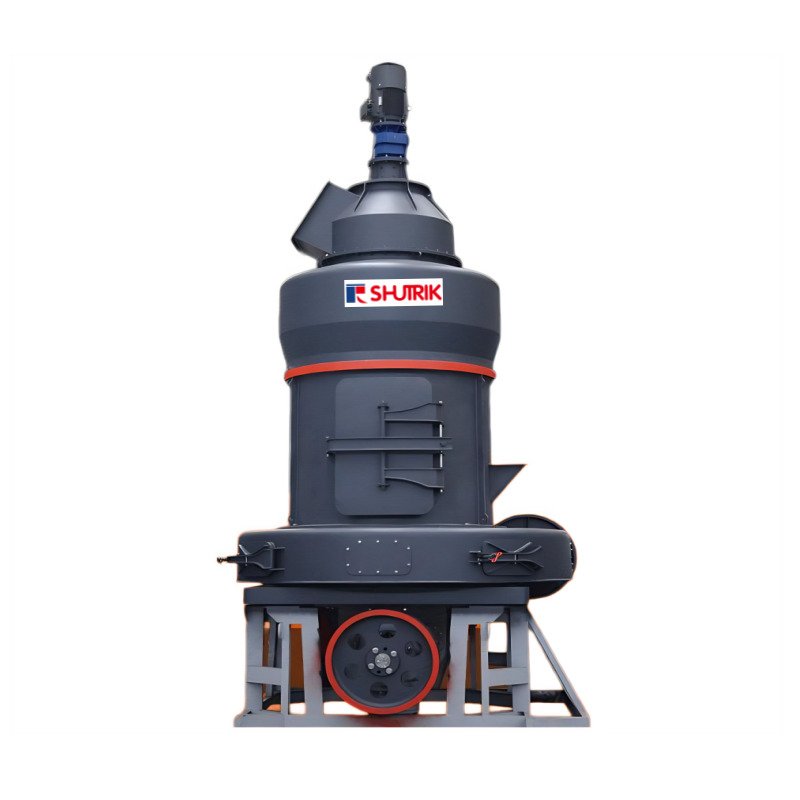
The micro powder grinding mill is an advanced piece of equipment designed for the dry, superfine grinding of non-metallic powders. It is widely used in applications such as calcium carbonate pulverization, gypsum powder processing, power plant desulfurization, non-metallic mineral powder production, and pulverized coal preparation. The finished products find extensive application across various sectors, including construction, building materials, glass, ceramics, and the chemical industry.
- Capacity: 0.5 – 25 t/h
- Feed Size: ≤ 20 mm
- Output Size: 325 – 3250 mesh
-
Vertical Grinding Mill
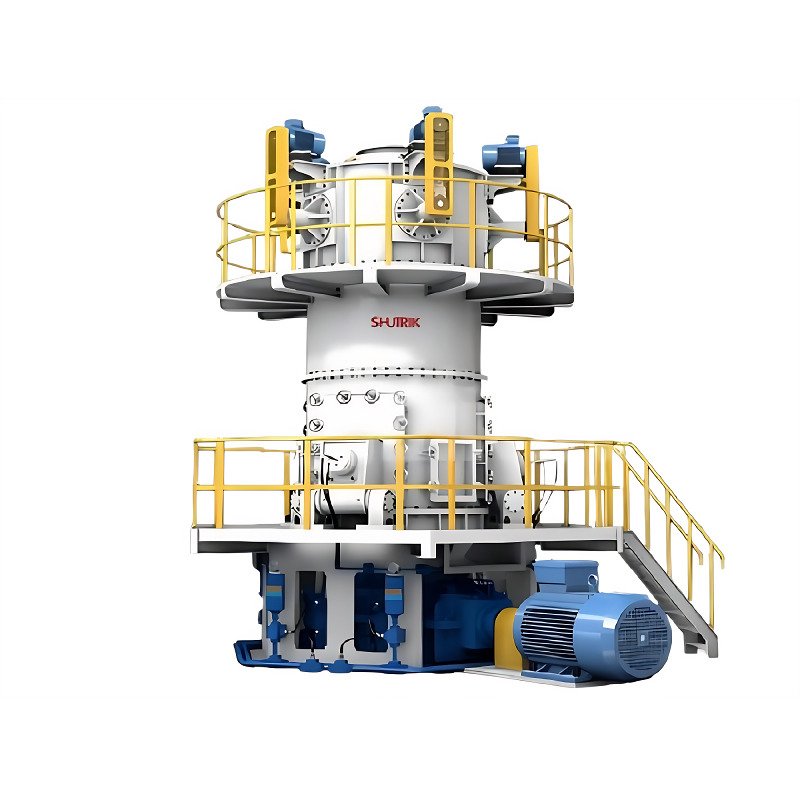
The vertical grinding mill integrates the functions of fine crushing, grinding, drying, classifying, and conveying. The system is simple, easy to operate and adjust, and features a high degree of automation. It is suitable for both large-scale and ultra-large-scale industrial production, as well as for small- and medium-scale operations.
- Capacity: 10 – 400 t/h
- Feed Size: ≤ 55 mm
- Output Size: 20 – 400 mesh
-
Industrial Ball Mill
The industrial ball mill is a grinding device widely used in industries such as mining, building materials, and chemicals, primarily employed for the crushing, grinding, and mixing of materials, as well as the production of ultrafine powders.
- Capacity: 0.65-130 t/h
- Feed Size: ≤ 25 mm
- Output Size: 0.074-0.89 mm
-
Ball Grinding Mill
A ball mill grinder is a grinding machine that uses steel balls as the grinding medium. It can crush and grind materials to a fineness of 35 mesh or finer and is suitable for use in open-circuit or closed-circuit grinding processes.
- Capacity: 0.65-130 t/h
- Feed Size: ≤ 25 mm
- Output Size: 0.074-0.89 mm
-
Raymond Grinding Mill
The Raymond grinding mill is a type of dry-grinding suspended-roller mill. It is widely used in the non-metallic mining industry and is capable of grinding rock into fine powder.
- Capacity: 0.25-22 t/h
- Feed Size: ≤35 mm
- Output Size: 0.005-0.613 mm