
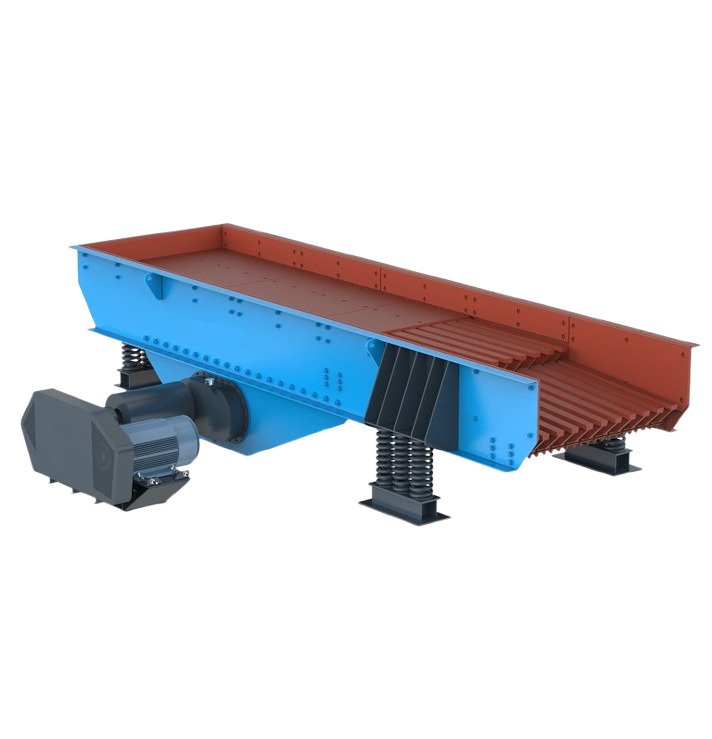
Sandreck’s vibration feeder machines are designed for ultra-heavy-duty applications. They suit primary crushers—such as jaw, impact, and hammer crushers—and are widely used in the stone processing, construction materials, and metal mining industries. They feature a low installation profile and require minimal space. The series offers a maximum processing capacity of 1,200 TPH, handles a maximum feed size of 1,500 mm, and comes with a standard hopper capacity of 25–45 m³.
These vibrating feeders are characterized by reliable operation, low noise, and low energy consumption. They prevent material surging, offer a long service life, and are easy to maintain. Additionally, their lightweight, compact design makes installation and adjustment easy, ensuring excellent overall performance.
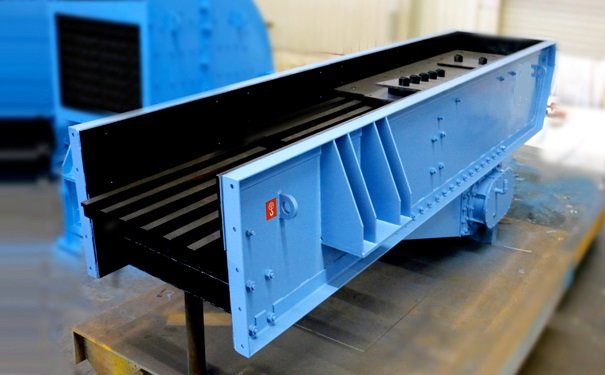
Vibration Feeder Working Principle
The core operating principle of a vibratory feeder machine uses eccentric blocks in a vibrator or an electromagnetic exciter to generate a periodic exciting force, causing the material trough to vibrate back and forth along an inclined path. Under the combined effects of this vibration and gravity, the material moves forward continuously along a parabolic trajectory, enabling uniform, metered, continuous conveyance.
- Mechanical vibration type: Rotating eccentric blocks generate centrifugal force, causing the screen box or trough to move in a circular or near-circular motion. As the trough moves, the material advances, being tossed forward along the inclined surface.
- Motor vibration type: A vibration motor serves as the excitation source, driving the trough to undergo periodic reciprocating vibration. This type suits industries such as metallurgy, coal mining, and construction materials.
- Electromagnetic vibration type: An electromagnetic coil generates a pulsed magnetic force when energized, causing the trough to vibrate at high frequencies. The material advances by hopping along the vibration line. The feed rate can be precisely controlled by adjusting the voltage or the thyristor conduction angle.
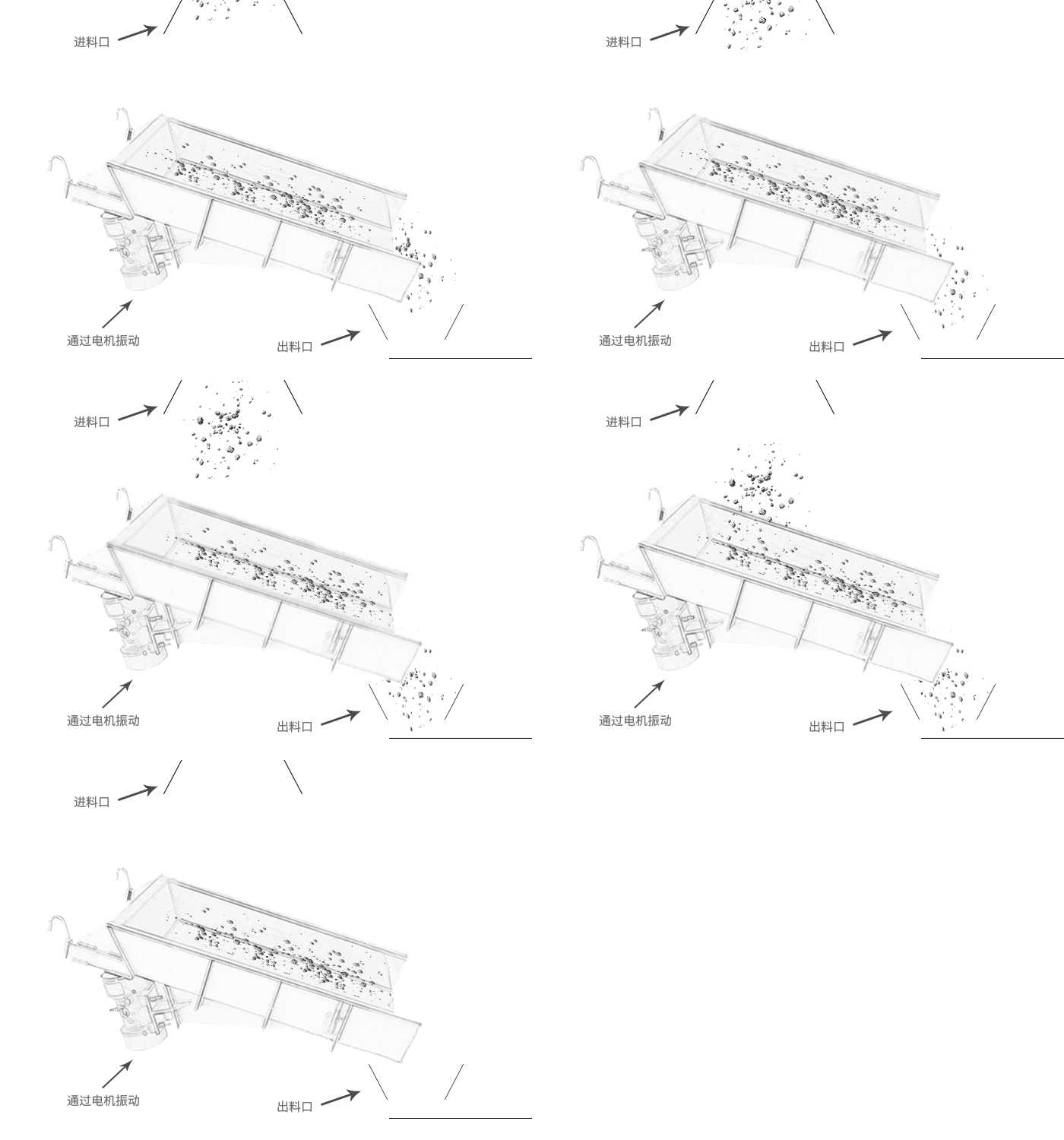
Features of Vibration Feeder Machine
- Uniform Feeding: The vibration feeder uses vibration to move material along the trough via a parabolic trajectory or sliding motion, ensuring continuous, uniform transport.
- Precise Flow Control: Feeding rates can be flexibly controlled by adjusting the vibration frequency or by installing a variable-frequency drive (VFD) motor.
- Versatile Material Handling: Can convey materials ranging from 0.1 mm to over 1 meter, including high-temperature or corrosive materials.
- Enhanced Production Efficiency: Reduces clogging in downstream equipment, improves crushing efficiency, and extends motor service life.
- Auxiliary Screening: Certain models can perform coarse screening to separate out fines, thereby increasing overall output.
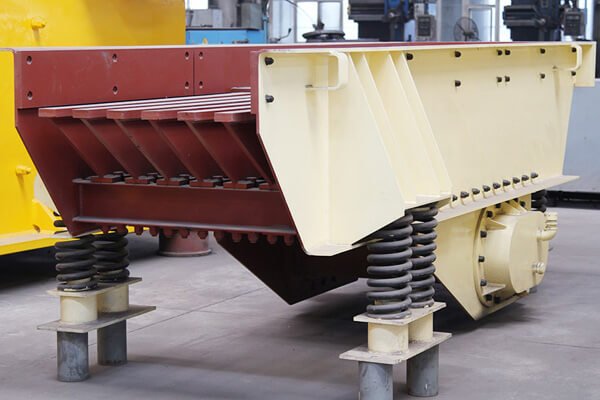
Vibration Feeder Applications
Vibration feeder machines are indispensable pieces of equipment across many industrial sectors, commonly used in:
- Mining industry: Uniformly feeding materials to equipment such as jaw crushers and cone crushers.
- Metallurgical industry: Conveying ores, coke, fluxes, and other materials.
- Chemical industry: Conveying powdered and granular chemical raw materials.
- Construction materials industry: Conveying raw materials in cement, glass, and ceramic production lines.
- Grain processing: Conveying grains, animal feed, etc.
- Light industry: Applications such as quantitative feeding for batching and packaging lines.
- Automated assembly lines: Serving as automatic feeders.
Technical Parameters of Vibration Feeder Machine
| Model | Size of funnel (mm) | Grizzly length (mm) | Inclination (°) | Speed (r/min) | Double amplitude (mm) | Maximum feed size (mm) | Capacity (t/h) | Power (kW) | Overall dimension (mm) |
| GZD1045(M) | 1000×4500 | 1×1200 | 5(0-10) | 1000(500-1000) | 8.5 | 700 | 400 | 15 | 4475×1660×1485 |
| GZD1345(M) | 1300×4500 | 1×1200 | 5(0-10) | 1000(500-1000) | 8.5 | 900 | 600 | 22 | 4475×1960×1485 |
| GZD1360(S) | 1300×6000 | 2×1200 | 5(0-10) | 1000(500-1000) | 8.5 | 900 | 600 | 30 | 6195×1960×1680 |
| GZD1645(M) | 1600×4500 | 1×1200 | 5(0-10) | 1000(500-1000) | 8.5 | 1200 | 1000 | 22 | 4475×2260×1485 |
| GZD1660(S) | 1600×6000 | 2×1200 | 5(0-10) | 1000(500-1000) | 8.5 | 1200 | 1000 | 30 | 6195×2260×1680 |
| GZD2060(M) | 2000×6000 | 2×1200 | 5(0-15) | 1000(500-1000) | 8.5 | 1500 | 2400 | 45 | 6195×2660×1680 |
| GZD1354G | 1300×5400 | 4×900 | 5(0-10) | 1000(500-1000) | 8 | 900 | 500 | 22 | 4998×2601×2571 |
| GZD1654G | 1600×5400 | 4×900 | 5(0-10) | 1000(500-1000) | 8 | 1200 | 800 | 30 | 4998×2931×2571 |
| GZD2054G | 2000×5400 | 4×900 | 5(0-10) | 1000(500-1000) | 8 | 1500 | 1200 | 45 | 4998×3481×2625 |


Related products
-
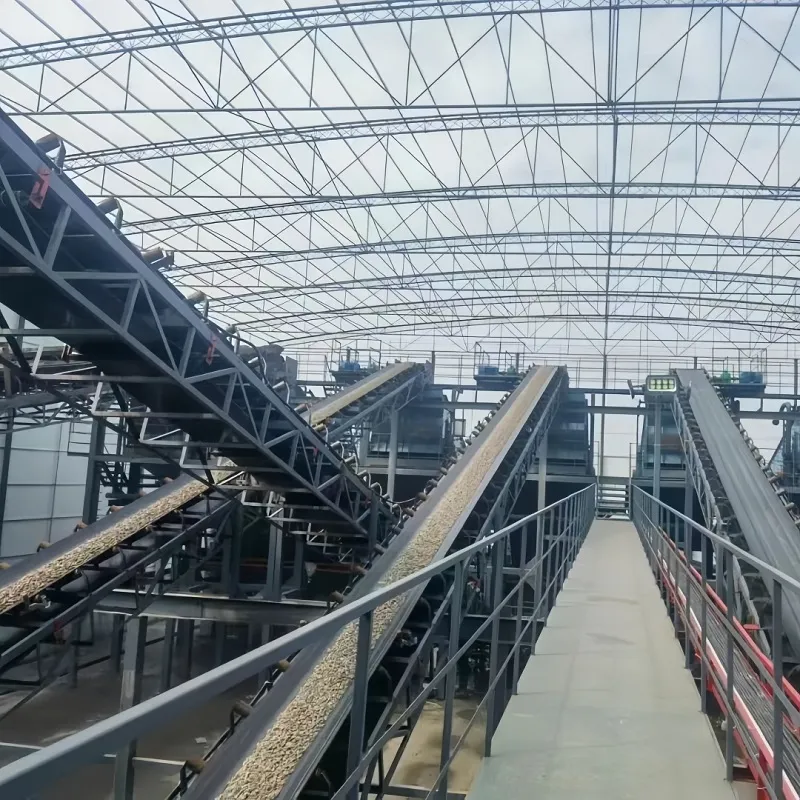
Heavy Duty Belt Conveyor
Heavy-duty belt conveyors are widely used in mining, metallurgy, coal, transportation, and hydropower to convey bulk materials or packaged goods. This equipment offers long conveying distances, high capacity, low operating resistance, easy installation, low energy consumption, and minimal wear.
- Capacity: 150 – 900 t/h
- Feed Size: ≤ 300 mm
- Belt Width: 500 – 1200 mm
-
Industrial Belt Conveyor
Industrial belt conveyors are widely used in mining, quarrying, the chemical industry, construction material recycling, and powder grinding plants. They transport materials such as aggregates, crushed stone, sand, coal, and cement.
- Capacity: 150 – 900 t/h
- Feed Size: ≤ 300 mm
- Belt Width: 500 – 1200 mm
-
Vibrating Feeder Machine
Vibrating feeders for sale are widely used across various industries, including mining, metallurgy, coal, building materials, and machinery. They are used to feed lump, granular, and powdered materials—uniformly, continuously, or at a controlled rate—from storage bins or hoppers into receiving equipment.
- Capacity: 400 – 1200 t/h
- Feed Size: ≤ 1500 mm
- Motor Power: 15 – 45 kW