

The hydrocyclone is a continuous-operation classification device and one of the most important pieces of equipment in the mineral processing industry. It is primarily used for classification—proving particularly effective for fine-particle classification—using centrifugal force to accelerate particle settling. It is commonly integrated with a grinding mill to form a closed-circuit grinding and classification system, where classification performance significantly impacts the overall efficiency of the grinding process. While widely used in closed-circuit grinding, hydrocyclone sand separators are also employed for other operations such as desliming, desanding, and thickening.
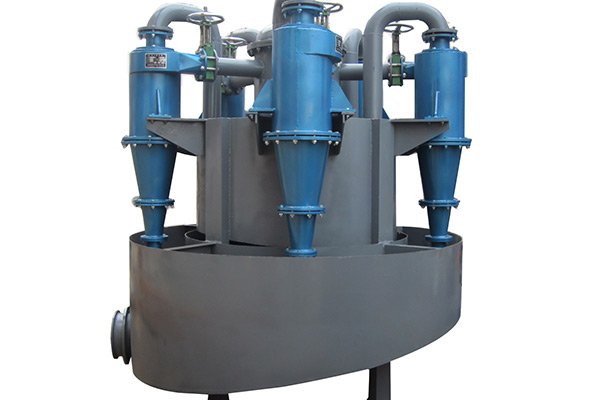
Hydrocyclone Separator Working Principle
A slurry pump drives the slurry into the cyclone body tangentially at a specific pressure and flow velocity. It immediately rotates at high speed within the cylindrical and conical sections, generating intense centrifugal force. Subjected to centrifugal force, centripetal fluid drag, and gravity, particles in the slurry move differently based on their density and size. Coarse, heavy particles experience greater centrifugal force; they are thrown against the inner wall, spiral downward, form an outer vortex and eventually discharge through the bottom underflow outlet.
Fine, lightweight particles experience less centrifugal force and, under fluid drag, migrate toward the cyclone’s center. They rise with the upward-rotating inner vortex and are discharged through the upper overflow outlet via the overflow pipe. This process classifies and separates coarse and fine particles within the slurry.
A negative-pressure air column forms at the center of the hydrocyclone separator and plays a crucial role in the inner vortex’s flow dynamics. The slurry feed pressure determines the rotation intensity and directly influences particle separation efficiency.


Advantages of Hydrocyclone Separator
- The hydrocyclone sand separator features an involute feed inlet, which increases centrifugal force, improves classification efficiency, and reduces wear on the feed box.
- It suits closed-circuit grinding; coarse underflow particles are returned to the mill for regrinding, minimizing over-grinding.
- The Sandreck hydrocyclone features an optimized cylindrical-to-conical section ratio and an appropriate overflow-pipe insertion depth, resulting in high classification efficiency.
- It accommodates high-density feed. In thickening applications, the underflow yields high-concentration solids suitable for dry tailings disposal or pre-thickening prior to backfilling.
- The unit is compact, has a small footprint, offers high processing capacity, and has low operating costs.
- The processing flow is straightforward. Once operating parameters are established, the hydrocyclone filter runs stably over the long term and is easy to manage.

Hydrocyclone Separator Applications
Hydrocyclones are primarily used for closed-circuit classification in mineral grinding operations. They classify the grinding mill discharge, directing fine-grained overflow to the beneficiation stage while returning coarse underflow to the mill for regrinding, thereby optimizing grinding efficiency.
Additionally, they facilitate pulp desliming and impurity removal, eliminating the adverse effects of fine slimes on beneficiation and improving processing performance. They can also thicken and dewater pulp and tailings to meet requirements for dry tailings stacking, underground backfilling, and high-concentration transport.
Hydrocyclone separators can also be used for heavy-medium recovery and purification, as well as pre-classification of ore. Compatible with various mineral processing flows, they help reduce energy consumption and production costs.
Technical Parameters of Hydrocyclone Separator
| Mode | Diameter (mm) | Feed Port (mm) | Overflow Port Diameter (mm) | Desanding Port Diameter (mm) | Angle of Inclination (°) | Max Feed Size (mm) | Feed Pressure (MPa) | Capacity (m³/h) | Separation Size (µm) | Overall Dimensions (mm) |
| FX-660
|
660
|
187 167
|
180.2 | 80 | 20
|
16
|
0.03-0.4
|
250-360
|
74-220
|
1215×850×2720
|
| 220,240 | 110,150 | |||||||||
| FX-500
|
500
|
130 120
|
130,140,160, 80,220
|
35,45,50 | 25 | 10
|
0.03-0.4
|
140-220
|
74-200 | 951×718×1825 |
| 65,70,80 | 20 | 74-200 | 850×623×1825 | |||||||
| 90,100 | 10 | 74-150 | 951×718×2280 | |||||||
| FX-350
|
350
|
80 | 80,90,105, 115,120 | 30,35,40 45,50,60,70
|
25 | 6
|
0.03-0.4
|
60-105
|
50-150 | 530×413×1411 |
| 20 | 50-150 | 530×413×1411 | ||||||||
| 15 | 50-120 | 530×413×1674 | ||||||||
| FX-300 | 300 | 64 75 | 65,80, 100,120 | 20,25, | 20 | 5 | 0.03-0.4 | 45-90 | 50-150 | 530×410×1305 |
| 30,35,40 | 15 | 40-100 | 563×410×1490 | |||||||
| FX-250 | 250 | 55 74 80 | 60,75, 80,100,120 | 25,30,35,40 | 20 | 3 | 0.05-0.4 | 40-65 | 40-100 | 563×534×1178 |
| 15 | 40-100 | 548×390×1057 | ||||||||
| 10 | 30-100 | 548×415×1380 | ||||||||
| FX-200 | 200 | 48 | 40,45, 55,65 | 16,20, | 20 | 2 | 0.05-0.4 | 25-40 | 40-100 | 548×307×1025 |
| 24,28,32 | 15 | 30-100 | 320×307×1114 | |||||||
| FX-150 | 150 | 36 | 30,35, 40,45 | 8,10,12,14,16, 18,20,22 | 20 | 1.5 | 0.05-0.4 | 11-20.0 | 30-74 | 320×270×682 |
| 15 | 30-74 | 252×349×899 | ||||||||
| 8 | 20-74 | 290×295×1267 | ||||||||
| FX-125 | 125 | 26 | 25,30, 35,40 | 8,10,12,14,16, 18,20,22 | 17 | 1 | 0.05-0.4 | 8-15.0 | 20-100 | 280×185×617 |
| 8 | 20-74 | 210×240×973 | ||||||||
| FX-100 | 10 | 23 | 20,25, 30,40 | 8,10,12,14,16, 18,20,22 | 20 | 1 | 0.05-0.4 | 5-12.0 | 20-100 | 250×210×525 |
| 15 | 10-100 | 257×210×575 | ||||||||
| 8 | 10-74 | 257×210×829 |

Related products
-
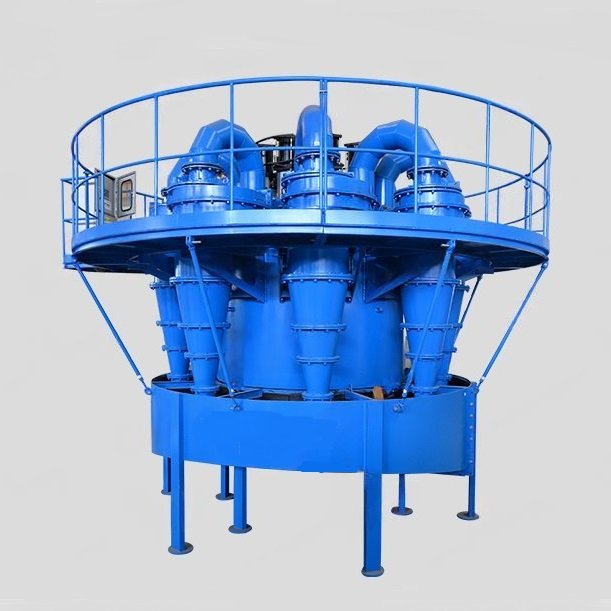
Hydrocyclone Filter
The hydrocyclone filter is a classification device commonly used in mining, primarily for closed-circuit grinding, solid-liquid separation, and tailings treatment.
- Capacity: 5 – 360 m³/h
- Feed Size: ≤ 16 mm
- Separation Size: 10 – 220 μm
-
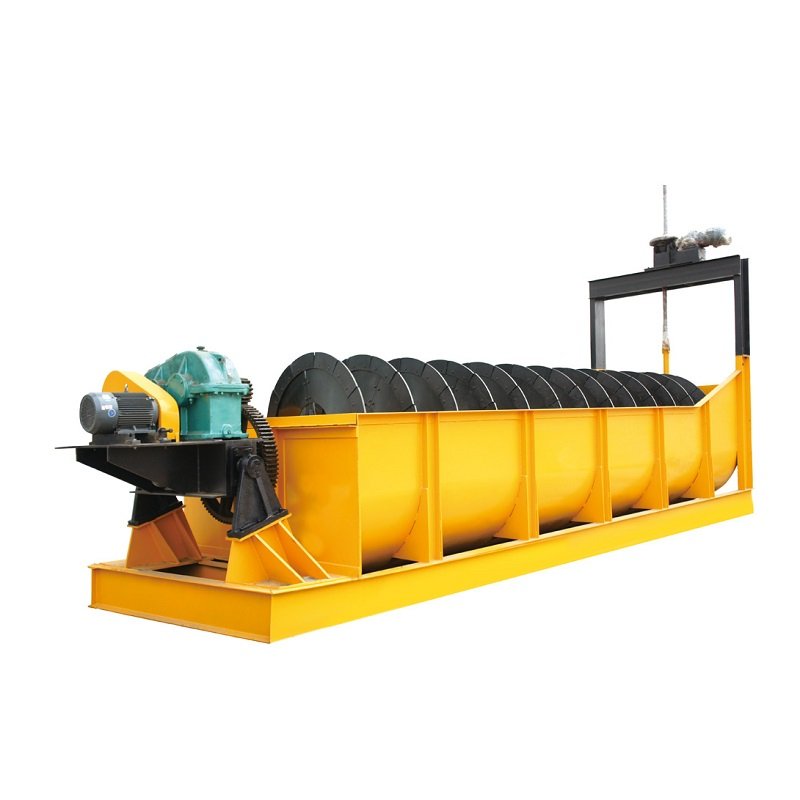
Spiral Classifier Machine
Spiral classifier machines are widely used for classification in the grinding circuits of mineral processing plants, as well as for ore washing, desliming, and dewatering operations. Their primary advantages include simple construction, reliable performance, and ease of operation.
- Capacity: sand return rate: 135–23300 t/d; overflow rate: 32 – 1410 t/d
- Feed Size: ≤ 0.15 mm
- Spiral diameter: 500- 3000 mm
-
Spiral Classifier Equipment
Spiral classifier equipment is primarily used in grinding circuits for preliminary and check classification, as well as in sand and gravel aggregate processing for desliming and dewatering.
- Capacity: sand return rate: 135–23300 t/d; overflow rate: 32 – 1410 t/d
- Feed Size: ≤ 0.15 mm
- Spiral diameter: 500- 3000 mm
-
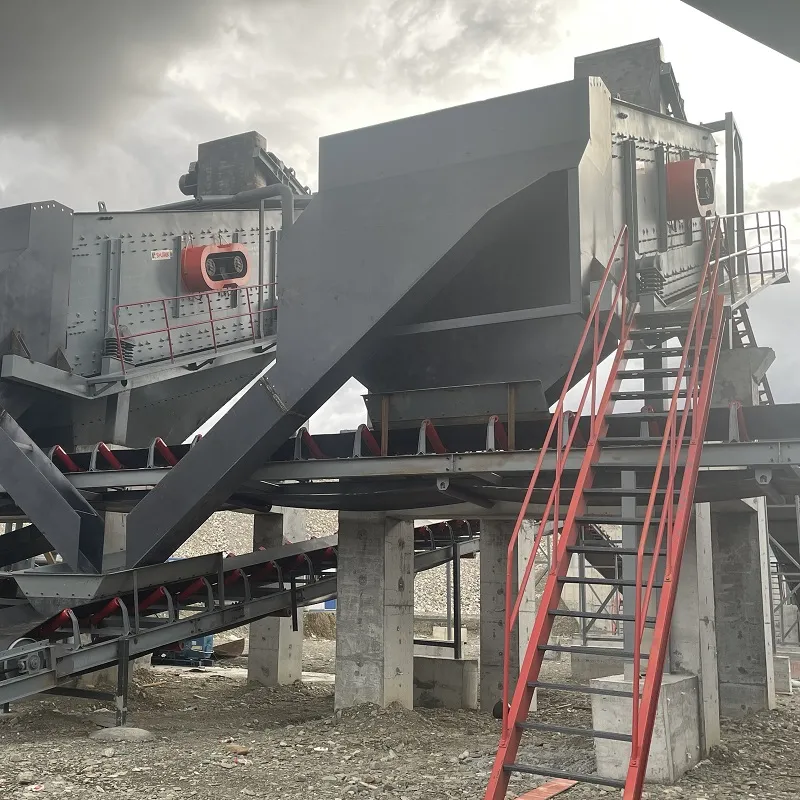
Mining Vibrating Screens
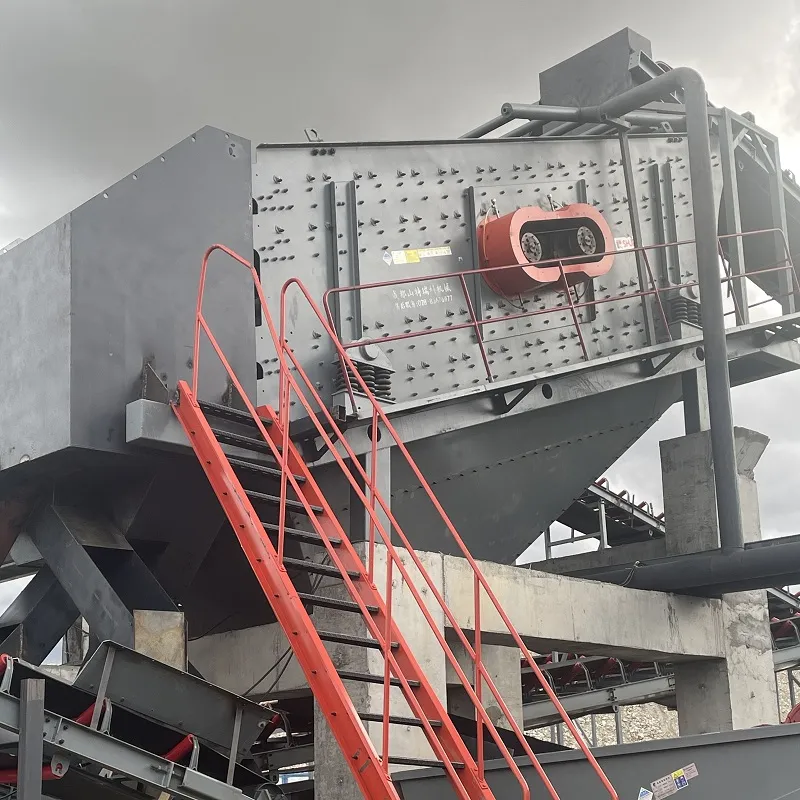
Mining vibrating screens are widely used in the mining and construction industries, particularly for screening coarse-grained materials. They offer advantages such as a high-strength screen frame, a well-designed mechanical structure, low operating temperatures for large-clearance bearings, low noise levels, and a long service life.
- Capacity: 70 – 500 t/h
- Feed Size: ≤ 250 mm
- Screen Mesh: < 100 mm
-
Industrial Vibrating Screens
This industrial vibrating screen operates with a circular motion. This new multi-deck vibrating screen is designed specifically for screening stone in quarries. It is also suitable for product classification in sectors such as coal preparation, mineral processing, construction materials, electric power, and the chemical industry.
- Capacity: 70 – 500 t/h
- Feed Size: ≤ 250 mm
- Screen Mesh: < 100 mm