

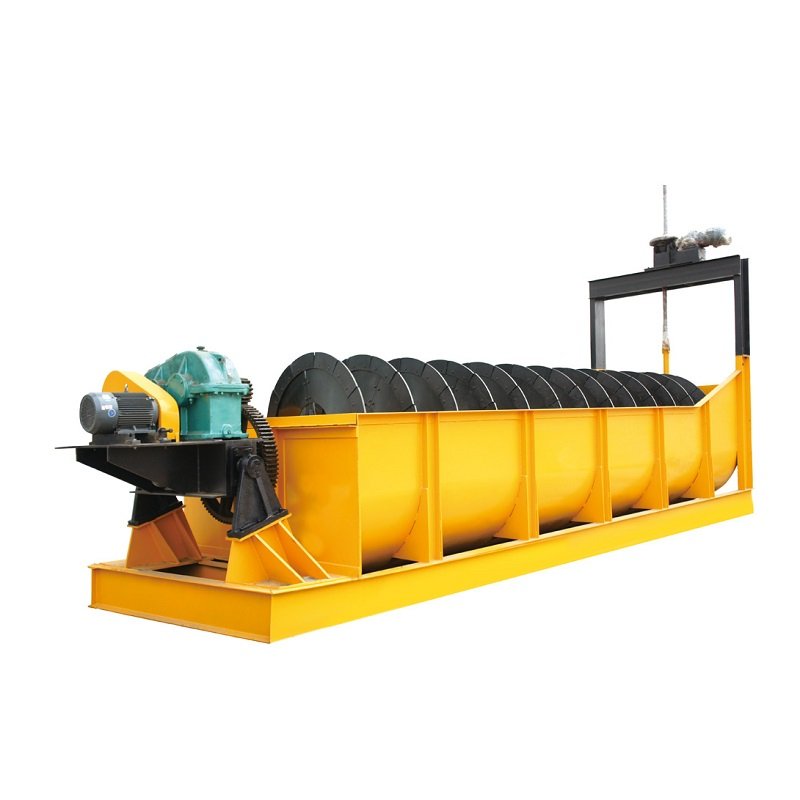
The spiral classifier is a type of mineral processing equipment. It performs mechanical classification by exploiting differences in solid particles’ settling velocities in a liquid, which vary with their specific gravity.
The spiral classifier machine classifies and separates material discharged from the grinding mill. It uses spiral blades to return coarse material to the mill’s feed inlet while discharging the separated fines through an overflow pipe.
Sandreck’s spiral classifiers for sale are widely used in mineral processing plants to form a closed-circuit loop with ball mills for ore classification. They also classify ore sands and fine slimes in gravity separation plants, classify slurry particle sizes in metal processing circuits, and deslime and dewater in ore washing operations.
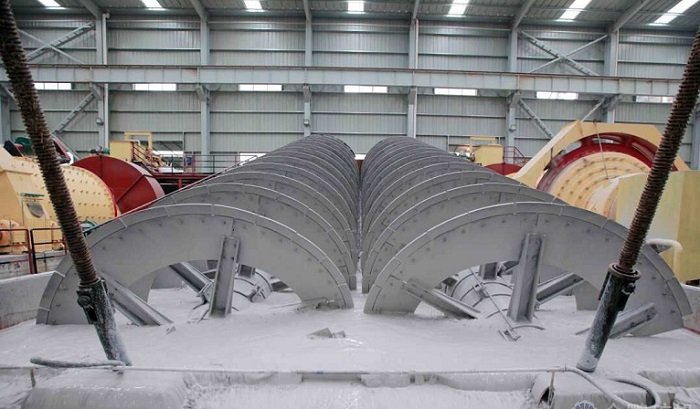
Spiral Classifier Machine Working Principle
The working principle of the spiral classifier machine is based on gravity sedimentation and mechanical transport.
1) Mixing and Sedimentation
Slurry discharged from the ball mill enters the bottom of the U-shaped tank through a side inlet. In the relatively calm water, coarse, heavy particles settle rapidly to the bottom, while fine, light particles settle slowly and remain suspended in the slurry’s upper layer.
2) Separation and Overflow
The level of the upper slurry layer—containing fine particles—rises continuously and spills over the overflow weir, becoming the overflow product (sized fine particles) that is sent to the next stage of the beneficiation process.
3) Transport and Sand Return
A spiral mechanism at the bottom of the tank rotates continuously, pushing the coarse particles (sand return) that settle at the bottom upward along the incline and lifting them out. They are ultimately discharged from the upper outlet and returned to the ball mill for regrinding.
4) Lifting Adjustment
A lifting mechanism adjusts the spiral blade height, changing the sedimentation area and fine-tuning particle-size classification and processing capacity.
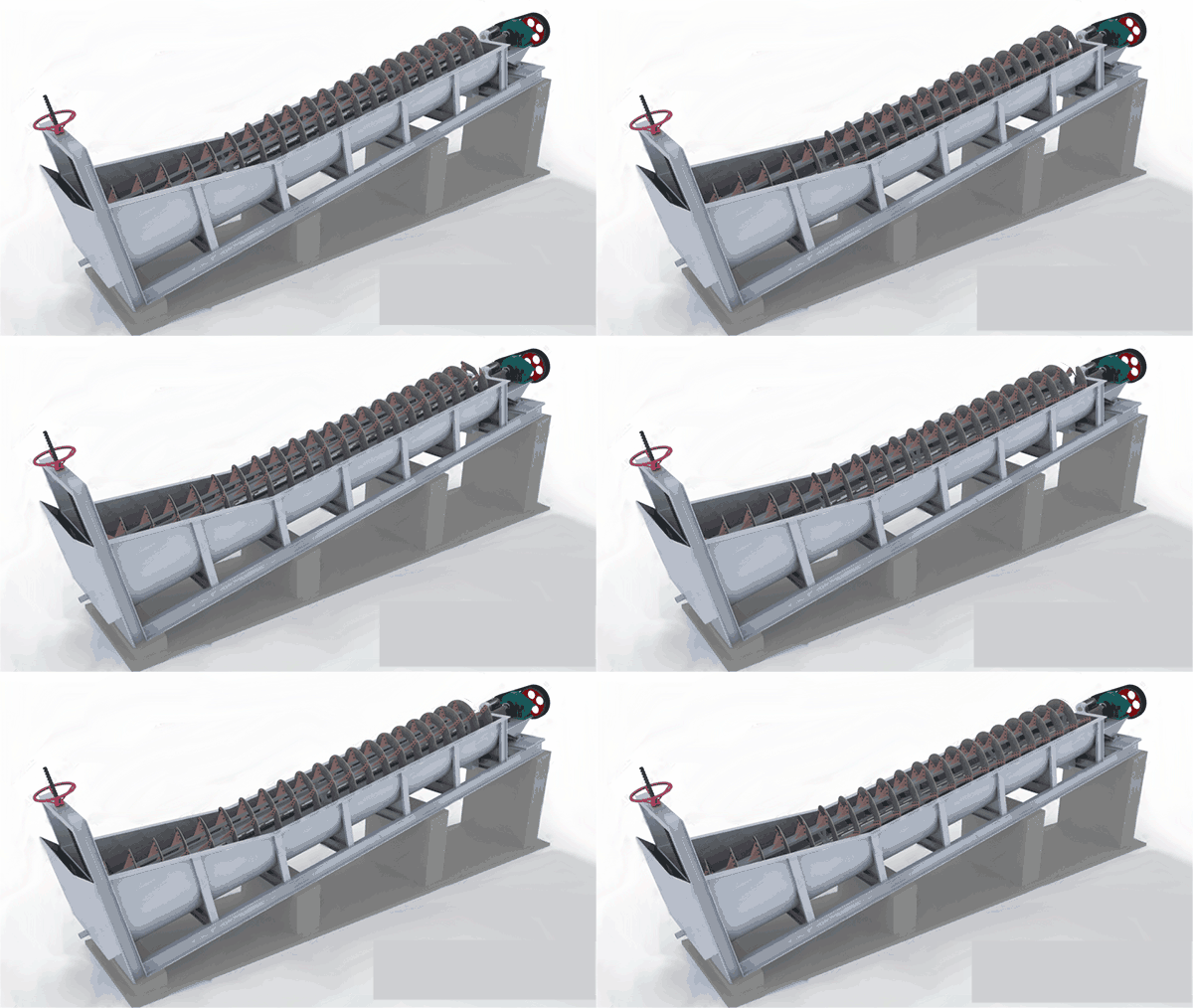
Advantages of Spiral Classifier for Sale
1. Low Energy Consumption: For the same processing capacity, the spiral classifier machine consumes 50% less energy than other horizontal or vertical classifiers.
2. High Efficiency: For the same processing capacity, the spiral classifier for sale operates with 50% higher efficiency than other horizontal or vertical classifiers.
3. High Precision: Achieves high classification fineness, completely eliminating oversized particles and screen residues from the product.
4. Low Rotational Speed: For the same classification particle size, the classifier wheel rotates at 50% of the speed required by other horizontal or vertical classifiers. The classifier wheel shows no wear when processing powders with a Mohs hardness of <5. For powders with a Mohs hardness of ≥7, the classifier wheel lasts 5 to 8 times longer than other horizontal or vertical models.
6. Versatile Configuration: Specialized classification structures can be configured to meet specific requirements.
7. System Compatibility: Can be integrated into open- or closed-circuit systems with various grinding equipment, such as ball mills, Raymond mills, impact mills, and jet mills.
8. High Automation: Features high stability and ease of operation. Operates under negative pressure, ensuring a dust-free, environmentally friendly production process.
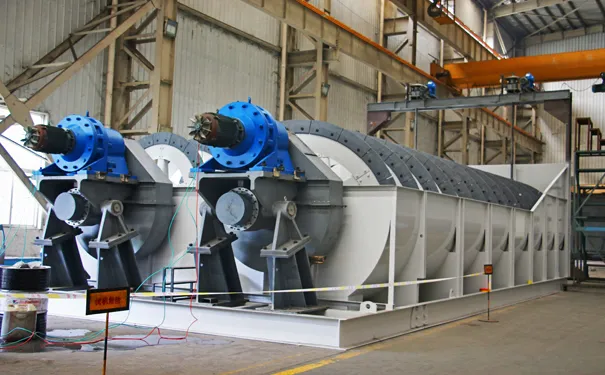
Spiral Classifier Machine Applications
- Closed-circuit Grinding and Classification (most common): Used in conjunction with a ball mill. It separates coarse and fine particles from the mill discharge. Coarse particles are returned for regrinding, while the fine-particle overflow (meeting specifications) proceeds to the beneficiation stage. This effectively prevents over-grinding and improves grinding efficiency.
- Pre-classification: Screens out fine material that already meets specifications before the ore enters the grinding mill. This avoids redundant grinding of fines, reduces the ball mill’s workload, and increases overall production capacity.
- Ore Washing and Desliming: Removes mud and impurities from the raw ore surface and separates coarse sand from fine slime; suitable for ores with high clay content. Serves as a pre-treatment step to purify the material for subsequent beneficiation operations.
- Sand Dewatering: The spiral mechanism conveys coarse sand upward, producing a dry, clean coarse-sand product.
Technical Parameters of Spiral Classifier for Sale
| Model
|
Screw Diameter (mm) | Flume Length (mm) | Screw Speed (r/min) | Capacity (t/d) | Motor Power (kW) | Overall Dimension L×W×H (mm≤)
|
Total Weight (t)
|
||
| Return Sand | Overflow | Driving | Lifting | ||||||
| FG-5 | 500 | 4500 | 8-12.5 | 135-210 | 32 | 1.1 | — | 5430×680×1480 | 1.9 |
| FG-7 | 750 | 5500 | 6-10 | 340-570 | 65 | 3 | — | 6720×980×1820 | 3.1 |
| FG-10 | 1000 | 6500 | 5-8 | 675-1080 | 110 | 5.5 | — | 7590×1240×2380 | 4.9 |
| FC-10 | 8400 | 675-1080 | 85 | 7.5 | — | 9600×1240×2680 | 6.2 | ||
| FG-12 | 1200 | 6500 | 4-6 | 1170-1870 | 155 | 7.5 | 2.2 | 8180×1570×3110 | 8.5 |
| FC-12 | 8400 | 1170-1870 | 120 | 7.5 | 2.2 | 10370×1540×3920 | 11.0 | ||
| FG-15 | 1500 | 8300 | 4-6 | 1830-2740 | 235 | 7.5 | 2.2 | 10410×1880×4080 | 12.5 |
| FC-15 | 10500 | 1830-2740 | 185 | 7.5 | 2.2 | 12670×1856×4180 | 16.8 | ||
| 2FG-15 | 8300 | 2280-5480 | 470 | 15 | 4 | 10410×3390×4080 | 22.1 | ||
| 2FC-15 | 10500 | 2280-5480 | 370 | 15 | 4 | 12670×3370×4890 | 30.7 | ||
| FG-20 | 2000 | 8400 | 3.6-5.5 | 3290-5940 | 400 | 11-15 | 3 | 10790×2530×4490 | 20.5 |
| FC-20 | 12900 | 3210-5940 | 320 | 15-18.5 | 3 | 15610×2530×4490 | 28.5 | ||
| 2FG-20 | 8400 | 7780-1180 | 800 | 11(2 units) | 5.5 | 11000×4600×4700 | 35.5 | ||
| 2FC-20 | 12900 | 7780-1180 | 640 | 18.5(2 units) | 5.5 | 15760×4600×5640 | 48.7 | ||
| FG-24 | 2400 | 9130 | 3.67 | 6800 | 580 | 22 | 3 | 11650×2910×4970 | 28.7 |
| FC-24 | 14130 | 6800 | 490 | 22 | 4 | 16580×2930×7190 | 41.0 | ||
| 2FG-24 | 9130 | 13600 | 1160 | 18.5(2 units) | 5.5 | 12710×5430×5690 | 45.8 | ||
| 2FC-24 | 14130 | 13700 | 910 | 30(2 units) | 7.5 | 17710×5430×8000 | 67.9 | ||
| FG-30 | 3000 | 12500 | 2-4 | 11650 | 890 | 30 | 4 | 16020×3320×6350 | 37.6 |
| 2FG-30 | 12500 | 23300 | 1785 | 30(2 units) | 7.5 | 16020×6640×6350 | 78.0 | ||
| 2FC-30 | 14300 | 23300 | 1410 | 30(2 units) | 7.5 | 17091×6640×8680 | 89.8 | ||
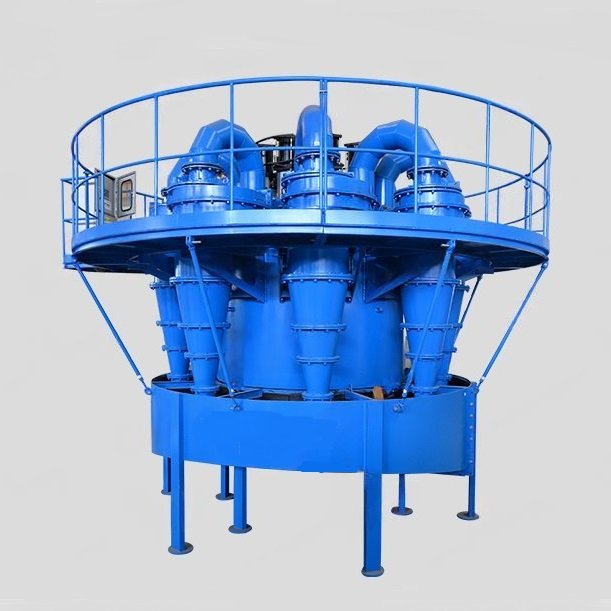

Related products
-
Hydrocyclone Filter
The hydrocyclone filter is a classification device commonly used in mining, primarily for closed-circuit grinding, solid-liquid separation, and tailings treatment.
- Capacity: 5 – 360 m³/h
- Feed Size: ≤ 16 mm
- Separation Size: 10 – 220 μm
-
Hydrocyclone Separator
Hydrocyclone separators are used in ferrous and non-ferrous metal mines for grinding and classification, thickening, dewatering, desliming, and ultrafine classification, as well as for tailings backfilling, dam construction, and recovery.
- Capacity: 5 – 360 m³/h
- Feed Size: ≤ 16 mm
- Separation Size: 10 – 220 μm
-
Spiral Classifier Equipment
Spiral classifier equipment is primarily used in grinding circuits for preliminary and check classification, as well as in sand and gravel aggregate processing for desliming and dewatering.
- Capacity: sand return rate: 135–23300 t/d; overflow rate: 32 – 1410 t/d
- Feed Size: ≤ 0.15 mm
- Spiral diameter: 500- 3000 mm
-
Mining Vibrating Screens
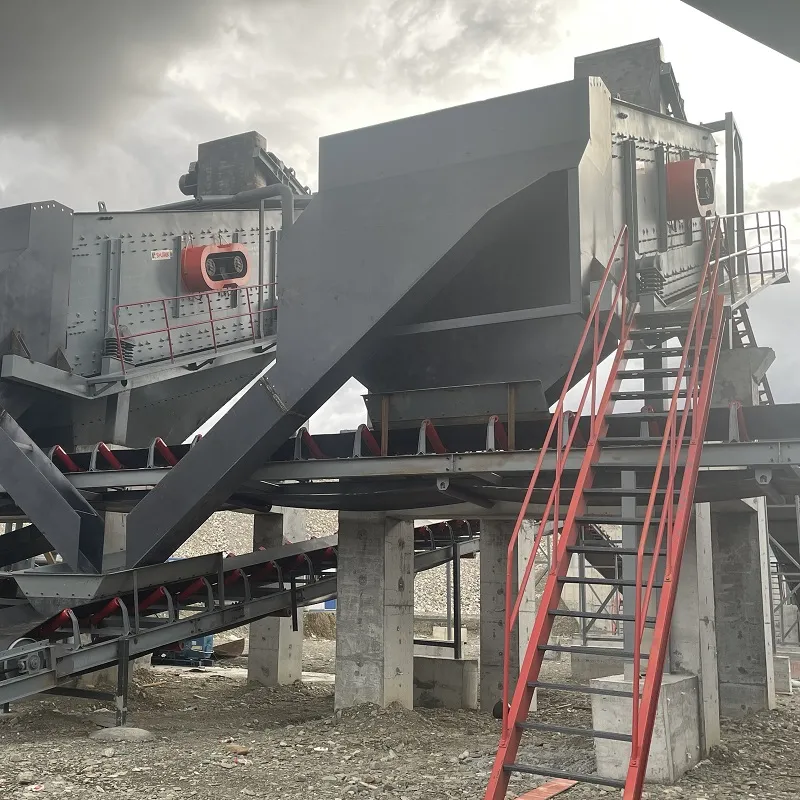
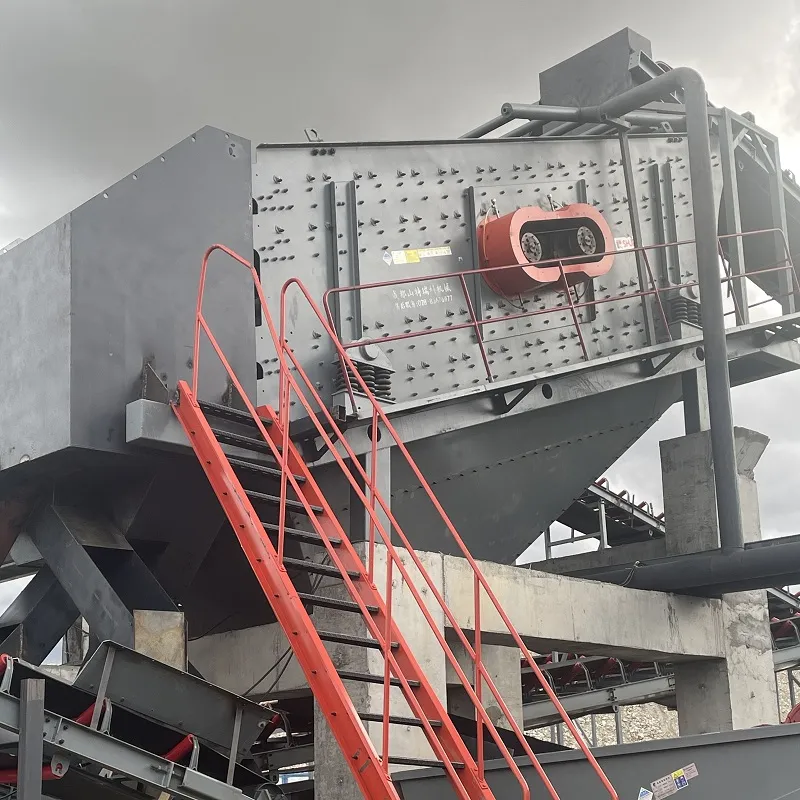
Mining vibrating screens are widely used in the mining and construction industries, particularly for screening coarse-grained materials. They offer advantages such as a high-strength screen frame, a well-designed mechanical structure, low operating temperatures for large-clearance bearings, low noise levels, and a long service life.
- Capacity: 70 – 500 t/h
- Feed Size: ≤ 250 mm
- Screen Mesh: < 100 mm
-
Industrial Vibrating Screens
This industrial vibrating screen operates with a circular motion. This new multi-deck vibrating screen is designed specifically for screening stone in quarries. It is also suitable for product classification in sectors such as coal preparation, mineral processing, construction materials, electric power, and the chemical industry.
- Capacity: 70 – 500 t/h
- Feed Size: ≤ 250 mm
- Screen Mesh: < 100 mm