
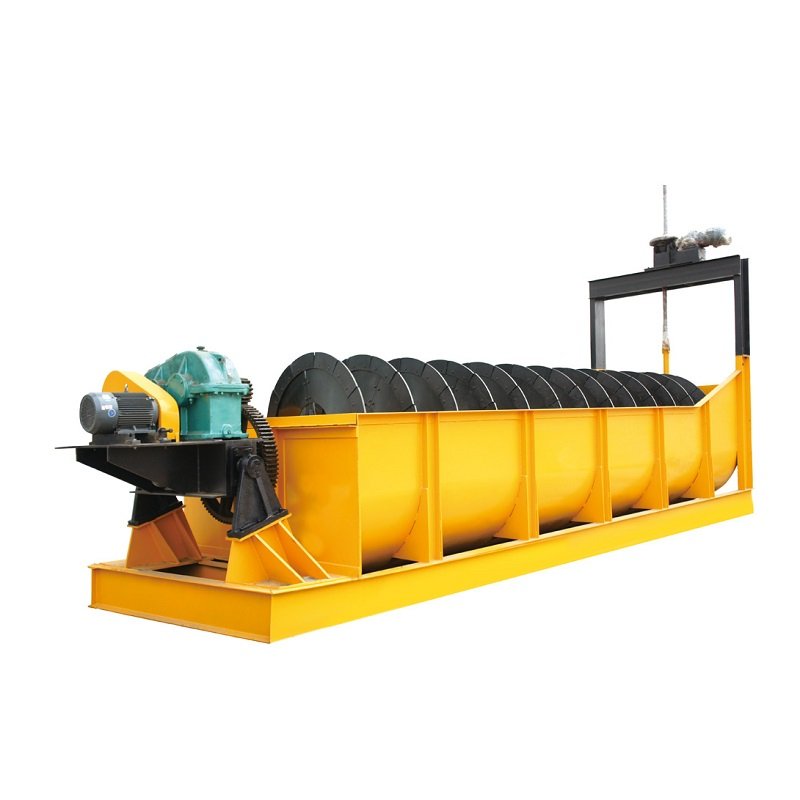
The spiral classifier equipment is a critical piece of equipment in mineral processing plants, forming a closed-circuit loop with the ball mill. It is primarily used to classify metallic and non-metallic ores. It separates the slurry discharged from the ball mill based on settling velocity into fine overflow particles (the qualified product) and coarse return sand (sent back to the ball mill for regrinding). They apply to a wide range of metallic and non-metallic minerals, including iron, copper, gold, tungsten, tin, quartz, feldspar, and fluorite.
Spiral classifiers are categorized as single-spiral or double-spiral based on the number of spirals. They are also classified as high-weir or submerged based on how deep the spiral blades are submerged relative to the overflow level. The high-weir type is used for classifying ores with an overflow particle size of 0.83 mm to 0.15 mm, while the submerged type is used for ores with an overflow particle size of 0.15 mm to 0.07 mm.
Spiral Classifier Equipment Working Principle
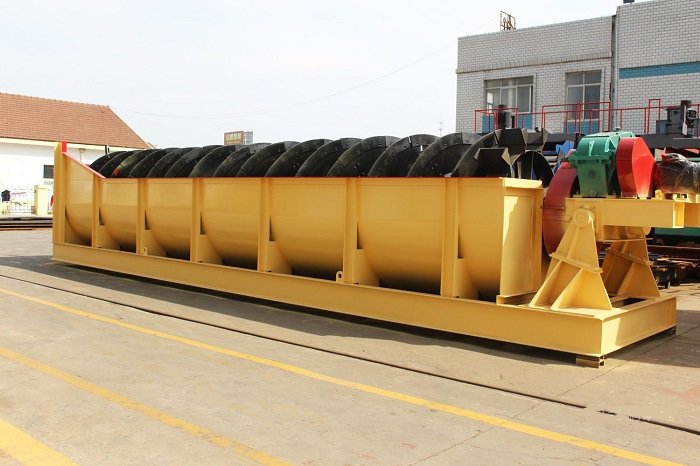
Spiral classifier machines separate particles by exploiting differences in settling velocities in water, which vary with particle size and specific gravity. They are commonly integrated with ball mills to form a closed-circuit grinding system.
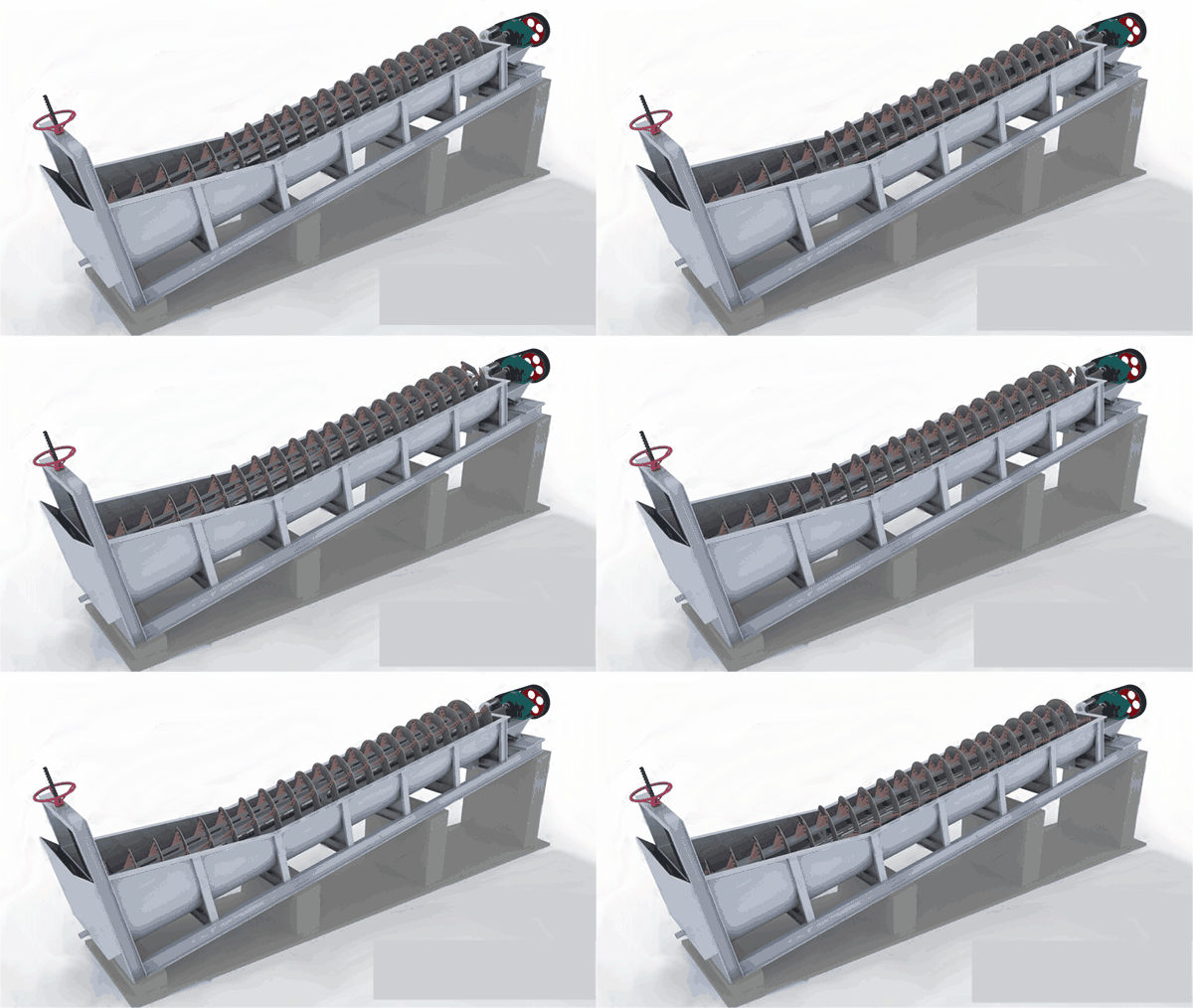
The tank is installed at an incline, typically 12° to 18.5°, and houses a slowly rotating spiral shaft with spiral blades.
- After grinding, the slurry enters the settling zone at the tank’s lower end through a feed inlet in the middle section.
- Coarse and heavy particles settle to the semi-circular tank bottom. The rotating spiral blades continuously convey the settled material (sands) upward. During this ascent, the material undergoes dewatering. Finally, the sands are discharged through the return port at the upper end and sent back to the ball mill for regrinding.
- Fine, light particles remain suspended in the upper layer of the slurry because they do not have time to settle. They flow over the overflow weir at the tank’s lower end as qualified fine product and proceed to the next stage of mineral processing.
- The spiral’s slow rotation gently agitates the slurry, preventing fine particles from settling and mixing with the coarse sands, ensuring effective classification. A lifting mechanism lets operators raise the spiral during shutdowns, preventing it from becoming buried in settled material and ensuring it can be restarted.
Features of Spiral Classifier Equipment
1) Advanced Technology and Simple Process
This spiral classifier equipment features advanced technology and a streamlined process, making it particularly suitable for large and medium-sized dry sand-making production lines. Customers can choose between single-spiral and double-spiral configurations based on specific needs, and a wide range of tank designs is available.
2) High Precision and Low Rotational Speed
It offers high classification precision, effectively eliminating oversized particles and screen residues. For a given cut size, the classification wheel operates at 50% of the speed required by other horizontal or vertical classifiers. The classification wheel shows no wear when processing powders with a Mohs hardness below 5. When processing powders with a Mohs hardness of 7 or higher, the classification wheel lasts 5 to 8 times longer than other horizontal or vertical models.
3) High Output and Wide Application Range
Large-scale models can achieve an output of up to 50 t/h. Specialized classification structures can be configured to meet unique requirements. The unit can be integrated into closed-circuit or open-circuit systems with various grinding equipment, such as ball mills, Raymond mills, impact mills, and jet mills.
4) Large Sedimentation Area and Excellent Classification Performance
The long, narrow tank design extends the time materials remain suspended in the water. Combined with a spacious sedimentation area, this facilitates superior material classification. An optimal combination of slurry pool depth, surface area, and spiral configuration ensures precise control over classification performance.
Spiral Classifier Equipment Applications
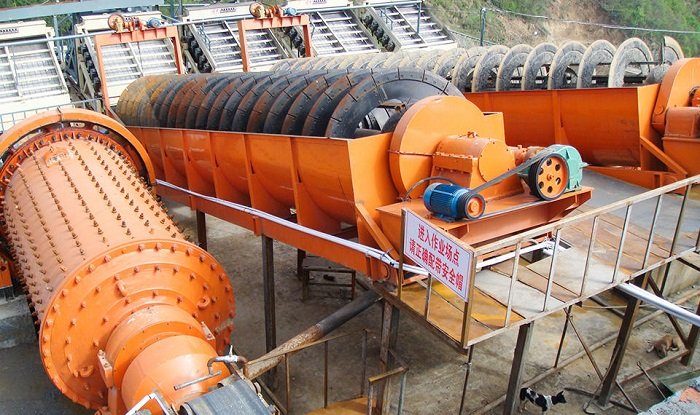
- Metal Mines: Grinding and beneficiation processes for various metal ores, including iron, copper, gold, lead-zinc, manganese, tungsten, and tin.
- Non-metallic Minerals: Grinding, desliming, and purification operations for ores such as quartz sand, feldspar, fluorite, and spodumene.
- Sand, Gravel, and Construction Materials: Washing and desliming of manufactured sand and river sand to reduce clay content and improve aggregate quality.
- Other Applications: Coal washing and desliming; wet grinding and classification of chemical raw materials.
Technical Parameters of Spiral Classifier Equipment
| Model
|
Screw Diameter (mm) | Flume Length (mm) | Screw Speed (r/min) | Capacity (t/d) | Motor Power (kW) | Overall Dimension L×W×H (mm≤)
|
Total Weight (t)
|
||
| Return Sand | Overflow | Driving | Lifting | ||||||
| FG-5 | 500 | 4500 | 8-12.5 | 135-210 | 32 | 1.1 | — | 5430×680×1480 | 1.9 |
| FG-7 | 750 | 5500 | 6-10 | 340-570 | 65 | 3 | — | 6720×980×1820 | 3.1 |
| FG-10 | 1000 | 6500 | 5-8 | 675-1080 | 110 | 5.5 | — | 7590×1240×2380 | 4.9 |
| FC-10 | 8400 | 675-1080 | 85 | 7.5 | — | 9600×1240×2680 | 6.2 | ||
| FG-12 | 1200 | 6500 | 4-6 | 1170-1870 | 155 | 7.5 | 2.2 | 8180×1570×3110 | 8.5 |
| FC-12 | 8400 | 1170-1870 | 120 | 7.5 | 2.2 | 10370×1540×3920 | 11.0 | ||
| FG-15 | 1500 | 8300 | 4-6 | 1830-2740 | 235 | 7.5 | 2.2 | 10410×1880×4080 | 12.5 |
| FC-15 | 10500 | 1830-2740 | 185 | 7.5 | 2.2 | 12670×1856×4180 | 16.8 | ||
| 2FG-15 | 8300 | 2280-5480 | 470 | 15 | 4 | 10410×3390×4080 | 22.1 | ||
| 2FC-15 | 10500 | 2280-5480 | 370 | 15 | 4 | 12670×3370×4890 | 30.7 | ||
| FG-20 | 2000 | 8400 | 3.6-5.5 | 3290-5940 | 400 | 11-15 | 3 | 10790×2530×4490 | 20.5 |
| FC-20 | 12900 | 3210-5940 | 320 | 15-18.5 | 3 | 15610×2530×4490 | 28.5 | ||
| 2FG-20 | 8400 | 7780-1180 | 800 | 11(2 units) | 5.5 | 11000×4600×4700 | 35.5 | ||
| 2FC-20 | 12900 | 7780-1180 | 640 | 18.5(2 units) | 5.5 | 15760×4600×5640 | 48.7 | ||
| FG-24 | 2400 | 9130 | 3.67 | 6800 | 580 | 22 | 3 | 11650×2910×4970 | 28.7 |
| FC-24 | 14130 | 6800 | 490 | 22 | 4 | 16580×2930×7190 | 41.0 | ||
| 2FG-24 | 9130 | 13600 | 1160 | 18.5(2 units) | 5.5 | 12710×5430×5690 | 45.8 | ||
| 2FC-24 | 14130 | 13700 | 910 | 30(2 units) | 7.5 | 17710×5430×8000 | 67.9 | ||
| FG-30 | 3000 | 12500 | 2-4 | 11650 | 890 | 30 | 4 | 16020×3320×6350 | 37.6 |
| 2FG-30 | 12500 | 23300 | 1785 | 30(2 units) | 7.5 | 16020×6640×6350 | 78.0 | ||
| 2FC-30 | 14300 | 23300 | 1410 | 30(2 units) | 7.5 | 17091×6640×8680 | 89.8 | ||


Related products
-
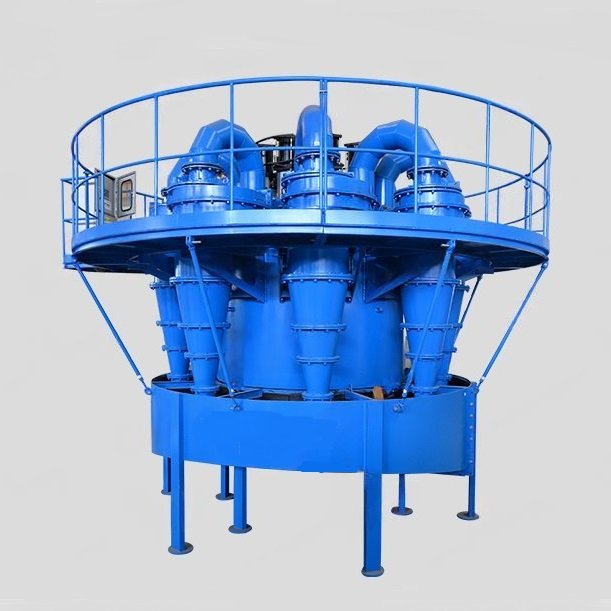
Hydrocyclone Filter
The hydrocyclone filter is a classification device commonly used in mining, primarily for closed-circuit grinding, solid-liquid separation, and tailings treatment.
- Capacity: 5 – 360 m³/h
- Feed Size: ≤ 16 mm
- Separation Size: 10 – 220 μm
-
Hydrocyclone Separator
Hydrocyclone separators are used in ferrous and non-ferrous metal mines for grinding and classification, thickening, dewatering, desliming, and ultrafine classification, as well as for tailings backfilling, dam construction, and recovery.
- Capacity: 5 – 360 m³/h
- Feed Size: ≤ 16 mm
- Separation Size: 10 – 220 μm
-
Spiral Classifier Machine
Spiral classifier machines are widely used for classification in the grinding circuits of mineral processing plants, as well as for ore washing, desliming, and dewatering operations. Their primary advantages include simple construction, reliable performance, and ease of operation.
- Capacity: sand return rate: 135–23300 t/d; overflow rate: 32 – 1410 t/d
- Feed Size: ≤ 0.15 mm
- Spiral diameter: 500- 3000 mm
-
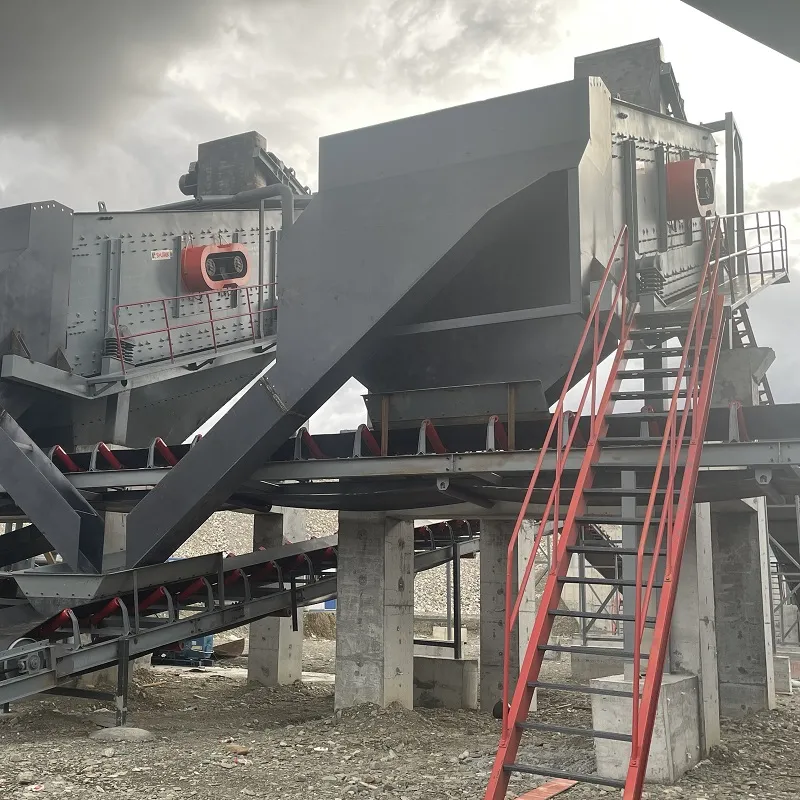
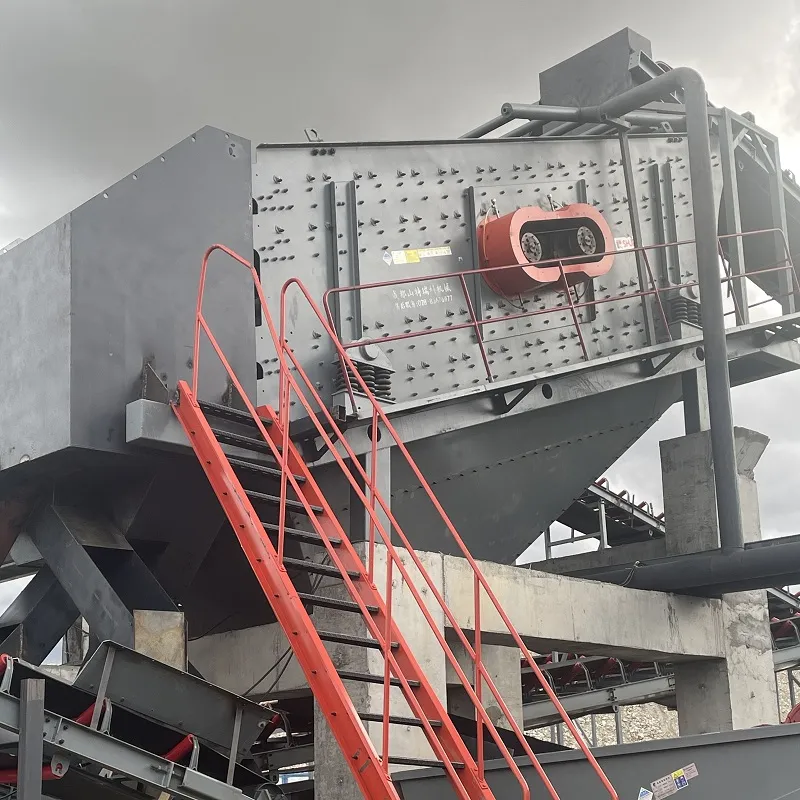
Mining Vibrating Screens
Mining vibrating screens are widely used in the mining and construction industries, particularly for screening coarse-grained materials. They offer advantages such as a high-strength screen frame, a well-designed mechanical structure, low operating temperatures for large-clearance bearings, low noise levels, and a long service life.
- Capacity: 70 – 500 t/h
- Feed Size: ≤ 250 mm
- Screen Mesh: < 100 mm
-
Industrial Vibrating Screens
This industrial vibrating screen operates with a circular motion. This new multi-deck vibrating screen is designed specifically for screening stone in quarries. It is also suitable for product classification in sectors such as coal preparation, mineral processing, construction materials, electric power, and the chemical industry.
- Capacity: 70 – 500 t/h
- Feed Size: ≤ 250 mm
- Screen Mesh: < 100 mm