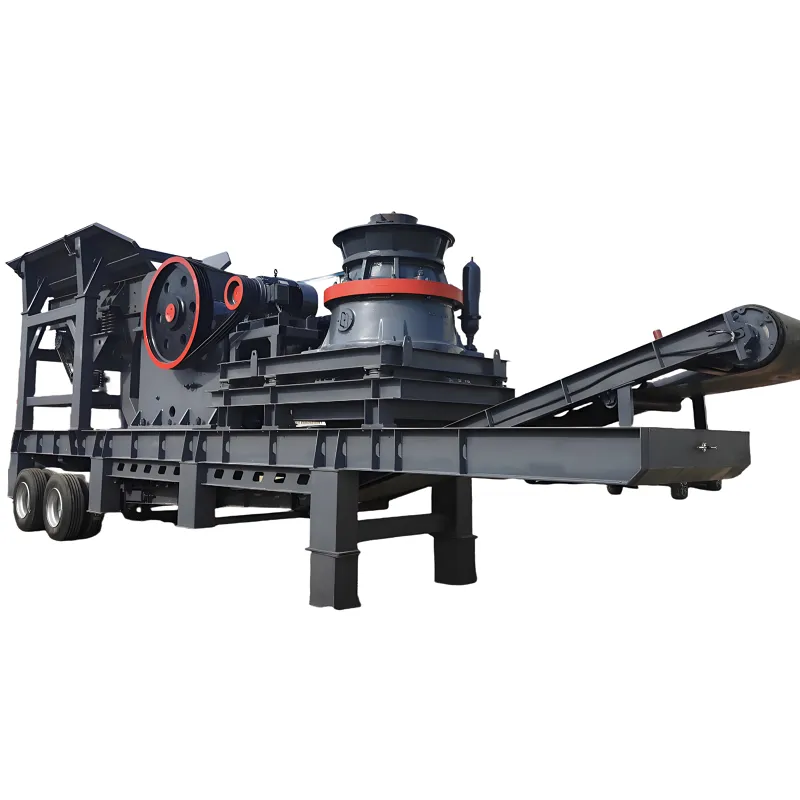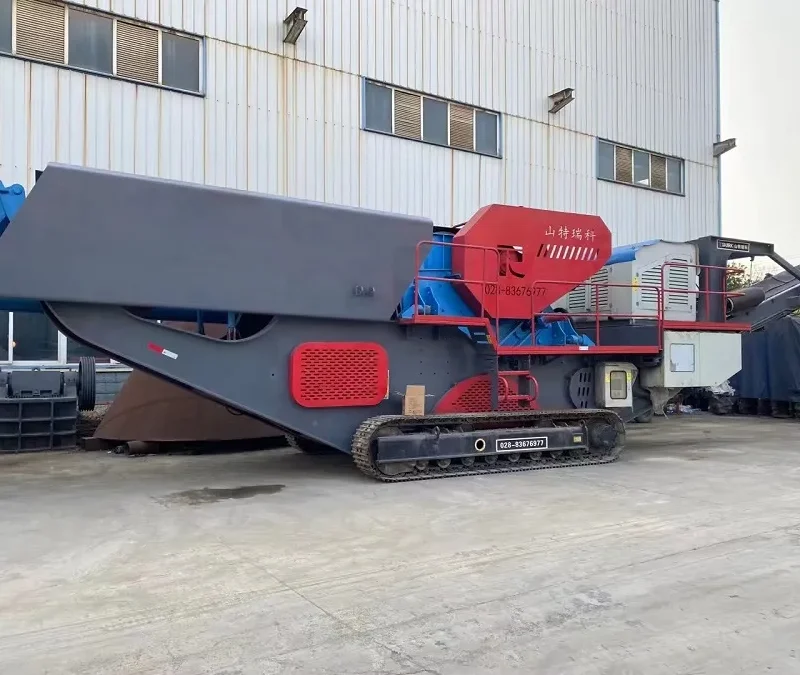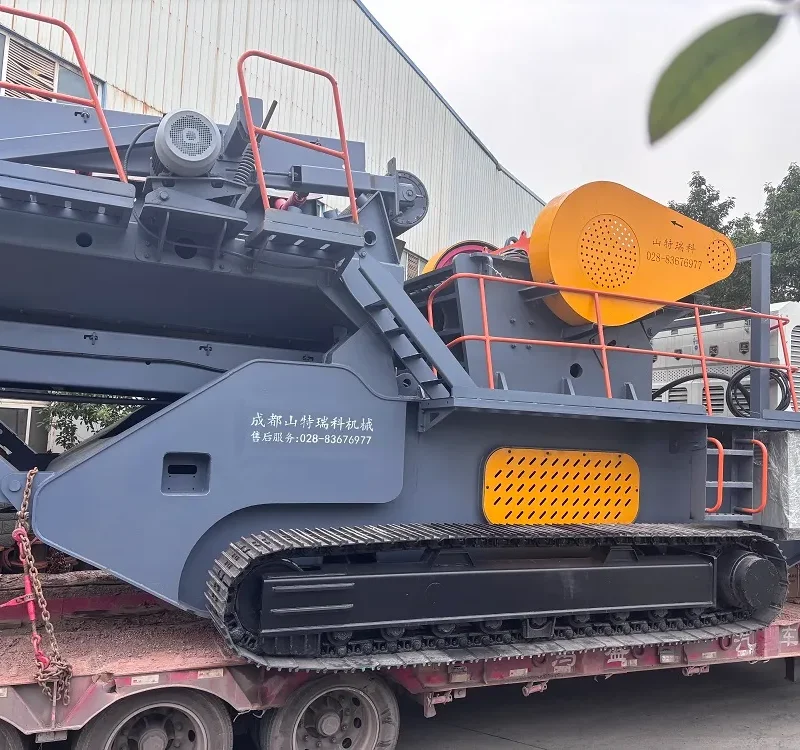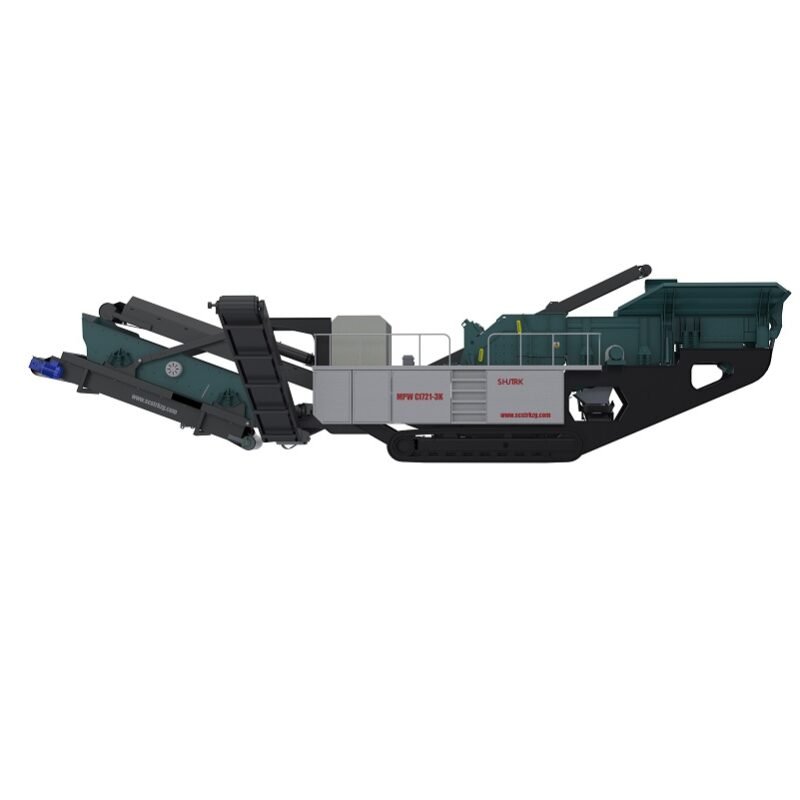
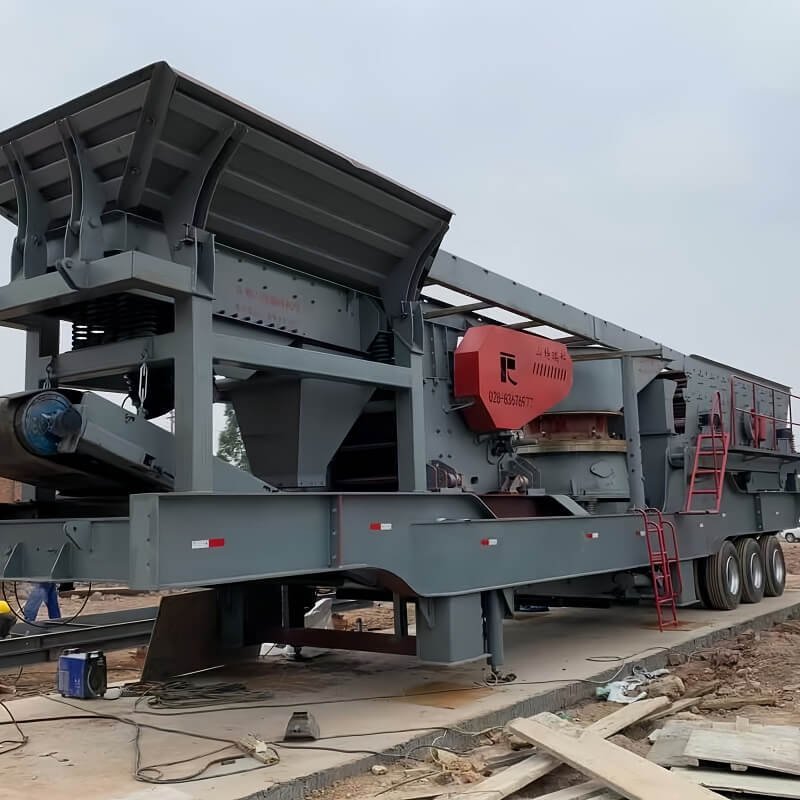
The rock crusher for sale is an innovative piece of rock-crushing equipment designed for industries—such as metallurgy, chemicals, construction materials, highways, and railways—that require mobile processing operations for materials like construction waste, river pebbles, granite, basalt, limestone, and quartz. Its design focuses on overcoming the site limitations associated with traditional crushing operations, while its integrated structure helps reduce operational costs for customers.
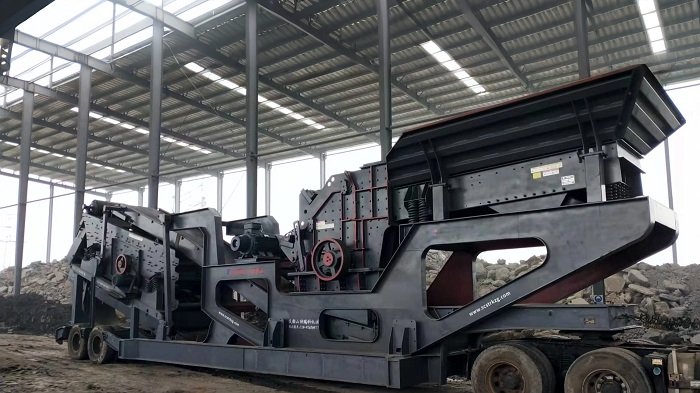
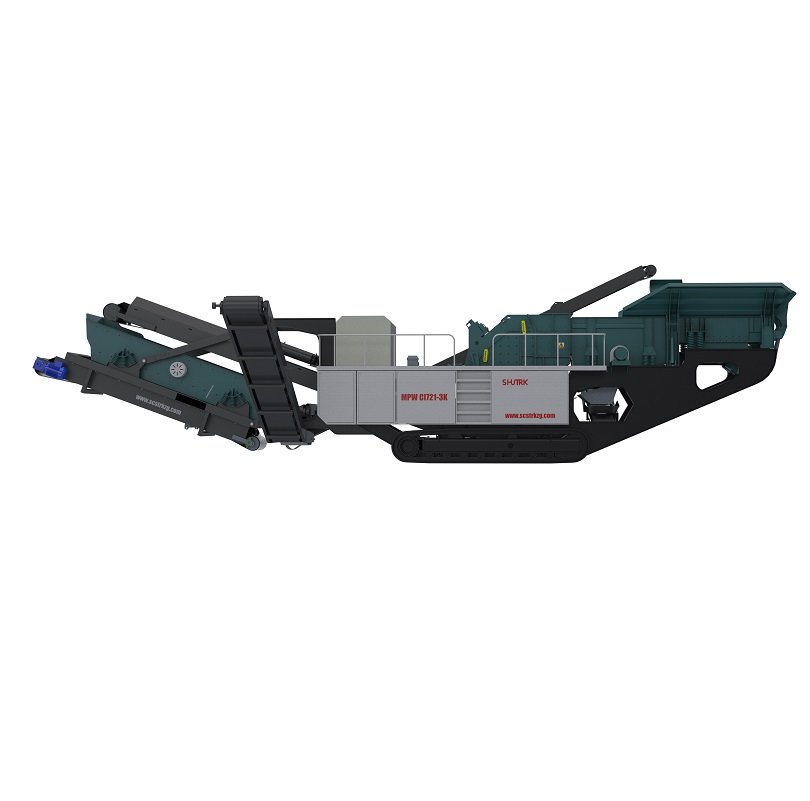
The mobile rock crushing equipment features an all-in-one design that integrates a crusher, vibrating feeder, screening system, and onboard power unit, offering both highway transportability and the ability to maneuver across complex terrain. Its chassis height and compact layout facilitate rapid deployment, with a processing capacity ranging from 20 to 450 tons per hour.
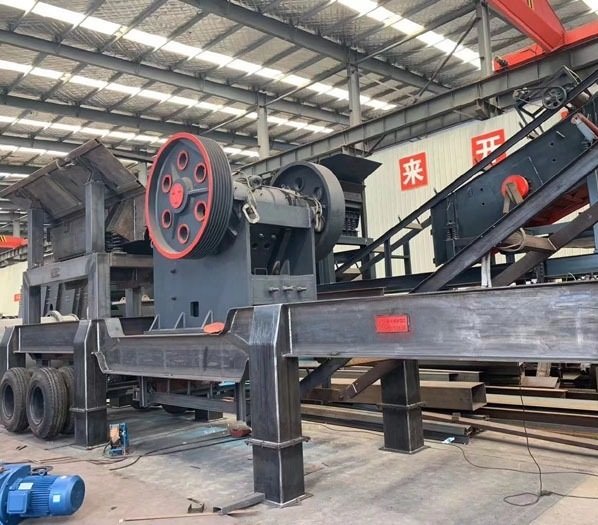
The core component—a jaw crusher—handles primary crushing, while a dual-layer feeder helps boost output. The system uses several physical crushing principles, including compression, splitting, and impact, allowing it to adapt to different materials. Customers can choose from various configurations based on operation scale and specific material requirements.
How Does a Mobile Rock Crusher Work
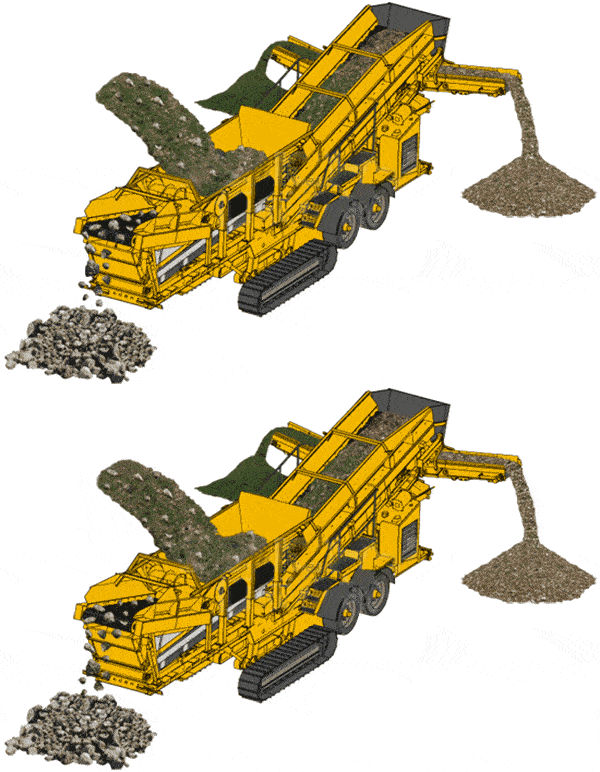
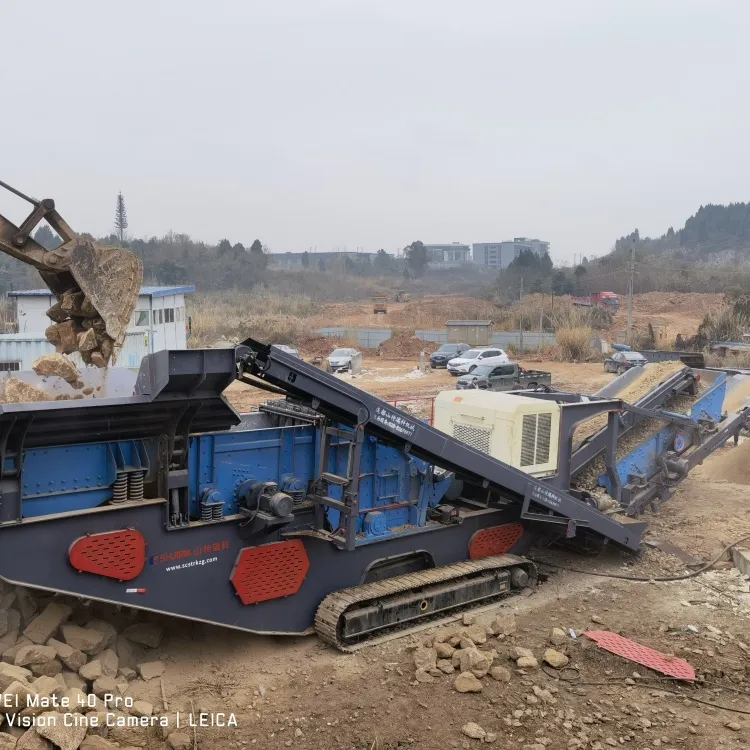
A loader feeds material into a vibrating feeder, which conveys the raw material at a steady rate while pre-separating soil and fines. The material is continuously fed into the primary crusher (jaw, impact, or cone crusher), where it is crushed through compression and impact forces. The crushed product is transported via belt conveyor to a vibrating screen for size classification. Finished aggregates that meet specifications are conveyed to a central stockpile, while oversized material is returned to the crusher via a return conveyor for secondary processing. The entire system operates in a closed-loop circuit.
Advantages of Mobile Rock Crushing Plant
1) Flexible Relocation and High Adaptability
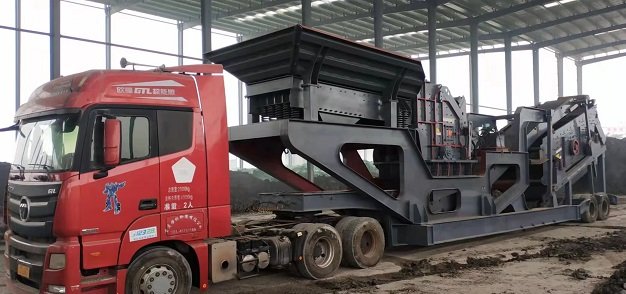
The entire unit is mounted on a tracked or wheeled chassis, eliminating the need for fixed installation. Operators can drive it directly to the work site and operate it in mountainous areas, confined spaces, or along roadsides. Tracked stone crushers offer climbing capabilities and adapt well to complex terrain.
2) Integrated Design
A vibrating feeder, primary rock crusher, vibrating screen, and belt conveyors are integrated into a single unit. With complete onboard piping and wiring, the system is ready for operation shortly after arrival, eliminating the need for extensive steel-structure infrastructure.
3) Reduced Material Transport Costs
Mobile rock-crushing equipment enables on-site crushing of raw materials, eliminating the need to transport large stones over long distances and significantly cutting dump-truck transportation costs. It is particularly well-suited for mining operations, construction waste processing, and road infrastructure projects.
4) Flexible Configuration
Crushing units—such as jaw crusher, impact crusher, or cone crushers—can be selected based on specific needs for primary crushing, secondary/fine crushing, or aggregate shaping. Units can operate independently or combine with other mobile stations to form a complete crushing production line.
Mobile Rock Crusher Applications
The mobile rock crushing plant is an innovative piece of crushing equipment that significantly expands the application scope of traditional stationary rock crushers. It suits diverse production environments and supports environmental protection initiatives.
1. Production of Sand and Aggregate
Market demand for sand and aggregate is high, and manufactured sand can fully replace natural sand in the construction industry. Mobile crushing stations integrate crushing and screening systems, allowing flexible production-line configurations to meet output requirements for various sand and aggregate particle sizes.
2. Mining and Quarrying Operations
Mobile rock crushing machines suit primary rock crushing in small-to-medium-sized open-pit mines, especially for projects with dispersed mining sites or short operational cycles. Their tracked design adapts to complex terrain and reduces transportation costs by 30% compared to stationary equipment.
3. Tailings Processing
Mining operations generate large quantities of tailings after mineral processing. Historically, tailings were typically used as backfill material for underground mining areas. However, advances in crushing technology now allow tailings to be crushed and processed for use in sand making or as construction raw materials.

4. Construction Waste Processing
Landfilling construction waste not only wastes land resources but also causes secondary pollution. Mobile rock crushing equipment can process construction waste into materials for recycled bricks or permeable pavers, maximizing its economic value.
5. Solid Waste Recycling
Solid waste often requires pretreatment—such as crushing and screening—before it can be processed and utilized. Compact mobile rock crushers can access solid waste storage sites to operate on-site, reducing transportation needs and infrastructure investment costs.
Technical Parameters of Mobile Rock Crushing Machine
| Model | Feeding and screening equipment | Crushing equipment | Belt conveyor | Hopper volume (m³) | Max.feed size (mm) | Transportation dimension (mm) |
| K6T70-4 | GZD0936 YZS 1548 | PE500X750 PYB900 | B650 x 10.5m | 3 | 425 | 15150 ×2800 ×4500 |
| K6T100-4 | GZD0936 YZS 1845-3 | C6X80 HST100 | B800 x 10.5m | 4 | 430 | 15500 x 2650 ×4000 |
| K6T150-4 | GZD0936 YZS 1845-3 | C6X80 HST160 | B800 x 10.5m | 4 | 430 | 15500 x 2650 ×4000 |
| K6E760-1 | GZD1245 | PEW760 | B1200 x 10m | 6.5 | 630 | 12800 x 2800 ×4200 |
| K6C100-1 | GZD1245 | C6X100 | B1200 x 10m | 6.5 | 630 | 12800 x 2800 ×4100 |
| K6C110-1 | GZD1245 | C6X110 | B1200 x 10m | 6.5 | 720 | 12800 x 2800 ×4100 |
| K6CI1213-1C | GZD1245 | CI5X1213 | B1200 x 10m | 6.5 | 530 | 12800 x 2800 ×4100 |
| K6F1315-1C | GZD1245 | CI5X1315 | B1200 x 10m | 6.5 | 600 | 12800 x 2800 ×4100 |
| K6H300-1 | — | HPT300 | B1200 x 6.3m | 4.5 | 180 | 12650 ×2800×4000 |
| K6CI1213-1 | — | CI5X1213 | B1200 x 6.3m | 4.5 | 300 | 12650 x 2800 ×4000 |
| K6CI1315-1 | — | CI5X1315 | B1200 x 6.3m | 4.5 | 300 | 12650 × 2800 ×4000 |
| K6V9026-1 | — | VSI6X9026 | B1200 ×6.3m | 4.5 | 35 | 12650 ×2800×4000 |
| K6H300D-2 | — | HPT300 HPT300 | B1200 x 6.3m | 4.5 | 180 | 14850 x 2800 ×4000 |
| K6H300V-2 | — | HPT300 VSI6X1040 | B1200 x 6.3m | 4.5 | 180 | 14850 x 2800 ×4000 |
| K6S1860-1 | S5X1860-3 | — | B1000 x 10m | — | 200 | 15200 x 3000 ×4200 |
| K6S2160-1 | S5X2160-3 | — | B1000 x 10m | — | 200 | 15200 x 3000 ×4200 |
| K6S2460-1 | S5X2460-3 | — | B1000 x 10m | — | 200 | 15200 x 3000 ×4200 |
| K6H300S-2 | 3YZS 2160 | HPT300 | B1000 x8.5m | — | 180 | 15500 ×2700×4480 |
| K6T160S-2 | 3YZS2160 | HST160S | B1000 x8.5m | — | 250 | 15500 ×2700×4480 |
| K6F1214S-2 | 3YZS1860 | PFW1214 III | B1000 x8.5m | — | 250 | 15500 ×2700×4480 |
| K6F13155-2 | 3YZS2160 | PFW1315 III | B1000 x 8.5m | — | 300 | 15500 x 3000 ×4480 |
| K6V85225-2 | 3YZS 1860 | VSI5X8522 | B1000 x 8.5m | — | 35 | 15500 ×2700×4480 |
| K6V95325-2 | 3YZS2160 | VSI5X9532 | B1000 x8.5m | — | 40 | 15500 ×2700×4480 |
| K6V1145S-2 | 3YZS2460 | VSI5X1145 | B1000 x8.5m | — |

Related products
-
Mobile Cone Crusher
The mobile cone crusher utilizes mobile crushing technology to meet customers’ requirements for intermediate and fine crushing. It is primarily used for processing stone materials in applications such as highway, railway, and hydropower construction projects, where mobility is required. Users can select from various configuration options based on the type of raw material, the scale of operations, and the specific requirements for the finished product.
- Feed Size: ≤165-240 mm
- Capacity: 90-630 t/h
-
Portable Jaw Crushers
The portable jaw crushing plant features an integrated unit design. Its chassis is equipped with a wheeled mobile system, offering both high ground clearance and a small turning radius—enabling travel on standard roads as well as flexible maneuvering across complex job sites.
- Capacity: 40–650 t/h
- Feed Size: ≤500–900 mm
-
Wheeled Mobile Jaw Crusher
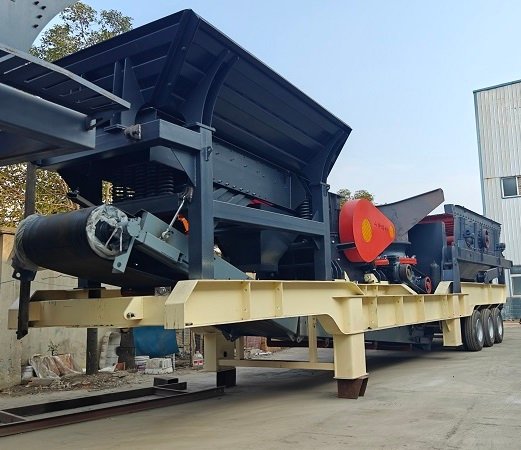
The tire-mounted mobile jaw crushing plant utilizes a wheeled mobile configuration. Featuring a high chassis and a small turning radius, it is well-suited for travel on public roads as well as within the confines of a crushing site. This design facilitates easy access to work locations and provides a flexible operational space for the entire crushing process.
- Capacity: 40–650 t/h
- Feed Size: ≤500–900 mm
-
Track Mobile Jaw Crushing Plant
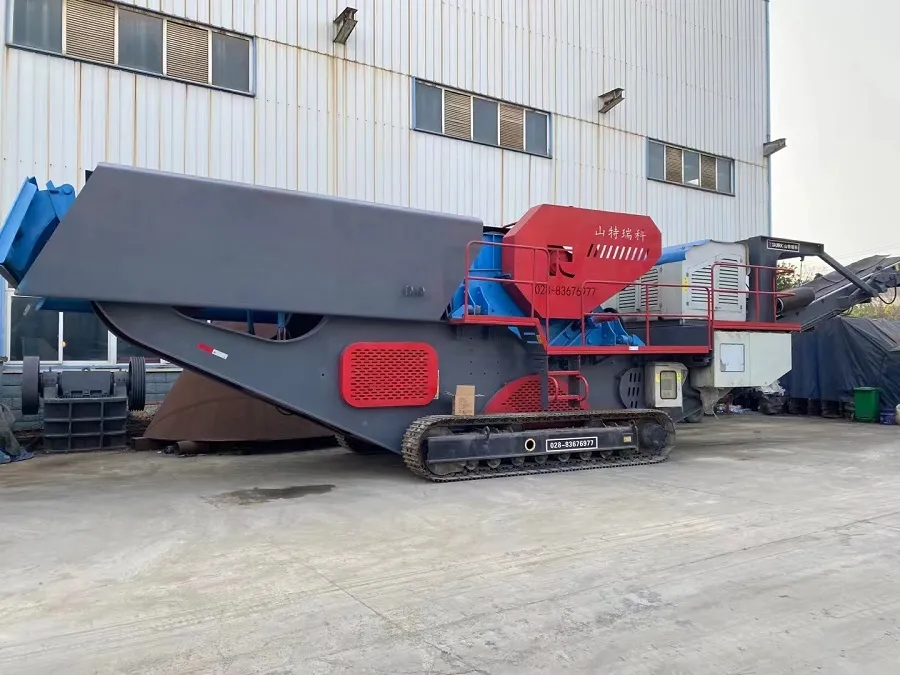
The track mobile jaw crusher utilizes a crawler-type undercarriage and a hydraulic drive system. It is primarily designed for use in mountainous areas, excavation sites, and regions with uneven or complex terrain. The equipment features strong climbing capability, a high degree of automation, advanced technology, and ease of operation.
- Capacity: 40-160 t/h
- Feed Size: ≤450-500 mm
-
Mobile Jaw Crusher
Coarse crushing equipment. It consists of a jaw crusher integrated onto a mobile chassis. Equipped with its own feeding, conveying, and electrical control systems, the mobile jaw crushing plant requires no permanent foundation. Once moved to the site, it is ready for immediate operation. It is primarily used for the initial stage of crushing hard materials.
- Capacity: 40–650 t/h
- Feed Size: ≤500–900 mm
-
Mobile Stone Crusher
A mobile stone crusher is mobile crushing equipment that integrates feeding, crushing, screening, and conveying. It is designed to eliminate operational constraints related to the crushing site, environment, and logistics, providing customers with efficient, cost-effective, and flexible solutions for project operations.
- Feed Size: ≤720 mm
- Capacity: 20-450 t/h